Tokenized markets depend on technology infrastructure as well as legal rights, custody, settlement, governance, and operational controls.
Tokenization changes how an asset or claim can be recorded, transferred, administered, and settled. The useful starting point is not the token itself, but what it represents, where the authoritative ownership record sits, what rights the holder receives, and which parties remain responsible for custody, servicing, compliance, settlement, and redemption.
For organizations evaluating tokenized markets, tokenized asset management and investment are operating-model questions as much as technology questions. This hub explains the structure behind tokenized assets and real-world assets, what firms evaluate, and where tokenization’s limits remain.
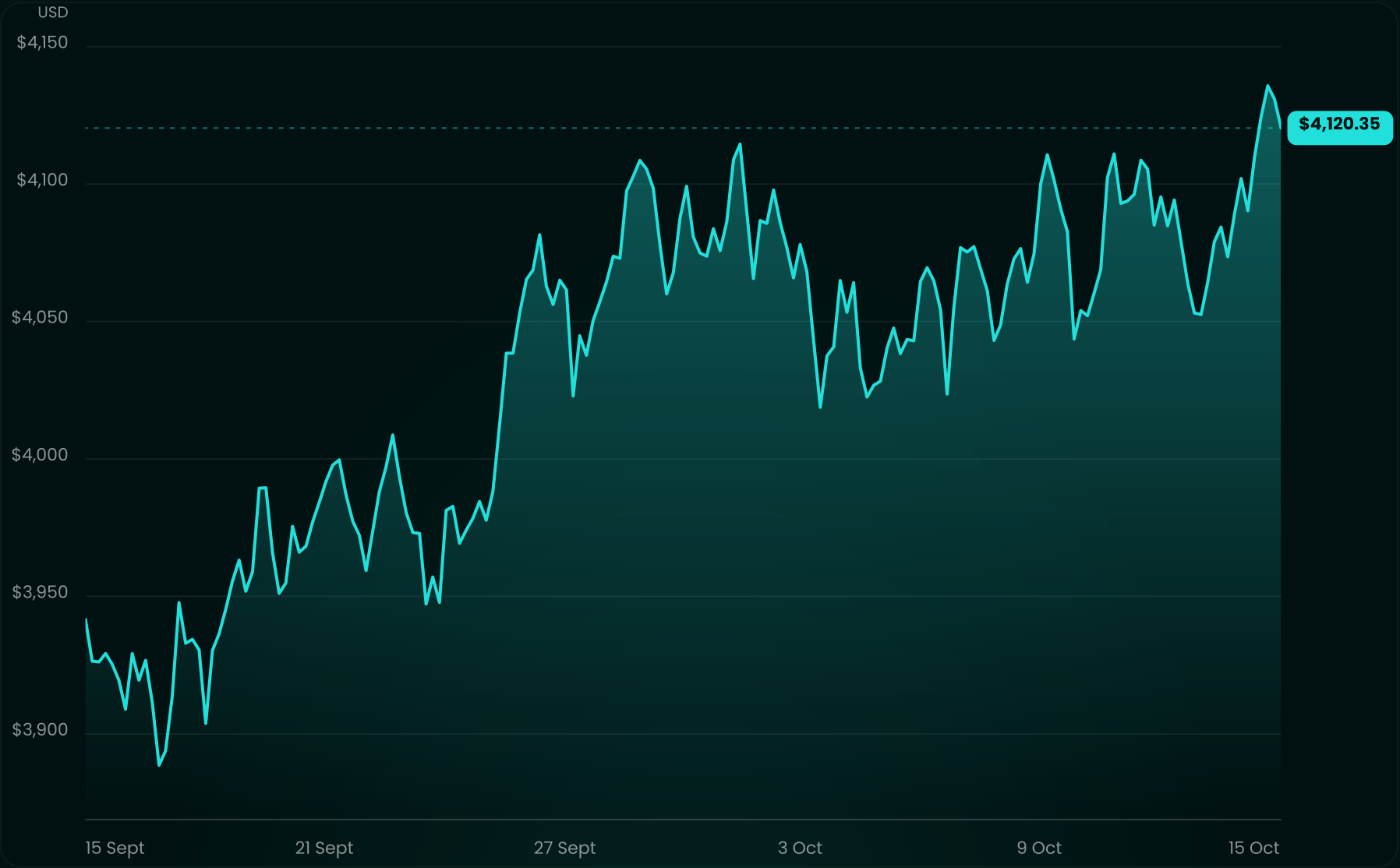
Tokenized Gold · USD per PAXG token · Month · Line
Timeframe
Hour
Day
Week
Month
Year
All Time
Chart
Line
Candlestick
Source: CoinGecko
Last updated: 2 min ago
PAX Gold
PAXG
$4,120.35
▲ +1.64% 24h
USD per PAXG token
Market cap
$1.08B
Volume (24h)
$48.21M
Circulating supply
262,410 PAXG
Total supply
262,410 PAXG
Max. supply
Unavailable
PAXG to USD converter
PAXG
1
USD
$ 4,120.35
Converted at the current price shown above.
Market Data
Ondo Treasuries (OUSG) / USD
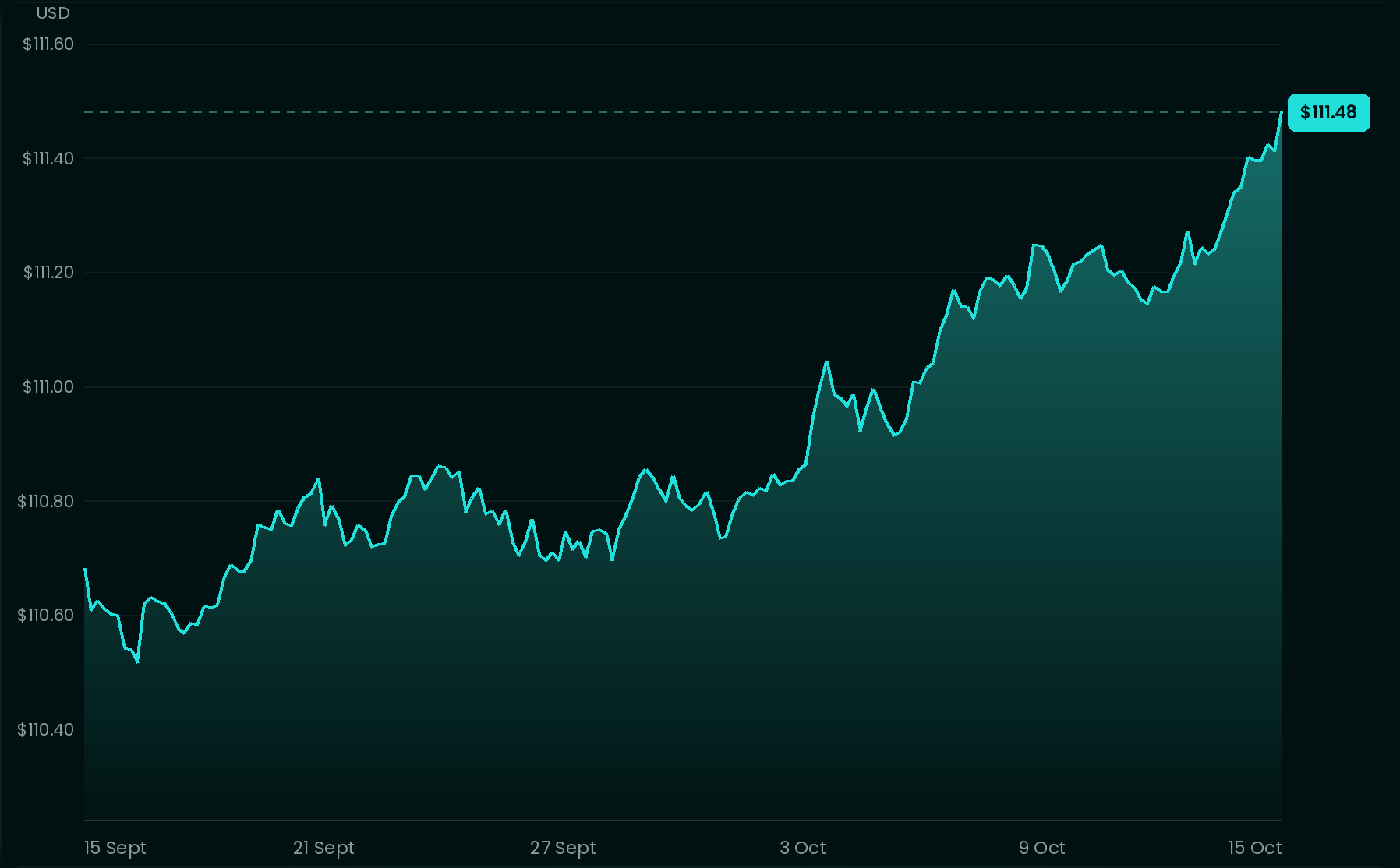
Tokenized Treasuries · USD per OUSG token · Month · Line
Timeframe
Hour
Day
Week
Month
Year
All Time
Chart
Line
Candlestick
Source: CoinGecko
Last updated: 2 min ago
Ondo US Treasuries
OUSG
$111.48
▲ +0.02% 24h
USD per OUSG token
Market cap
$692.4M
Volume (24h)
$3.15M
Circulating supply
6,211,040 OUSG
Total supply
6,211,040 OUSG
Max. supply
Unavailable
OUSG to USD converter
OUSG
1
USD
$ 111.48
Converted at the current price shown above.
Market Data
Tesla xStock (TSLAx) / USD
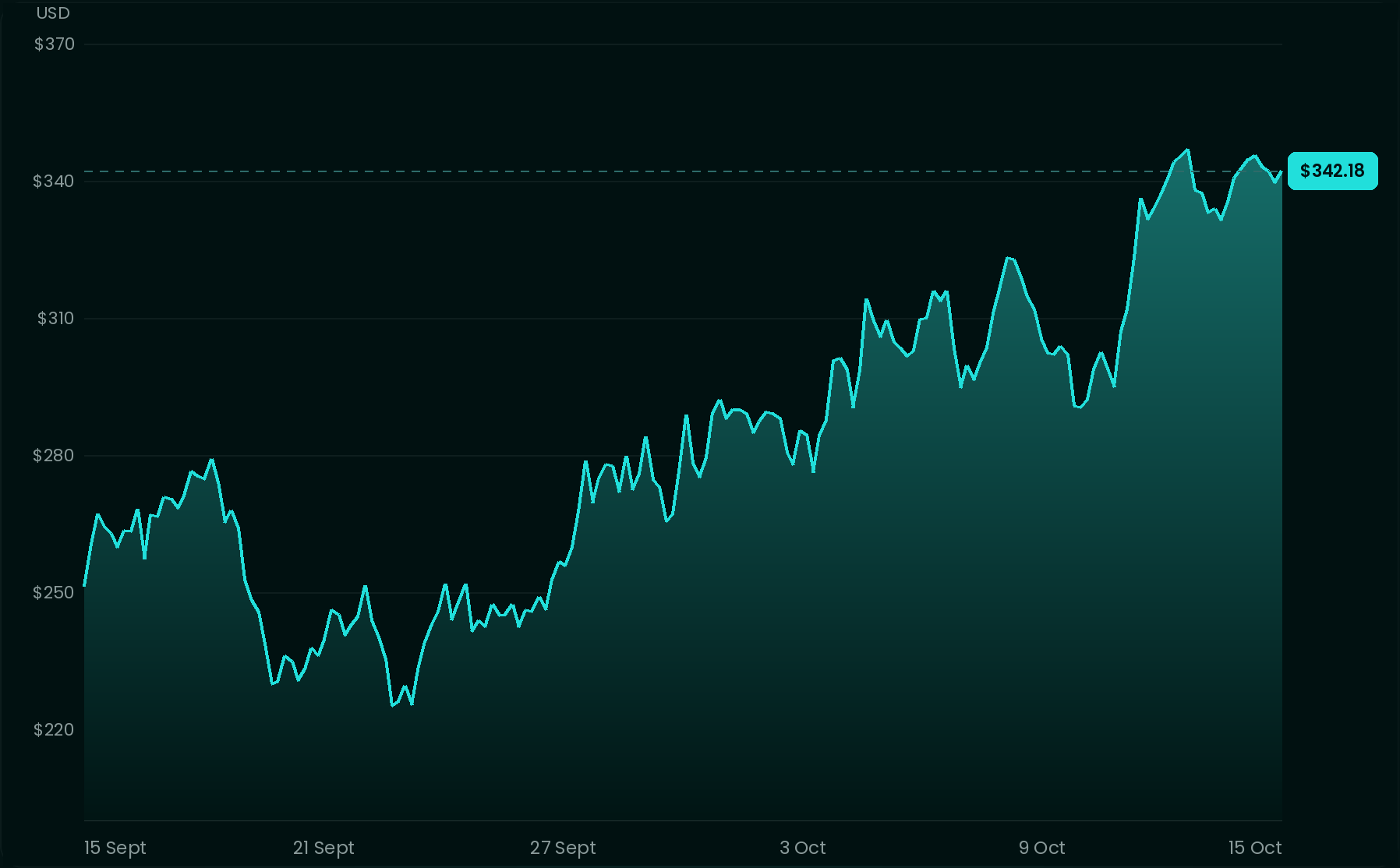
Tokenized Stocks · USD per TSLAx token · Month · Line
Timeframe
Hour
Day
Week
Month
Year
All Time
Chart
Line
Candlestick
Source: CoinGecko
Last updated: 2 min ago
Tesla xStock
TSLAx
$342.18
▲ +2.37% 24h
USD per TSLAx token
Market cap
$18.6M
Volume (24h)
$4.92M
Circulating supply
54,370 TSLAx
Total supply
54,370 TSLAx
Max. supply
Unavailable
TSLAx to USD converter
TSLAx
1
USD
$ 342.18
Converted at the current price shown above.
01
What Is a Tokenized Asset?
A tokenized asset is a digital representation of an asset, right, or claim recorded on a programmable ledger. The underlying reference may be physical, financial, contractual, or intangible. Depending on the structure, the ledger may form part of the authoritative ownership record, or the token may only evidence an entitlement recorded or enforced elsewhere.
For tokenized securities, the U.S. Securities and Exchange Commission stated in January 2026 that structures and holder rights can differ. Issuer-sponsored tokens can integrate the crypto network into the issuer’s ownership records, while third-party structures may represent custodial interests or synthetic exposure. Legal documents, custody arrangements, insolvency treatment, and applicable law still determine what the holder actually owns.
Real-world assets, often shortened to RWAs, are existing physical, financial, contractual, or intangible assets and claims represented through token infrastructure. Examples can include commodities, real estate, government debt, private credit, fund interests, equities, and intellectual property.
A crypto-native asset originates on a blockchain or similar network.
A tokenized RWA references an asset or claim that exists outside that network.
A conventional digitized asset may already exist electronically but without its ownership or transfer logic being represented on a programmable ledger.
Tokenization changes the record and workflow layer, not automatically the asset’s economics or legal character.
03
How Tokenization Works
A workable tokenization structure has to connect legal rights, digital records, control, and settlement:
1.
Identify the underlying asset, right, or claim and who can issue or transfer it.
2.
Define the ownership structure, holder rights, eligibility rules, and authoritative record.
3.
Create the token and programmable rules for issuance, transfer, servicing, or restrictions.
4.
Establish custody, wallet controls, data inputs, and reconciliation between on-chain and off-chain records.
5.
Define how the asset and payment legs settle, including finality, funding, and failure handling.
6.
Administer distributions, corporate actions, reporting, redemption, suspension, and retirement.
The Bank for International Settlements describes tokenisation as recording claims on real or financial assets onto programmable platforms. Its work highlights coordinated messaging, reconciliation, and transfer, while emphasizing sound governance, settlement arrangements, and legal finality.
Tokenized asset management is broader than selecting or holding a digital token. It can involve ownership records, custody architecture, smart-contract controls, transfer restrictions, settlement, asset servicing, liquidity, compliance, interoperability, valuation data, governance, and recovery procedures.
A tokenized asset management firm may focus on how tokenized holdings are controlled, monitored, serviced, reconciled, and incorporated into portfolio or treasury workflows. A digital asset management firm may have a broader scope that also includes crypto-native assets. Actual permissions and regulatory responsibilities vary by firm, product, and jurisdiction.
The key question is whether the legal, technical, market, and control layers continue to agree during failures, not only when transfers work as designed.
05
What a Tokenized Asset Consultancy May Evaluate
A tokenized asset consultancy may assess whether tokenization fits a particular asset or operating model before a platform is selected. Useful questions include:
Rights and record:
What does the token legally represent, and which record is authoritative?
Custody and control:
Who holds the asset or keys, and who can authorize movement?
Settlement and redemption:
What must happen on-chain and off-chain for ownership or cash to become final?
Liquidity:
Where can the token trade or redeem if buyers, market makers, or settlement assets are unavailable?
Governance and resilience:
Who can upgrade contracts, pause activity, correct records, and execute recovery?
These questions separate tokenization feasibility from the assumption that blockchain implementation is useful simply because it is technically possible.
Tokenized asset management can involve market data, liquidity analysis, custody, settlement, governance, and ongoing operational oversight.
06
Tokenized Asset Investment and Ownership Structures
Tokenized asset investment can involve materially different forms of exposure. Under the SEC’s 2026 taxonomy, an issuer may tokenize its own security, or an unaffiliated third party may create a custodial or synthetic structure linked to another issuer’s security.
The distinction affects ownership, counterparty exposure, redemption, insolvency treatment, voting or distribution rights, and settlement mechanics. Two tokens referencing the same asset should not be assumed to provide equivalent rights. U.S. federal banking agencies reinforced the technology-neutral principle in March 2026, stating that an eligible tokenized security with legal rights identical to its non-tokenized form generally receives the same regulatory capital treatment.
07
Potential Benefits and Limitations
Potential benefits
Tokenization can support programmability, smaller ownership units, automated servicing, shared records, and more coordinated settlement. When asset and payment legs operate on compatible infrastructure, some reconciliation and counterparty frictions may decline.
Limitations
Those capabilities are conditional. Fractionalization changes unit size, not market depth. Tokenization does not automatically create liquidity, guarantee buyers, establish reliable pricing, or ensure redemption capacity. Faster transfer also does not remove dependence on custodians, banks, administrators, or off-chain data.
The International Monetary Fund has found that tokenization may reduce some market frictions while leaving others in place and creating new ones. The Financial Stability Board identifies potential vulnerabilities involving liquidity and maturity mismatch, leverage, interconnectedness, asset quality, and operational fragilities.
08
Exploring Different Tokenized Asset Markets
Tokenization is being applied across different asset categories, but the relevant controls vary. Precious metals depend heavily on custody, reserve verification, and redemption design. Treasuries, equities, indices, and fund interests bring securities-law, ownership-record, transfer, and market-infrastructure questions. Energy, foreign exchange, and agricultural assets introduce different pricing, delivery, data, and settlement dependencies.
In July 2026, DTCC completed real production transactions using DTC-custodied tokenized assets across U.S. Treasury repo, Treasury buy/sell, and equity buy/sell use cases. The milestone shows tokenization connecting with established market infrastructure without implying that every asset class can use the same operating model.
For institutions examining tokenized markets, a practical framework is to follow the asset through eight questions: rights, authoritative record, custody, settlement, servicing, liquidity, governance, and recovery. A weakness in any one layer can change the usefulness or risk of the complete structure.
Disclaimer: The information provided on this page is for educational and informational purposes only and should not be construed as financial advice. Crypto currency assets involve inherent risks, and past performance is not indicative of future results. Always conduct thorough research and consult with a qualified financial advisor before making investment decisions.
“The crypto currency and digital asset space is an emerging asset class that has not yet been regulated by the SEC and US Federal Government. None of the information provided by Kenson LLC should be considered as financial investment advice. Please consult your Registered Financial Advisor for guidance. Kenson LLC does not offer any products regulated by the SEC including, equities, registered securities, ETFs, stocks, bonds, or equivalents”
Kenson Investments excels in digital asset management, serving high-net-worth individuals and businesses. We prioritize security and transparency, offering tailored solutions for asset management, diversification, and innovative investment opportunities in the expanding digital asset sector.
Disclaimer: The crypto currency and digital asset space is an emerging asset class that has not yet been regulated by the SEC and US Federal Government. None of the information provided by Kenson LLC should be considered as financial investment advice. Please consult your Registered Financial Advisor for guidance. Kenson LLC does not offer any products regulated by the SEC including, equities, registered securities, ETFs, stocks, bonds, or equivalents.