








The Depository Trust & Clearing Corporation, the organization responsible for safeguarding more than $114 trillion in securities across the United States financial system, has begun a live pilot to convert stocks, exchange-traded funds, and U.S. Treasury securities into blockchain-based tokens. Nearly 40 financial institutions and technology providers, including JPMorgan Chase, Goldman Sachs, BlackRock, Vanguard, and the New York Stock Exchange, are taking part in the trial, which DTCC has said could expand into a full production service by October 2026.
For an organization that processed $4.7 quadrillion in transactions in 2025 alone, testing tokenization at this scale is a meaningful signal. It shows that enterprise interest in blockchain infrastructure has moved well past small proof-of-concept experiments and into live, regulated environments where institutions are willing to put real assets on the line.
What Tokenization Actually Means
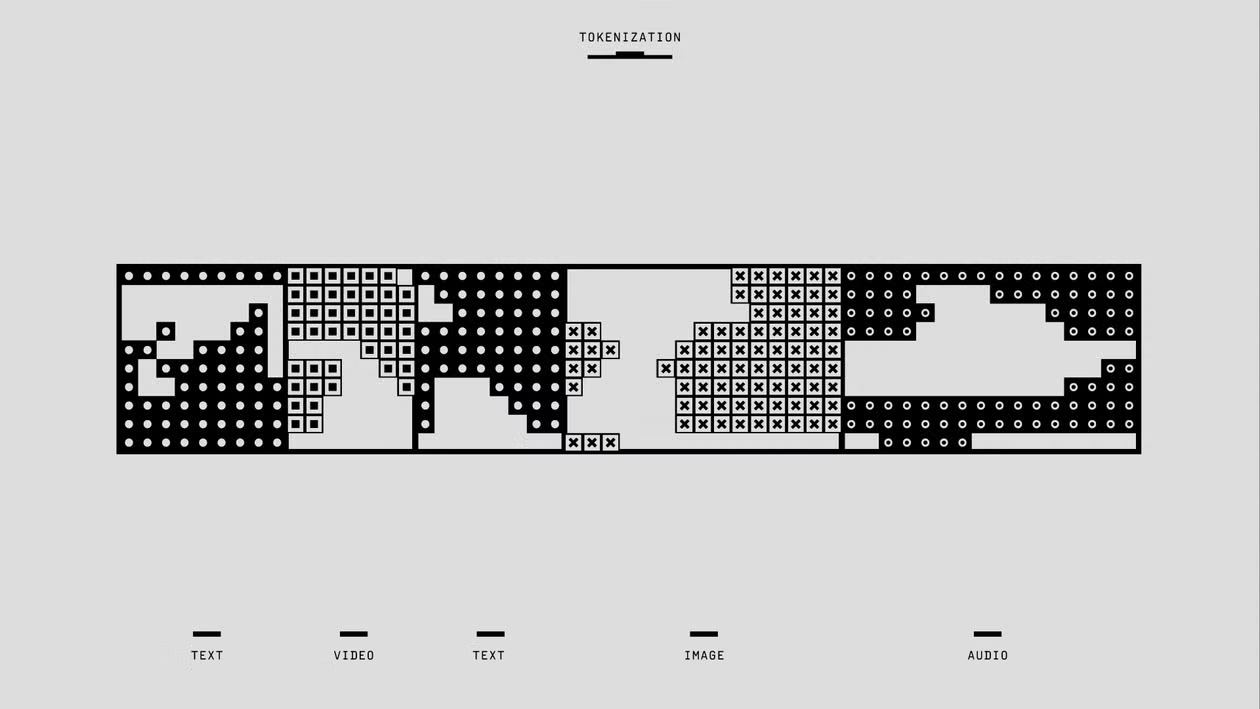
Tokenization is the process of recording ownership of an existing asset on a shared, digital ledger rather than in a traditional paper-based or siloed database. In DTCC’s pilot, a token created for a Treasury security functions as what the industry often calls a digital twin. It is designed to carry the same economic rights as the underlying asset, and it can be converted back to its original form at any time. The token itself is not a new financial product. It is a new way of recording and moving an existing one.
This distinction matters for anyone trying to understand blockchain-based investment opportunities more broadly. The technology’s value in this pilot comes from removing friction in how ownership records move between parties, not from creating an entirely new type of asset. That is a useful mental model for evaluating almost any tokenization announcement in the months ahead.
Why Institutions Are Researching Blockchain
DTCC’s leadership has described asset tokenization as a long-term shift in how financial infrastructure operates, with an emphasis on system security, resilience, and unlocking liquidity that is otherwise tied up in slower settlement processes. That framing helps explain why institutions of this size are willing to experiment. Settlement that once took days can, in theory, be reduced to near-instant confirmation when ownership records live on a shared ledger instead of moving through multiple intermediaries.
Notably, DTCC chose not to build this pilot on public blockchains such as Ethereum or Solana. Instead, live trades are settling on private, permissioned networks, specifically Hyperledger Besu and the Canton Network. As more institutions begin navigating the digital asset market, permissioned infrastructure is emerging as the preferred foundation, because it allows firms to retain the compliance controls regulators expect while still capturing the efficiency gains tokenization can offer.
This pilot did not happen in isolation. In late 2025, the U.S. Securities and Exchange Commission issued a no-action letter that helped clear a path for this type of trial, and Nasdaq received similar approval in March 2026 to support tokenized trading of Russell 1000 stocks and major index ETFs. Three major pillars of U.S. market infrastructure moving toward tokenization within the same year is a stronger signal than any single announcement on its own.
How Blockchain Infrastructure Is Evolving
The DTCC pilot reflects a broader pattern taking shape across global markets. In the United Kingdom, a government-backed wholesale tokenization roadmap estimated that tokenized financial markets could generate up to £33 billion in annual economic value by 2035, and it established an industry task force to help coordinate adoption among major financial institutions. Momentum of this kind rarely stays contained to one market or one asset type.
Industry analysts tracking enterprise blockchain adoption note that financial market infrastructure tends to move first, with other sectors such as insurance, supply chain finance, and real estate typically following within eighteen to thirty-six months once compliant, repeatable patterns have been proven out. That is why organizations exploring blockchain and digital asset consulting today are often less focused on the technology itself and more focused on the operating model questions it raises: which functions still require human oversight, which can be automated at the infrastructure layer, and how digital asset consulting for compliance fits into that transition.
For firms evaluating this shift, the practical work increasingly involves evaluating digital asset consulting firms and digital asset strategy consulting firm partners who can translate infrastructure-level change into operational decisions, rather than treating tokenization as a purely technical upgrade.
Why Understanding the Technology Is Worth Your Time
DTCC’s pilot centers on traditional securities, not cryptocurrencies, but the underlying mechanics illustrate concepts that are directly relevant to anyone building context around digital asset investment solutions more broadly: how tokens are issued, how custody and security in digital asset management are handled, and how settlement rails are designed to preserve legal ownership rights. These are the same building blocks that underpin digital assets across the market.
Understanding this infrastructure does not require picking a side on whether tokenization will succeed at scale. It requires paying attention to who is building it, how it is regulated, and what problems it is actually solving. That kind of technical literacy is what separates informed observers from those reacting to headlines, and it is a useful foundation before anyone begins researching long-term investment in digital assets or evaluating how digital asset portfolio management might fit into their broader financial picture.

Following the Infrastructure Shift
Kenson Investments publishes educational research on how institutional pilots like DTCC’s are reshaping blockchain infrastructure, custody, and market structure. Our goal is to help readers build a clearer, more transparent investment solutions focused understanding of where this technology is heading, not to tell anyone what to do with their money. As enterprise adoption accelerates, we believe innovative investment solutions start with education, not speculation.
If you want to go deeper on how tokenization and blockchain infrastructure connect to digital asset management services, our Digital Asset Consultation walks through the fundamentals in plain language. You can also explore how these trends relate to Digital Asset Investments, or Contact Us if you have questions about the research behind this piece.
Disclaimer: The information provided on this page is for educational and informational purposes only and should not be construed as financial advice. Crypto currency assets involve inherent risks, and past performance is not indicative of future results. Always conduct thorough research and consult with a qualified financial advisor before making investment decisions.
“The crypto currency and digital asset space is an emerging asset class that has not yet been regulated by the SEC and US Federal Government. None of the information provided by Kenson LLC should be considered as financial investment advice. Please consult your Registered Financial Advisor for guidance. Kenson LLC does not offer any products regulated by the SEC including, equities, registered securities, ETFs, stocks, bonds, or equivalents.”