








Digital asset systems operate in conditions that differ materially from traditional financial markets. Transaction finality occurs in minutes rather than days. Market structure evolves through protocol upgrades rather than regulatory rulemaking. Participant behavior is visible on public ledgers but remains highly reflexive. Under these conditions, forecasting outcomes with precision becomes increasingly unreliable.
This reality has prompted a shift in how institutional participants assess digital asset investments. Rather than relying on prediction-heavy models, many now emphasize process-driven investing in crypto that prioritizes repeatable decision structures, operational discipline, and risk controls. In environments defined by uncertainty and rapid feedback loops, structured processes consistently outperform attempts to anticipate short-term outcomes.
This post examines why onchain systems reward process over prediction, and how decision frameworks, operational design, and governance discipline contribute to security in digital asset management across blockchain-based environments.
Prediction Faces Structural Limits in Onchain Environments
Prediction depends on stable inputs, bounded uncertainty, and delayed feedback. Onchain systems exhibit none of these characteristics in a durable way.
Several structural conditions undermine predictive confidence:
- Continuous market feedback:Price discovery, liquidity changes, and participant behavior update in near real time.
- Reflexive incentives:Public data alters participant behavior as soon as it becomes observable.
- Protocol-driven change:Governance proposals, validator incentives, and software updates reshape system behavior without traditional notice periods.
- Compressed time horizons:Risk exposure materializes quickly, leaving limited room for adjustment.
These conditions do not render analysis irrelevant. They do, however, weaken models that depend on forward-looking certainty. Forecasting future price levels, adoption timelines, or protocol dominance becomes less reliable as system complexity increases.
As a result, institutions operating in blockchain-based investment opportunities increasingly differentiate between forecasting outcomes and designing processes that remain resilient regardless of outcome.

Process-Driven Investing in Crypto: A Structural Advantage
Process-driven investing in crypto does not attempt to predict where a market will move next. Instead, it establishes rules for how decisions are made, monitored, reviewed, and adjusted over time.
At its core, a process-first approach answers three questions:
1. What information is admissible?
Data sources are predefined, verifiable, and consistent across time.
2. How are decisions triggered?
Actions occur based on observable conditions, not narrative shifts.
3. How is risk constrained?
Exposure limits, review cycles, and exit conditions are defined in advance.
In digital asset systems, where uncertainty cannot be eliminated, this structure reduces reliance on discretionary judgment under pressure. It also improves auditability and post-decision evaluation, both of which matter to compliance-aware organizations.
Decision Frameworks as the Foundation of Onchain Discipline
Effective decision frameworks translate abstract principles into operational rules. In digital asset contexts, these frameworks often incorporate onchain and offchain inputs while maintaining strict boundaries around interpretation.
Common elements include:
- Eligibility criteria:Standards for protocol maturity, governance transparency, and technical documentation.
- Operational checks:Custody design, key management procedures, and counterparty exposure mapping.
- Governance assessment:Voting mechanics, upgrade authority, and dispute resolution structures.
- Monitoring cadence:Defined intervals for reassessment rather than continuous reaction.
These frameworks do not remove uncertainty. They contain it. By predefining how uncertainty is handled, institutions reduce the risk of inconsistent responses driven by market volatility or sentiment shifts.
This approach is increasingly associated with security in digital asset management, where consistency and control matter more than tactical accuracy.
Onchain Transparency Changes the Nature of Risk
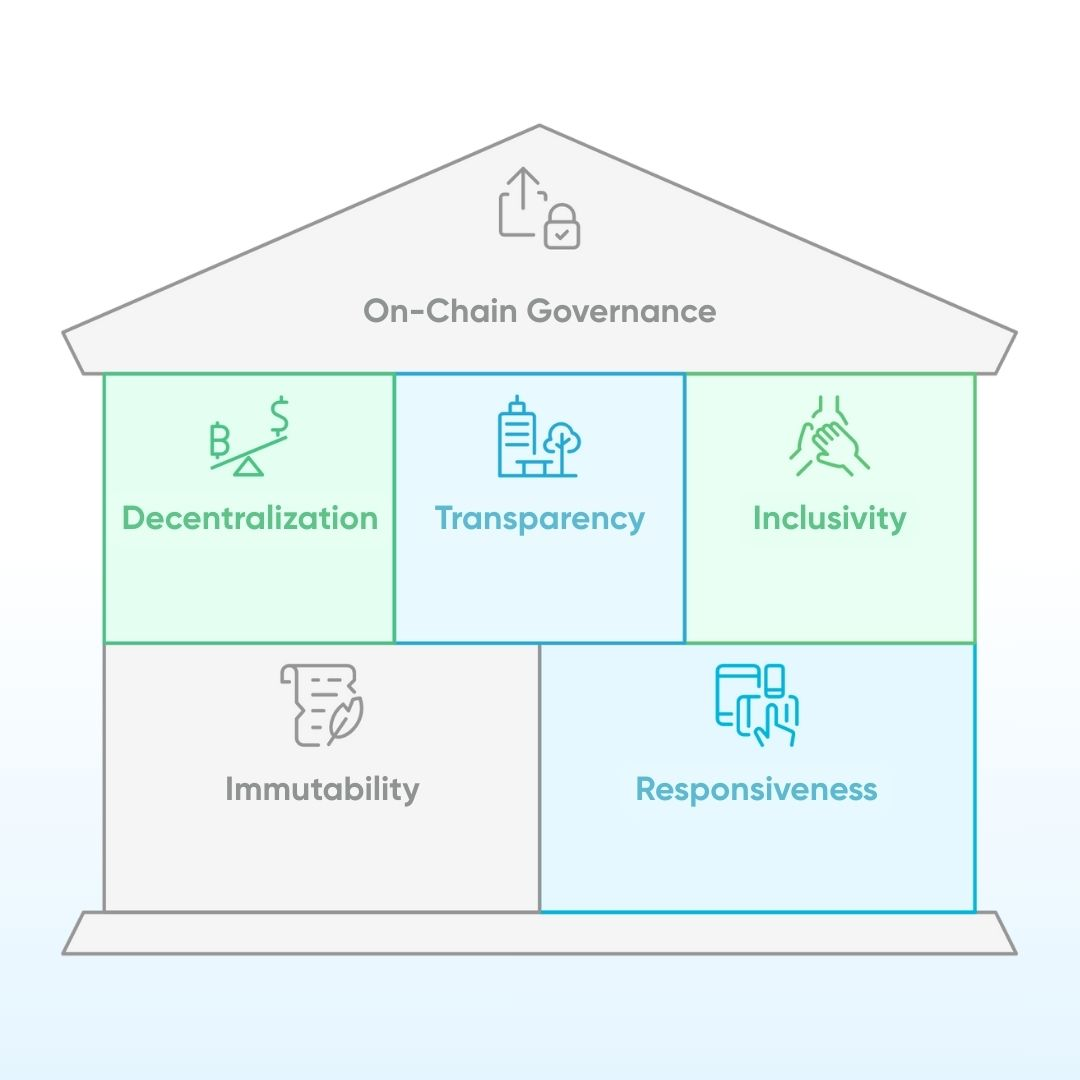
Public blockchains provide unprecedented visibility into transaction flows, liquidity pools, and protocol activity. This transparency alters how risk is identified and managed.
However, visibility does not equal predictability. Observing activity does not guarantee insight into intent, coordination, or future behavior. In fact, the availability of shared data often increases reflexivity, as participants respond simultaneously to the same signals.
Process-oriented systems address this by:
- Defining which metrics are monitored and why
- Establishing thresholds that trigger review rather than immediate action
- Separating observation from response through governance controls
In this way, transparency becomes an input into structured oversight rather than a catalyst for reactive decision-making.
Speed Rewards Preparation, Not Forecasting
Onchain environments move quickly, but speed does not favor those who react fastest. It favors those who prepared their response in advance.
Prediction-based approaches often fail under speed constraints because they require interpretation before action. By contrast, process-based systems encode responses ahead of time.
Examples include:
- Predefined liquidity exposure limits
- Automated risk alerts tied to governance review
- Custody workflows that require multi-party authorization
- Incident response protocols for smart contract anomalies
These mechanisms do not rely on anticipating specific events. They rely on readiness. In digital asset systems, readiness consistently outperforms accuracy.

Governance Structures Matter More Than Market Narratives
In traditional markets, governance risk is often secondary to financial performance. In digital assets, governance frequently determines system behavior directly.
Protocol upgrades, parameter changes, and validator incentives can alter economic outcomes without external intervention. As a result, governance analysis becomes a core component of any digital asset investments framework.
Process-oriented governance review focuses on:
- Who can propose changes
- How changes are approved
- What safeguards exist against concentration of control
- How disputes are resolved
Rather than predicting whether a protocol will succeed, institutions assess whether its governance structure can manage failure scenarios without systemic breakdown.
Reducing Behavioral Risk Through Structure
Human judgment remains a factor in all decision-making systems. However, unstructured judgment introduces behavioral risk, particularly under conditions of volatility.
Process-driven approaches mitigate this risk by:
- Limiting discretionary overrides
- Requiring documentation for deviations
- Separating analysis from execution
- Enforcing review cycles regardless of market conditions
These controls do not eliminate error. They reduce its frequency and severity. Over time, this contributes to greater consistency in how blockchain-based investment opportunities are evaluated and managed.
Why Prediction Persists Despite Its Limitations
Forecasting remains appealing because it offers a sense of control. Predictive narratives simplify complexity into directional confidence. In environments where uncertainty is uncomfortable, prediction feels reassuring.
However, comfort does not equal reliability. Onchain systems expose the limits of narrative-driven models by continuously challenging assumptions through observable outcomes.
Institutions that recognize this distinction shift their focus from being right about the future to being prepared for multiple plausible scenarios.
Process as a Form of Risk Governance
In regulated financial environments, process is inseparable from governance. Documentation, review, and accountability are not optional. Digital asset systems increasingly face similar expectations from internal risk committees and external stakeholders.
A well-defined process provides:
- Traceability of decisions
- Clear separation of roles
- Evidence of control mechanisms
- Consistency across market conditions
This is particularly relevant for organizations seeking security in digital asset management without relying on speculative confidence.

Implications for Institutional Digital Asset Strategy
The growing emphasis on process over prediction reflects a maturation of digital asset participation. As systems scale and integration deepens, the tolerance for ad hoc decision-making declines.
Institutional strategies increasingly prioritize:
- Framework integrity over short-term accuracy
- Governance qualityover narrative appeal
- Operational resilience over tactical positioning
This shift does not signal reduced engagement. It signals a recalibration toward methods that align with the structural realities of onchain systems.
Looking Forward Without Forecasting
Rejecting prediction does not mean ignoring the future. It means acknowledging that the future cannot be reliably modeled in complex, reflexive systems.
Process-oriented approaches remain effective precisely because they do not depend on foresight. They depend on discipline, review, and adaptability within defined boundaries.
As digital asset systems continue to evolve, the organizations best positioned to engage with them will not be those with the most confident forecasts, but those with the most resilient processes.
Learn How Structured Frameworks Shape Onchain Decision-Making
Organizations evaluating process-driven investing in crypto often benefit from structured research that examines governance design, operational controls, and institutional decision frameworks across digital assets.
At Kenson Investments, we publish educational resources that document how decision frameworks, governance structures, and operational processes influence participation in digital asset systems. Our work focuses on institutional context, risk awareness, and the mechanics that underpin blockchain-based environments.
Readers seeking deeper insight into digital assets, digital asset investments, and security in digital asset management can access our research library for general market insights and structured analysis. Register now!
Disclaimer: The information provided on this page is for educational and informational purposes only and should not be construed as financial advice. Cryptocurrency assets involve inherent risks, and past performance is not indicative of future results. Always conduct thorough research and consult with a qualified financial advisor before making investment decisions.
“The cryptocurrency and digital asset space is an emerging asset class that has not yet been regulated by the SEC and the US Federal Government. None of the information provided by Kenson LLC should be considered as financial investment advice. Please consult your Registered Financial Advisor for guidance. Kenson LLC does not offer any products regulated by the SEC, including equities, registered securities, ETFs, stocks, bonds, or equivalents.”