






Institutional participation in tokenized markets has increased steadily, but scale depends on trust. That trust no longer comes from periodic reviews or static disclosures. It comes from continuous verification. Real-time attestations now sit at the center of how institutions assess reserves, operational processes, solvency signals, and custody integrity in digital asset environments.
This shift matters to organizations engaged in digital asset consulting services because attestations influence how market participants evaluate transparency, operational readiness, and risk visibility. Rather than relying on point-in-time confirmation, institutions increasingly expect always-on proof that systems operate as described.
Why Attestations Became Continuous
Traditional audits were designed for slower financial systems. Tokenized markets move at network speed. Asset issuance, transfers, and custody changes can occur around the clock. As volumes grew, institutions recognized that delayed verification increased uncertainty.
By 2024, industry surveys showed that more than 60 percent of institutional platforms working with tokenized assets required some form of continuous reserve or operational reporting before onboarding new counterparties. This demand reshaped expectations across digital asset managementservices, where transparency now functions as a baseline requirement rather than a differentiator.
Continuous attestations reduce informational gaps. They provide near real-time insight into whether reserves exist, processes execute correctly, and custody controls remain intact. For organizations offering digital asset strategy consulting, these proof layers help explain how risk awareness frameworks adapt to fast-moving crypto markets.
Reserve Attestations: Visibility Into Asset Backing
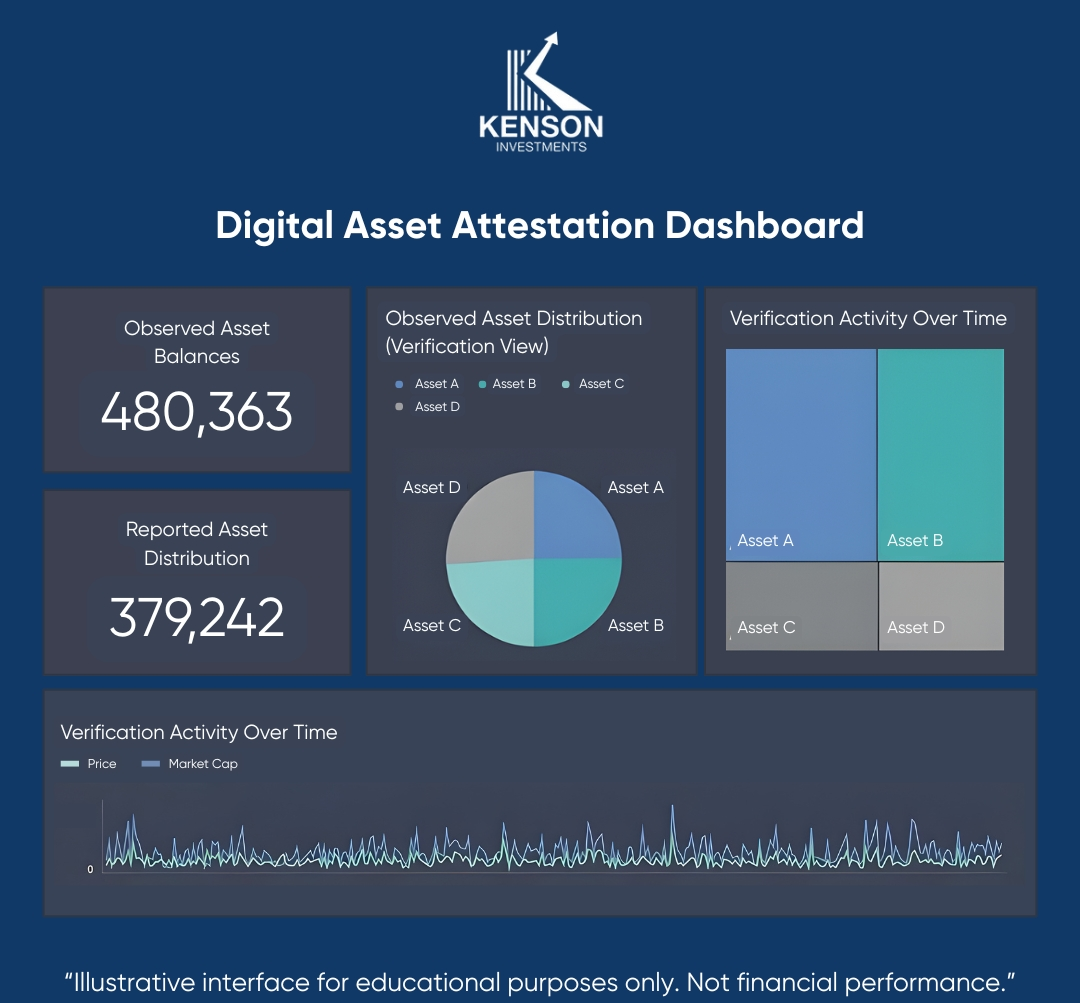
Reserve attestations confirm that assets claimed to exist are observable and accounted for. In tokenized environments, this often involves combining onchain data with offchain confirmations. The goal is not prediction or performance measurement, but verification.
Stable-value instruments accelerated adoption of this model. As supply expanded, institutions demanded clearer views into backing mechanisms. Real-time reserve attestations answered that need by publishing continuous snapshots rather than quarterly summaries.
Within digital asset portfolio management, reserve attestations help market participants understand exposure conditions without implying outcomes. They also support discussions around security in digital asset management, where custody and backing transparency intersect.

Operational Attestations: Making Processes Observable
Not all risks are visible onchain. Operational attestations address what happens behind the interface. These reviews focus on procedures such as access controls, transaction sequencing, and change management.
Operational attestations matter because failures often originate in process gaps rather than code execution. Institutions increasingly request documentation that internal controls operate consistently. In 2025, over half of institutional tokenization platforms reported implementing recurring operational attestations as part of onboarding reviews.
For organizations positioned as a digital asset management company, operational attestations demonstrate process discipline without implying regulatory approval. They also support educational conversations around risk management in crypto investments by highlighting how internal practices affect exposure.

Solvency Signals and Continuous Monitoring
Solvency in tokenized markets is not a static concept. It reflects real-time relationships between liabilities, reserves, and operational constraints. Continuous attestations provide solvency signals by linking observable data to defined thresholds.
These signals do not predict outcomes. Instead, they help market participants interpret system conditions. This distinction is critical for educational content tied to digital asset advisory services, where clarity and neutrality reduce misunderstanding.
Solvency attestations also inform broader investment analysis and portfolio management discussions by showing how transparency frameworks support informed decision-making without offering guidance or recommendations.

Custody Integrity and Control Validation
Custody remains a focal point for institutional trust. Real-time attestations validate custody integrity by confirming control structures, segregation practices, and access limitations.
Rather than asserting safety, custody attestations provide evidence that stated controls exist and function. This approach aligns with educational frameworks used in crypto investment consulting and crypto investment research, where operational clarity supports risk awareness.
For participants evaluating transparent investment solutions, custody attestations clarify how assets are held and monitored without implying protection or guarantees.

Implications for Tokenized Fund Structures
Tokenized fund structures introduced new operational complexity. Continuous attestations now play a central role in how institutions assess these environments. This is particularly relevant when discussing hedge fund investment strategies in crypto contexts, where structure transparency matters more than labels.
While some organizations operate similarly to private funds, attestations help clarify what systems do rather than how they are branded. For research tied to cryptocurrency hedge fund structures or a fund management company, real-time verification supports due diligence without suggesting expertise or regulatory standing.
These mechanisms also influence conversations around fund management services by shifting focus from performance narratives to operational clarity.
What Audit and Risk Teams Need in Production
Audit and risk teams evaluating tokenized platforms prioritize three elements:
- Continuous data availability
- Independent verification sources
- Clear documentation of processes
Real-time attestations address these needs by providing ongoing visibility rather than episodic assurance. For organizations engaged in blockchain asset consulting, this shift reframes how oversight is discussed, moving from compliance language to operational transparency.
Teams also expect attestations to integrate cleanly into reporting workflows. This supports educational efforts around blockchain-based investment opportunities by grounding discussions in observable facts rather than assumptions.
Attestations as an Educational Foundation
As tokenized markets mature, attestations function as an educational layer. They help informed market participants understand how systems behave under normal and stressed conditions. This perspective is increasingly common in digital asset management research and content, where clarity builds confidence without persuasion.
Attestations do not remove risk. They make it visible. That distinction underpins responsible market participation and aligns with broader efforts to improve transparency across digital asset ecosystems.
How Real-Time Attestations Shape Market Confidence
As tokenized ecosystems continue to mature, real-time attestations increasingly influence how informed market participants evaluate credibility. These verification layers do not function as endorsements or assurances. Instead, they provide observable signals that help reduce ambiguity in environments where data moves faster than traditional reporting cycles.
For organizations engaged in digital and blockchain asset consulting, attestations serve as a reference point for explaining how transparency frameworks operate in practice. Continuous reserve reporting, operational verification, and custody monitoring allow participants to independently observe whether systems behave as documented. This visibility supports market awareness without implying outcomes or expectations.
Attestations also play a role in broader digital asset management discussions by helping participants contextualize operational risk. Rather than focusing on performance narratives, verification shifts attention toward structure, process discipline, and data integrity. This is particularly relevant in tokenized fund environments, where complexity can obscure underlying mechanics if verification is absent.
From an educational standpoint, real-time attestations reinforce an important principle: uncertainty cannot be eliminated, but it can be measured and observed. Transparent systems enable better interpretation of conditions, especially during periods of heightened volatility. This perspective aligns closely with responsible approaches to risk management in crypto investments, where understanding system behavior is more valuable than prediction.
As institutions, platforms, and service providers refine their approaches, attestations are becoming a shared language for discussing operational maturity. They help bridge technical execution and market understanding by translating internal processes into externally observable signals. In doing so, they support clearer communication across tokenized ecosystems while maintaining appropriate boundaries between education, transparency, and decision-making responsibility.
Work With Digital Asset Specialists
Understanding real-time attestations requires context, not promises. At Kenson Investments, our Digital Asset Specialists focus on education and general market insights related to verification frameworks, operational transparency, and evolving standards in tokenized markets.
Learn more about our approach to digital asset consulting through our digital asset consultation resources. Explore how verification concepts intersect with broader market awareness on our digital asset investments page. For additional questions, connect with our team via the contact us page, including resources related to NFT portfolio management, hedge fund investment companies, RWA tokenization investment, enhance ROI with digital asset consulting, Solana DeFi risk management, consultancy for DeFi finance investments, and institutional supply chain digitization.
“The crypto currency and digital asset space is an emerging asset class that has not yet been regulated by the SEC and US Federal Government. None of the information provided by Kenson LLC should be considered as financial investment advice. Please consult your Registered Financial Advisor for guidance. Kenson LLC does not offer any products regulated by the SEC including, equities, registered securities, ETFs, stocks, bonds, or equivalents”