







As traditional finance infrastructure struggles to meet the needs of cross-border commerce, volatile currency regimes, and capital controls in emerging markets, stablecoins have stepped in—not just as speculative instruments, but as institutional payment rails. Of these, Tether (USDT) stands out as the most transacted and widely used.
In 2025, Tether institutional stablecoin usage is growing not just among retail users, but across businesses, trade networks, and even governments. For institutions seeking to leverage stablecoins for payment settlement, working capital flows, or dollar exposure, Tether has become a tool of pragmatic dollarization—particularly in regions underserved by traditional correspondent banking networks.
Tether by the Numbers: Scale and Reach
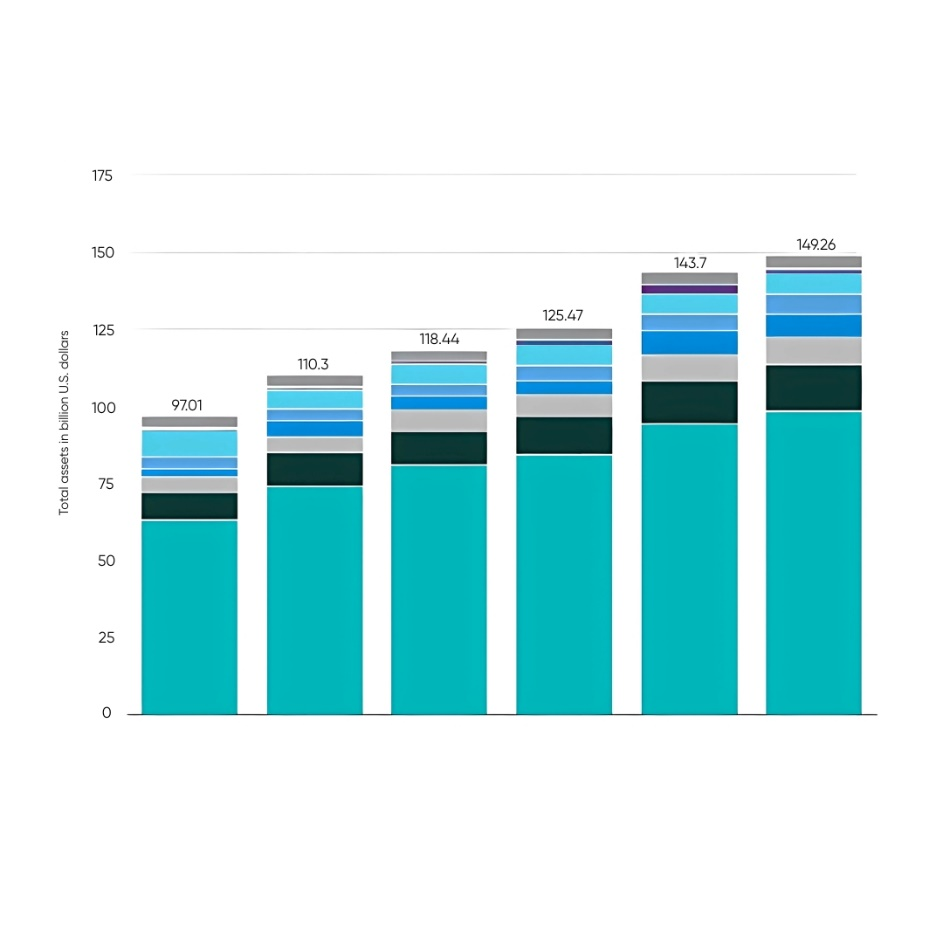
Tether is the largest stablecoin by market capitalization, with over $112 billion in circulation (as of June 2025). It facilitates more trading volume on a daily basis than Bitcoin and has settlement volumes that often exceed $100 billion per day, particularly on high-velocity Layer 2 networks like Tron.
According to a 2024 report by Chainalysis, the majority of Tether volume now flows outside of centralized exchanges, driven by cross-border business transactions, merchant settlements, and remittance corridors in Latin America, Sub-Saharan Africa, and parts of Southeast Asia.
This makes Tether increasingly relevant to digital asset management consultants, portfolio management consultants, and blockchain asset consulting firms seeking infrastructure alternatives that scale where banks cannot.
Institutional Use Cases in Emerging Markets
1. Cross-Border B2B Payments
In many emerging markets, traditional international wire transfers are expensive, slow, and subject to failure due to intermediary risk. With Tether, businesses can settle invoices or pay suppliers across borders within minutes—often for a fraction of the cost.
For instance, importers in Turkey and exporters in Nigeria have turned to USDT as a parallel settlement rail to hedge against currency volatility and mitigate banking frictions. These models are being integrated into digital asset investment solutions and cryptocurrency investment solutions for institutional clients exploring frictionless global trade operations.
2. Treasury Dollarization & Reserve Strategies
Companies and family offices operating in high-inflation environments like Argentina, Lebanon, or Zimbabwe increasingly hold part of their treasury in USDT to preserve purchasing power. While not a substitute for regulated dollar custody, Tether offers pseudo-dollar exposure without needing a U.S. bank account—particularly attractive in capital-controlled jurisdictions.
This trend is being monitored closely by digital asset consulting for compliance, as firms evaluate the legal frameworks governing stablecoin custody in local jurisdictions.
3. On-Chain Settlement for Real-World Assets
Tether is also being used as a stable collateral or settlement asset for tokenized real estate, commodities, and receivables. In markets where banking APIs are weak or settlement lags are long, on-chain dollar rails provide faster finality and auditability.
This makes it a viable tool for RWA tokenization investment consultants, real world DeFi investment consultants, and security tokens investment consultants developing programmable, cross-border capital markets.
Why Tether? Trust, Liquidity, and Ubiquity
While other stablecoins such as USDC offer greater transparency or regulatory partnerships, Tether has secured its lead through:
- Liquidity on Most Major Chains (Tron, Ethereum, Solana, Avalanche)
- Minimal Onboarding Requirements for wallet access
- Strong Exchange Integration, including local P2P platforms
- Market Immediacy – It’s often the only stablecoin accepted by suppliers and service providers in frontier markets
This practical dominance is recognized by global digital asset consulting firms and crypto asset management specialists who treat Tether as the de facto dollar in many digital economies.
Influencer Perspectives and Research Support
In a 2025 Bloomberg panel, Paolo Ardoino, Tether CEO, emphasized:
“Our growth isn’t driven by speculation anymore. It’s about real-world usage—retailers, small businesses, and even institutions using USDT as working capital in unstable economies.”
A recent Kaiko Research Report also found that more than 70% of USDT volume occurs on non-exchange platforms, highlighting its utility as a transactional currency rather than a speculative asset.
These trends reinforce the case made by digital assets consulting firms and cryptocurrency investment consultants who are educating institutions on stablecoin integrations not for yield, but for operational resilience.
Risks and Oversight Considerations
Despite its scale, Tether does face scrutiny around its reserves, disclosures, and potential systemic risk. Institutions considering USDT as part of a settlement or treasury function must:
- Assess Custodial Risk:Not all wallets or exchanges have the same standards of USDT custody.
- Review Regulatory Status:Stablecoin classification varies by region, and USDT may fall under money transmitter rules or capital controls.
- Implement KYT & AML Screens:Tools like TRM Labs or Chainalysis are used to screen USDT flows for suspicious activity.
This is where digital asset consulting for startups play a key role—helping organizations integrate Tether responsibly while mitigating legal and operational exposure.
Strategic Integration in Institutional Portfolios
Forward-thinking institutions aren’t just holding USDT—they’re integrating it across treasury operations, liquidity strategies, and procurement systems. Some examples:
- Multinational SMEs are using USDT for payroll disbursements across countries with hyperinflation.
- Decentralized capital platforms are using USDT to fund tokenized loans in emerging markets.
- Import/export syndicates are using stablecoin swaps to hedge FX risk and settle trade financing.
Tether in the Context of Institutional Tokenization
While USDT itself is a token, its role in enabling tokenized asset markets is significant. It’s the stable denominator against which tokenized treasuries, securities, and RWAs are priced and settled. In fact, many real-world assets crypto investment consultants now recommend Tether as part of the operational framework behind tokenized credit, energy markets, or infrastructure deals.
Rollups and Layer 2 platforms have further enhanced this by allowing Tether to move cheaply and instantly—especially important for use cases that demand high velocity and low cost.
Stablecoins as Strategic Infrastructure
Tether may not be the most regulated stablecoin, but it is undoubtedly the most used. For institutions operating in—or servicing—emerging markets, Tether institutional stablecoin usage is less about choice and more about necessity.
As capital movement, trade financing, and treasury functions increasingly go on-chain, Tether stands as a bridge between crypto-native liquidity and real-world commerce. And with the right compliance framework, it becomes a practical tool for operational resilience, cross-border speed, and scalable financial inclusion.
Build a Stablecoin Framework with Kenson Investments
At Kenson Investments, we specialize in building compliant, practical frameworks for stablecoin usage in treasury, trade, and tokenized finance. Our team of digital asset specialists help institutions integrate tools like USDT with proper governance, infrastructure, and education.
Connect with a Kenson Digital Asset Specialist to design stablecoin-powered workflows that serve your real-world operational goals.
Disclaimer: The information provided on this page is for educational and informational purposes only and should not be construed as financial advice. Crypto currency assets involve inherent risks, and past performance is not indicative of future results. Always conduct thorough research and consult with a qualified financial advisor before making investment decisions.
“The crypto currency and digital asset space is an emerging asset class that has not yet been regulated by the SEC and US Federal Government. None of the information provided by Kenson LLC should be considered as financial investment advice. Please consult your Registered Financial Advisor for guidance. Kenson LLC does not offer any products regulated by the SEC including, equities, registered securities, ETFs, stocks, bonds, or equivalents”