










Tokenized securities change how assets can be represented, transferred, and settled. But a tokenized security still needs a corresponding payment process. This payment is known as the cash leg of settlement. The concept is straightforward. One side of a transaction transfers the tokenized security. The other side transfers money or another settlement asset. For delivery-versus-payment, both transfers need to occur according to defined settlement conditions.
That makes the cash leg one of the most important pieces of tokenized market infrastructure. Central bank money, commercial bank money, stablecoins, e-money tokens, and conventional off-chain payments can all play different roles. Each has different characteristics, technical requirements, and legal considerations. Understanding those differences is essential for anyone navigating the digital asset market.
Why the Cash Leg Matters
A securities transaction has two connected movements: the asset and the payment. If those movements are separated, one party may transfer its side before receiving the other. Tokenized infrastructure can potentially bring these actions closer together. Programmable systems can coordinate instructions so that the asset transfer and payment occur together when predefined conditions are satisfied.
The Bank for International Settlements describes this concept as atomic settlement. In an atomic transaction, the exchange is structured so that one transfer occurs only when the corresponding transfer also occurs. This matters because settlement is not simply about speed. It also involves finality, liquidity, operational controls, interoperability, and the ability to manage exceptions. For organizations developing digital asset investment solutions, understanding the cash leg therefore requires more than examining the security token itself.
Central Bank Money as a Settlement Anchor

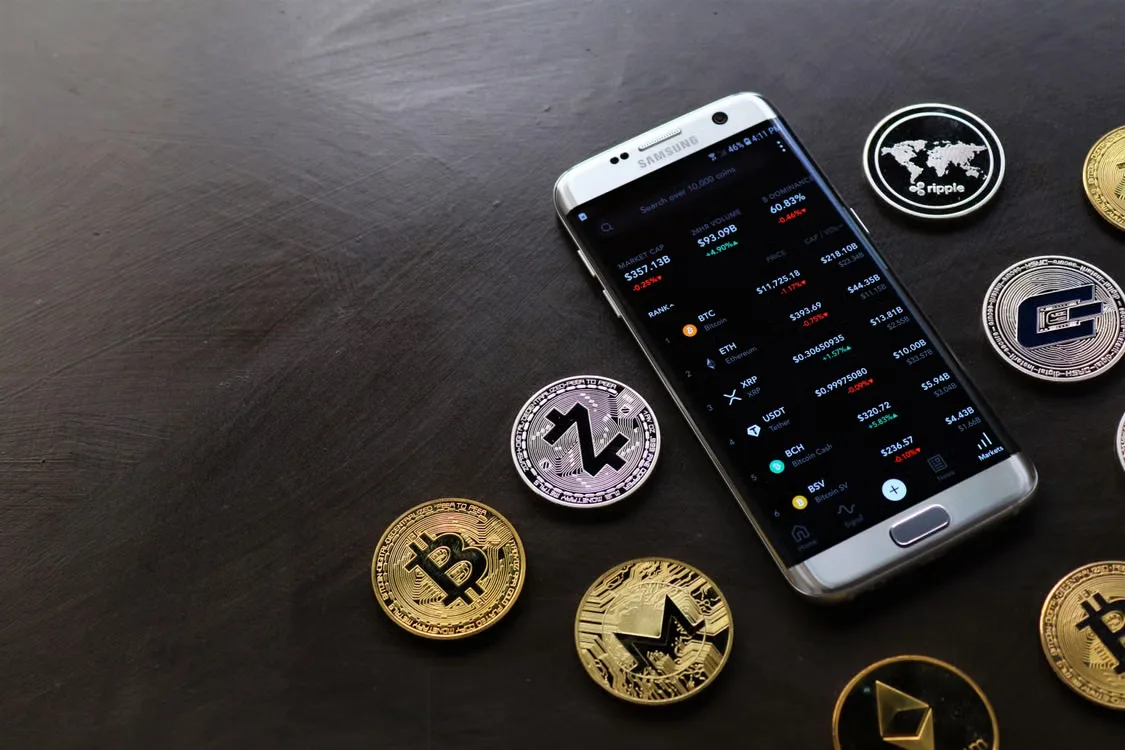
Alt-text: Close-up of Bitcoin coins on a financial report on a dark surface.
Image Caption: Central bank money can provide a settlement anchor for tokenized securities transactions conducted on digital infrastructure.
Central bank money occupies a distinct position in the monetary system. It provides the settlement asset used between commercial banks and serves as the monetary anchor for the broader financial system. Recent BIS research has examined how tokenized central bank reserves could operate alongside tokenized commercial bank money and tokenized assets on programmable platforms. The BIS describes this combination as part of a potential unified ledger architecture.
For tokenized securities, this creates an important possibility. The asset can exist on programmable infrastructure while the cash leg ultimately settles using central bank money. European central banking research is also examining this model. The Eurosystem has explored ways to connect distributed ledger technology platforms with existing payment infrastructure so tokenized transactions can settle in central bank money.
The significance is not that every tokenized transaction must use central bank money. Instead, it highlights the importance of settlement design. For organizations studying blockchain asset investment consulting, the distinction between the asset layer and the monetary settlement layer is an important part of understanding tokenization.
Commercial Bank Money and Tokenized Deposits
Commercial bank money represents another potential cash leg. Most economic activity already relies heavily on commercial bank deposits. Tokenization can create digital representations of these deposits that operate on programmable platforms.
The BIS has examined tokenized commercial bank money as part of a two-tier monetary architecture. In this model, commercial banks continue to provide money to users while central bank money supports settlement between institutions. Tokenized deposits can therefore connect familiar banking structures with programmable settlement infrastructure.
This distinction matters because tokenization does not necessarily mean replacing existing monetary arrangements. It can also mean creating new digital representations that interact with established systems. For people studying cryptocurrency investment solutions, this is an important conceptual difference. Tokenized securities settlement is not identical to cryptocurrency transactions. The underlying asset, settlement mechanism, legal structure, and participants can differ substantially.
Stablecoins as a Cash Leg
Stablecoins are another form of digital settlement asset. They are generally designed to maintain a stable value relative to a reference currency, often the US dollar. Their role in tokenized securities settlement is receiving increasing attention. In 2025, the Bank of England described stablecoins and tokenized deposits as potential forms of privately issued money that could support certain settlement applications, including experiments involving tokenized securities.
Stablecoins can operate directly on distributed ledgers. That creates a technical advantage for transactions where the security token and payment token exist within compatible digital environments. However, the term “stable” does not eliminate risk.
BIS research notes that stablecoins can trade away from their reference value. Their backing arrangements, redemption mechanisms, liquidity, governance, and legal structure can all affect their reliability as settlement instruments. This makes stablecoin investment consulting a subject that requires careful distinction between technological functionality and financial risk. A stablecoin may support a particular payment workflow without being equivalent to central bank money.
E-Money Tokens and Private Digital Money
E-money tokens represent another category of private digital money. Their precise structure depends on the relevant legal and regulatory framework. In broad terms, e-money arrangements are designed to represent claims denominated in a reference currency. Their role in tokenized settlement can therefore differ from both bank deposits and stablecoins.
The important consideration is the underlying claim. A token’s technical format does not by itself determine what the holder legally owns or what redemption rights exist. Settlement participants need to understand the issuer, backing arrangements, redemption process, transfer restrictions, and applicable legal framework.
This is also relevant to security in digital asset management. Digital infrastructure can automate transactions, but automation does not remove the need to understand the rights and obligations attached to the underlying asset.
Off-Chain Payments Still Have a Role
Not every tokenized transaction needs an on-chain cash leg. A tokenized security can exist on distributed ledger infrastructure while the corresponding payment moves through conventional banking or payment systems. This model can be useful when the asset platform and payment infrastructure are not directly interoperable. A transaction may involve an instruction on one system and a payment confirmation on another.
The trade-off is coordination. Separate systems may require additional messaging, reconciliation, timing controls, and operational processes. The BIS has highlighted how tokenization could combine messaging, reconciliation, and settlement into more integrated workflows.
That does not mean off-chain settlement disappears. Instead, tokenized markets may develop hybrid architectures in which on-chain assets interact with established payment infrastructure. For organizations evaluating digital asset portfolio management, understanding this hybrid model can help distinguish tokenization of an asset from tokenization of the entire settlement process.
Delivery Versus Payment
Delivery-versus-payment, commonly abbreviated DvP, is central to the cash-leg discussion. The basic principle is that delivery of the security should be linked to payment. Tokenized infrastructure can potentially encode the conditions governing both sides of that exchange. The BIS has specifically identified atomic settlement and DvP as potential applications of programmable financial infrastructure. Its 2026 research describes how programmable platforms could combine asset transfers and payment instructions while supporting legally final settlement.
Consider a simplified transaction. A buyer has the required payment asset. A seller has the tokenized security. The settlement system checks the conditions for the transaction. Once those conditions are satisfied, the security and payment can move according to the transaction’s programmed rules.
The example sounds simple. Real systems are not. They must account for identity, permissions, liquidity, transaction limits, technical failures, legal finality, and different operating hours across connected systems. These considerations form an important part of risk management in crypto investments, particularly when digital assets interact with broader financial infrastructure.
Interoperability Is the Hard Part
The cash leg becomes more complicated when the security and payment exist on different networks. Imagine a tokenized security on one distributed ledger and a payment token on another. A settlement mechanism must coordinate the two environments. That may require interoperability protocols, trusted connections, synchronized instructions, or links to conventional payment infrastructure.
The challenge is not merely moving data. Settlement requires confidence that the correct asset and payment have moved under the correct conditions. BIS research on tokenization emphasizes interoperability, governance, and risk management as important considerations for token arrangements. This is why blockchain and digital asset consulting often requires an understanding of infrastructure rather than simply the characteristics of individual tokens.
Liquidity and Settlement Asset Choice
The choice of cash leg also affects liquidity management. Central bank money provides a settlement anchor. Commercial bank money provides the familiar foundation of deposits and payments. Stablecoins can provide digitally native settlement on compatible networks. E-money arrangements can provide another form of private digital money.
Each model creates different operational dependencies. Participants must consider when funds become available, how redemption works, what happens during periods of stress, and whether the payment asset can interact with the security platform.
These questions also influence digital asset management because settlement design can affect how assets are transferred, recorded, reconciled, and controlled. A technically efficient transaction is not automatically a suitable transaction. The surrounding governance and operational framework remain important.

Why Settlement Design Matters for Digital Assets
Tokenization is often discussed through the lens of asset ownership. Yet settlement infrastructure may be just as important. A tokenized security can move quickly, but the payment leg still needs a credible mechanism. If the two systems cannot coordinate, the transaction may retain many of the operational dependencies that tokenization aims to address.
This makes digital asset investments inseparable from questions about infrastructure, custody, settlement, and operational controls. The same principle applies to crypto asset management. Managing digital assets requires more than tracking balances. It also involves understanding how assets move and what systems support those movements. For institutions exploring transparent investment solutions, settlement architecture can provide another layer of information about how a digital asset ecosystem operates.
The Emerging Settlement Architecture
There is no single cash-leg model that will necessarily dominate every tokenized market. Different applications can require different settlement arrangements. Wholesale transactions may prioritize central bank money. Certain private-market environments may use tokenized deposits. Stablecoins may support specific blockchain-based payment flows. Other transactions may continue to connect tokenized assets with off-chain payment systems.
The BIS’s 2026 work describes a potential unified ledger combining tokenized central bank reserves, tokenized commercial bank money, other regulated private money, and tokenized assets. The broader direction is clear: money and assets are increasingly being considered together when designing digital settlement infrastructure. For organizations researching digital asset strategy consulting, this shift raises practical questions about interoperability, settlement finality, liquidity, governance, and operational resilience.
What the Cash Leg Means for Market Participants
The cash leg is easy to overlook because attention naturally gravitates toward the tokenized security. Yet a complete transaction requires both sides. A tokenized security needs a payment mechanism. That mechanism can take several forms, including central bank money, commercial bank money, stablecoins, e-money tokens, or off-chain payment rails.
Each option carries different characteristics. The right question is therefore not simply whether a payment asset is digital. The more useful questions concern how it is issued, how it settles, how it interacts with the security, what rights it represents, and what happens when something goes wrong.
These questions are increasingly relevant to DeFi investment consulting and broader digital asset research because programmable finance can combine asset and payment functions in new ways. At the same time, technological integration does not eliminate market, legal, operational, or liquidity risk.
Tokenized securities settlement is developing around a simple idea: the asset and cash legs should coordinate more effectively.
Central bank money offers a public settlement anchor. Commercial bank money connects tokenized infrastructure with the existing banking system. Stablecoins provide a digitally native private settlement mechanism for certain use cases. E-money tokens represent another category of private digital money. Off-chain payments remain relevant where interoperability with existing systems is necessary.
The future may therefore be less about choosing one settlement asset and more about connecting different forms of money through reliable infrastructure. That makes decentralized finance advisory and related educational research increasingly focused on architecture, governance, and risk rather than technology alone. The central lesson is straightforward. Tokenization does not end with putting a security on a blockchain. The cash leg determines how value moves alongside that security. Understanding that relationship is essential to evaluating the practical development of tokenized markets.
Understanding Tokenized Settlement
Kenson Investments publishes educational material on digital assets, blockchain infrastructure, and emerging market structures. Explore our digital asset consultation resources to learn more about the concepts shaping this developing market.
You can also explore digital asset investments to continue your research, or contact Kenson Investments to learn more about available educational resources.
Disclaimer: The information provided on this page is for educational and informational purposes only and should not be construed as financial advice. Crypto currency assets involve inherent risks, and past performance is not indicative of future results. Always conduct thorough research and consult with a qualified financial advisor before making investment decisions.
“The crypto currency and digital asset space is an emerging asset class that has not yet been regulated by the SEC and US Federal Government. None of the information provided by Kenson LLC should be considered as financial investment advice. Please consult your Registered Financial Advisor for guidance. Kenson LLC does not offer any products regulated by the SEC including, equities, registered securities, ETFs, stocks, bonds, or equivalents”



