









Early participation in emerging digital asset markets is often framed as a financial risk. Headlines tend to focus on volatility, mispriced assets, and short-term market cycles. For institutions and serious market participants, however, the primary cost of early engagement has proven to be educational rather than financial.
Across custody, settlement, identity, and tokenization initiatives globally, the most durable value of early crypto adoption has been the accumulation of operational knowledge. The digital asset learning curve, how institutions understand systems, constraints, governance, and risk, has become a decisive factor in long-term capability building. In this context, early crypto adoption lessons resemble early internet infrastructure learning: imperfect, iterative, and foundational.
This guide examines why early participation primarily incurs learning costs, how those lessons compound into improved decision-making, and how structured education now underpins responsible crypto asset management.
Reframing “Early” in Digital Asset Markets
Being early in digital assets does not necessarily mean taking directional exposure or allocating capital aggressively. For most regulated entities, early participation has taken a different form:
- Running internal pilots
- Observing regulatory frameworks in real time
- Participating in controlled sandboxes
- Testing workflows without production-scale deployment
From central banks exploring wholesale settlement models to asset managers testing tokenized fund administration, early activity has largely focused on process discovery rather than financial positioning.
This distinction matters. Institutions that entered early without overextending financially gained visibility into:
- Where systems break under scale
- How compliance requirements surface operational friction
- Which assumptions from traditional markets no longer hold
These early crypto adoption lessons have proven transferable across jurisdictions and asset classes.
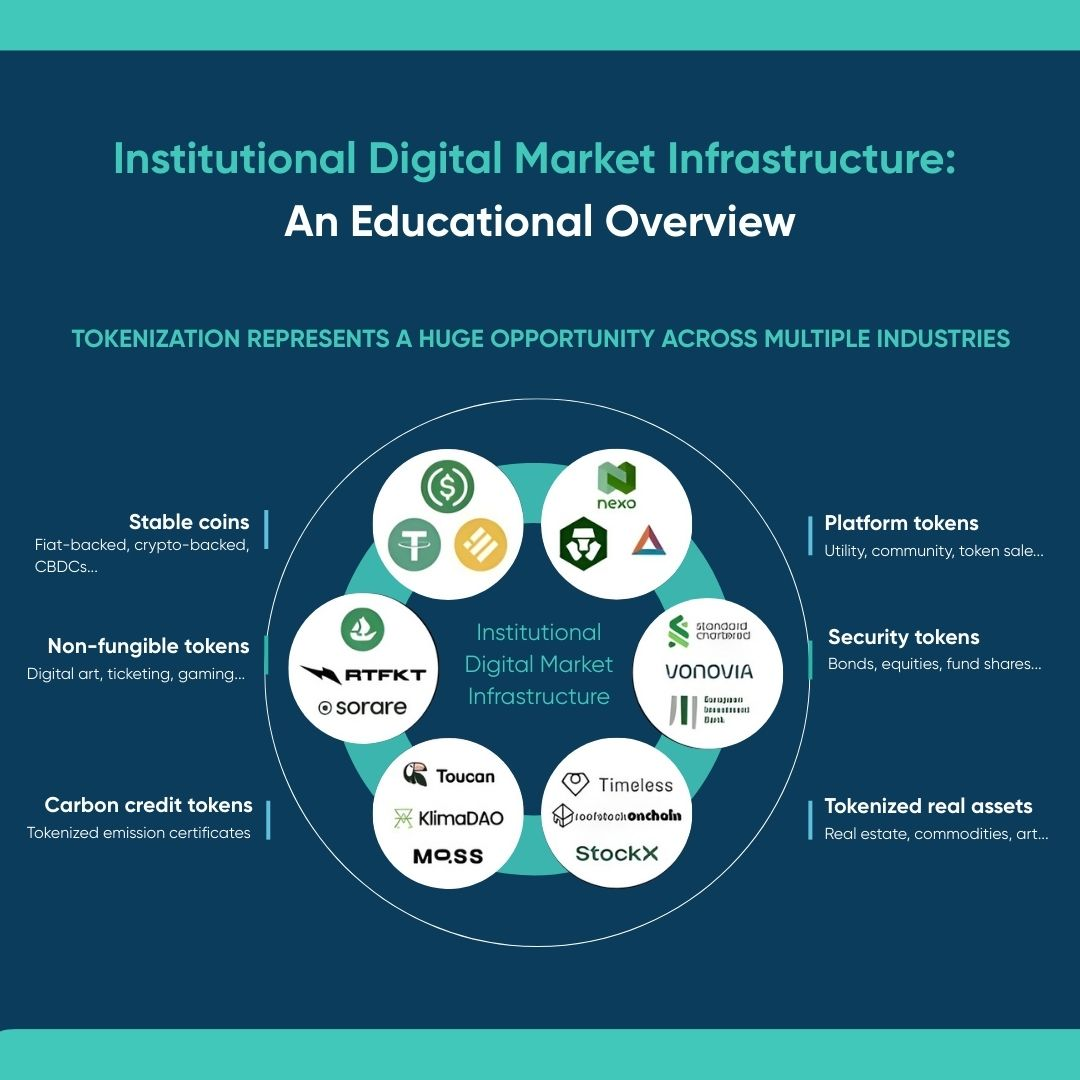
The Digital Asset Learning Curve Is Structural, Not Speculative
One of the most misunderstood aspects of digital assets is the learning curve itself. It is not primarily about price discovery or market timing. It is structural.
Institutions engaging with digital assets encounter new operational questions immediately:
- How are keys governed across teams and regions?
- What constitutes final settlement in a distributed environment?
- How do identity, permissioning, and complianceinteract at the transaction level?
- Where does legal ownership reside when assets move across ledgers?
These are not speculative questions. They are operational realities that must be understood before scale is possible.
The digital asset learning curve, therefore, resembles prior infrastructure shifts in financial markets, including:
- The move from paper-based to electronic settlement
- The introduction of real-time gross settlement systems
- The early adoption of straight-through processing
In each case, early participants absorbed educational costs, process redesign, staff training, and system integration, long before financial efficiency gains emerged.
Why Learning Costs Appear Before Financial Costs
Early participation often feels costly because it produces few immediate efficiencies. Systems are immature, standards are incomplete, and workflows are still forming. However, these costs are rarely financial losses. They are investments in understanding.
Educational costs typically show up as:
- Internal training time
- Legal and compliance interpretation efforts
- Technology integration experiments
- Governance and policy development
What they do not typically represent is capital loss tied to market exposure, particularly for institutions that deliberately separate learning from allocation.
This distinction is central to responsible cryptocurrency investment solutions. Education enables institutions to understand how markets function before deciding whether and how to participate financially.

Learning Compounds Faster Than Capital
One of the defining advantages of early engagement is that learning compounds.
An institution that understands custody models today can evaluate new tokenized instruments tomorrow without starting from zero. A team that has mapped settlement workflows once can assess new platforms faster and with greater precision.
Compounding educational advantages include:
- Faster internal decision cycles
- Reduced reliance on external interpretation
- Improved risk identification earlier in the process
This compounding effect mirrors traditional investment analysis and portfolio management, where understanding underlying mechanisms often matters more than short-term performance.
Institutions that delayed engagement entirely often face steeper learning curves later, when systems are already in production and operational tolerance for experimentation is lower.
Education as a Risk Management Function
Increasingly, regulators and supervisors recognize that insufficient understanding is itself a risk.
Across multiple jurisdictions, supervisory frameworks now emphasize:
- Board-level competence in digital asset topics
- Documented training for operational teams
- Clear accountability structures for technology decisions
This shift reframes education as a core component of crypto asset management, rather than an optional add-on.
Risk events in digital markets frequently trace back to misunderstandings rather than malfeasance. Examples include:
- Misconfigured access controls
- Inadequate segregation of operational roles
- Overreliance on assumptions imported from traditional systems
Early education reduces these risks by exposing gaps before they become embedded in production environments.
Separating Learning From Allocation
A recurring lesson from early adopters is the importance of separating learning initiatives from financial exposure.
Institutions that treated early engagement as an educational exercise rather than a capital deployment strategy were better positioned to:
- Pause initiatives without reputational damage
- Redesign governance frameworks iteratively
- Engage regulators transparently
This separation allows teams to focus on understanding system behavior rather than defending financial outcomes.
In practical terms, this often means:
- Running simulations rather than live allocations
- Using test networksor limited-scope pilots
- Treating early initiatives as operating research
This approach aligns with responsible cryptocurrency investment solutions by prioritizing literacy before participation.

Educational Gaps Are Now Competitive Gaps
As tokenization, programmable settlement, and digital custody move closer to mainstream financial infrastructure, educational gaps increasingly translate into competitive disadvantages.
Institutions with deeper digital asset literacy are better equipped to:
- Evaluate vendor claims critically
- Participate in industry working groups meaningfully
- Respond to regulatory consultations with substance
- Integrate new rails without operational shock
By contrast, organizations that deferred learning often struggle to catch up, even when capital resources are available.
This dynamic reinforces the idea that early crypto adoption lessons are less about timing markets and more about building institutional muscle memory.
Investment Analysis Without Literacy Is Incomplete
Traditional investment analysis and portfolio management frameworks assume familiarity with market mechanics. In digital assets, those mechanics are still evolving.
Without foundational literacy, even sophisticated analysis risks missing critical variables, including:
- Settlement finality assumptions
- Governance dependencies embedded in protocols
- Operational risk embedded in custody models
Education fills these gaps by contextualizing data within operational realities. This improves decision quality regardless of whether an institution ultimately increases, maintains, or avoids exposure.
In this sense, education is not a form of advocacy. It is infrastructure for informed choice.
From Individual Expertise to Institutional Knowledge
Early digital asset engagement often begins with individual champions. Over time, however, sustainable capability requires institutionalization.
Organizations that successfully navigated the digital asset learning curve invested in:
- Internal documentation and playbooks
- Cross-functional training programs
- Knowledge transfer beyond single teams
This transition, from individual expertise to institutional knowledge, marks the point at which learning costs begin to decline and strategic clarity improves.
It is also where crypto asset management becomes repeatable rather than experimental.
Why “Being Early” Still Matters in 2026
Some argue that the window for being early has passed. In reality, the market is early in different ways.
While certain asset classes are well known, the infrastructure supporting institutional participation, identity, settlement, governance, and compliance is still evolving. Learning remains unevenly distributed.
Being early today means:
- Understanding tokenized operational models before they are standardized
- Observing regulatory frameworks as they are formed, not after
- Participating in design conversations rather than reacting to outcomes
These are educational advantages, not speculative ones.
Education as Long-Term Optionality
The most overlooked benefit of early learning is optionality.
Institutions with strong digital asset literacy can choose when and how to engage. Those without it are often forced to react under time pressure.
Education preserves optionality by:
- Reducing uncertainty
- Improving internal alignment
- Enabling informed timing decisions
This is particularly relevant in environments where regulatory clarity emerges incrementally.

The Quiet Advantage of Learning First
The history of financial infrastructure suggests that those who learn first often lead later, even if they are not first to deploy capital.
Early engagement in digital assets has primarily required patience, curiosity, and structured education, not financial risk tolerance.
The cost of being early, when approached responsibly, is educational, and those lessons compound.
Moving Forward With Intent
As digital asset markets continue to mature, institutions face a choice: learn deliberately now, or compress learning under future operational pressure.
Education does not eliminate uncertainty, but it transforms it from an external threat into an internal capability. For organizations focused on long-term resilience, the learning curve itself is the investment.
At Kenson Investments, we focus on helping institutions and market participants navigate the digital asset market through structured research and education. Our work supports a deeper understanding of crypto asset management, operational frameworks, and evolving infrastructure, so decisions are informed by knowledge, not noise. Connect with us today!
Disclaimer: The information provided on this page is for educational and informational purposes only and should not be construed as financial advice. Cryptocurrency assets involve inherent risks, and past performance is not indicative of future results. Always conduct thorough research and consult with a qualified financial advisor before making investment decisions.
“The cryptocurrency and digital asset space is an emerging asset class that has not yet been regulated by the SEC and the US Federal Government. None of the information provided by Kenson LLC should be considered as financial investment advice. Please consult your Registered Financial Advisor for guidance. Kenson LLC does not offer any products regulated by the SEC, including equities, registered securities, ETFs, stocks, bonds, or equivalents.”