









Blockchain adoption in large organizations is not merely a matter of installing new technology. Despite the growing attention around distributed ledger systems, many institutions struggle with institutional blockchain adoption because the real barriers are organizational, not technical. Internal education gaps, cross-team coordination challenges, and cultural friction often slow adoption more than regulatory uncertainty or infrastructure limitations.
Internal Education Gaps Are Often Underestimated
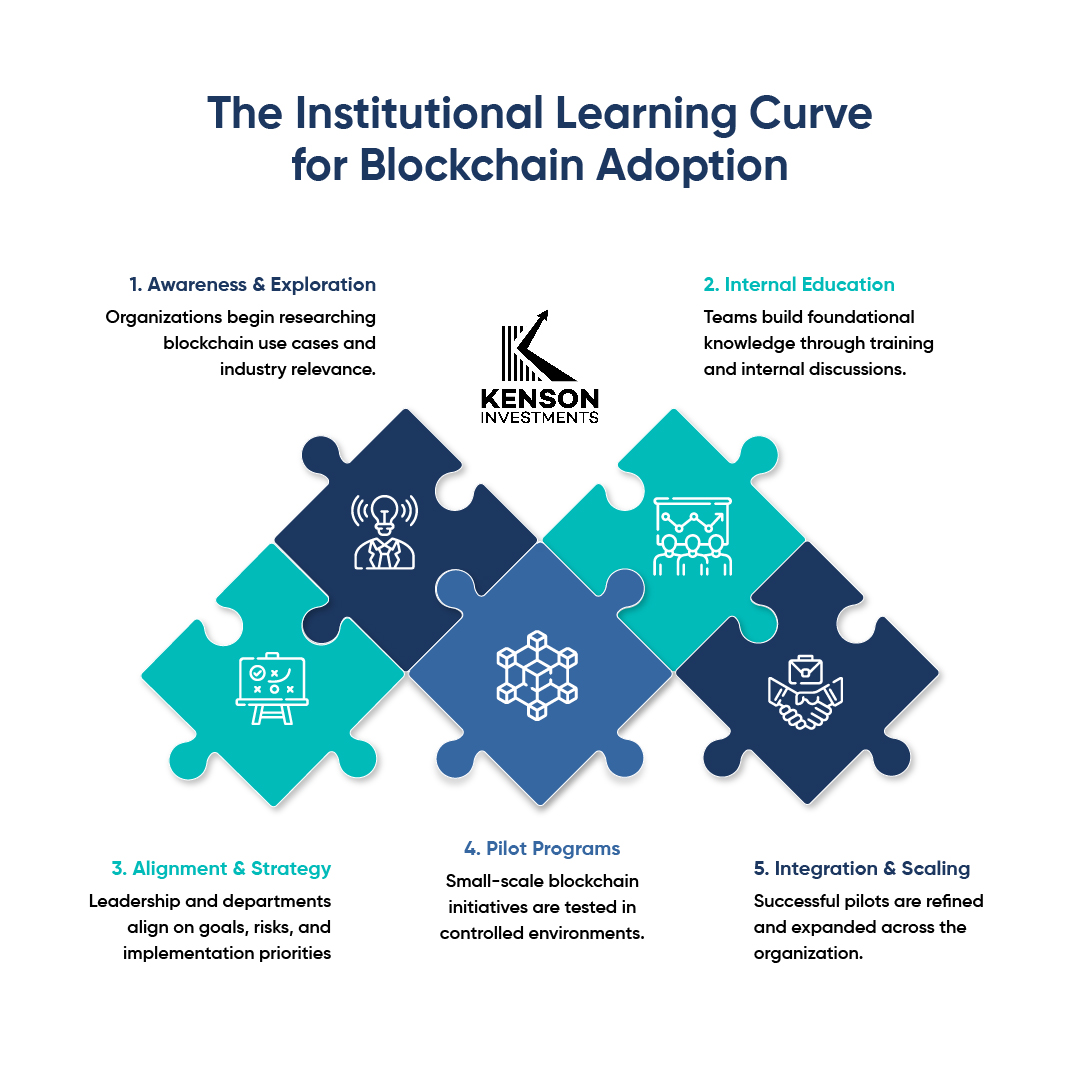
When institutions first explore blockchain, leadership tends to focus on potential operational efficiencies, cost savings, or market trends. While these technical possibilities are important, employees at all levels must understand the principles of distributed ledger systems and the specific applications relevant to their roles.
Organizations frequently encounter knowledge gaps in areas such as:
- How blockchain systems interact with existing IT infrastructure
- Differences between permissioned and public blockchain networks
- Security implications for managing digital assets
- Operational workflows for crypto asset derivatives
These gaps can stall digital asset organizational change. Teams may resist adoption because they feel ill-prepared or fear disrupting established processes. Investing in structured educational programs, internal workshops, and practical demonstrations is critical to reduce resistance and ensure informed participation.
Cross-Team Coordination Challenges
Blockchain adoption is inherently cross-functional. Unlike isolated software upgrades, distributed ledger systems impact multiple departments simultaneously:
- Operations must adjust settlement and reconciliation processes
- Risk teams need to understand digital asset volatility and exposure
- Compliance-like functions (internal policy teams) must establish reporting and monitoring workflows
- Finance and treasury departments must consider digital asset management in line with corporate governance
Without clear coordination, teams can work at cross-purposes. For instance, IT may develop a blockchain system without fully integrating feedback from operations, or finance may develop management protocols that clash with risk management guidelines. This misalignment is a core challenge for institutional blockchain adoption, often causing delays far longer than technical deployment itself.
Cultural Friction Slows Adoption
Even with technical understanding and coordination, organizational culture can inhibit adoption. Long-established hierarchies and siloed teams may resist new decision-making models enabled by blockchain. Distributed systems require transparency and collaboration that contrast with traditional centralized workflows.
Leaders must communicate clearly about:
- The purpose of blockchain integration
- Expected changes to decision-making processes
- Roles and responsibilities across teams
Promoting a culture of curiosity, experimentation, and continuous learning helps reduce friction and accelerates digital asset organizational change.
Strategic Use of Digital Asset Consulting
Many institutions engage digital asset consulting to navigate these internal hurdles. These services focus on educational guidance, organizational assessments, and implementation planning without offering financial advice. For example, digital asset strategy consulting may include:
- Assessing readiness for blockchain integration
- Mapping workflows affected by new systems
- Identifying internal knowledge gaps
- Creating tailored educational programs for cross-functional teams
Institutions often find that partnering with leading digital asset consulting experts accelerates adoption, reduces operational risk, and ensures internal alignment.
Risk Management Beyond Technology
Blockchain projects are often discussed in terms of technical risk, such as software vulnerabilities or network downtime. However, institutional blockchain adoption faces significant operational and strategic risks, including:
- Misaligned priorities across teams
- Insufficient training on blockchain workflows
- Misunderstanding the potential and limitations of crypto asset derivatives
Addressing these areas is as important as selecting the right technology vendor. Institutions focusing solely on infrastructure without organizational readiness may fail to realize the benefits of blockchain, even when the system functions correctly.

Measuring Success in Organizational Change
Success in blockchain adoption should be measured not only by technical deployment but by how effectively teams adapt. Metrics may include:
- Adoption rates among cross-functional teams
- Reduction in operational friction
- Efficiency improvements in asset management workflows
- Employee understanding of blockchain principles
Digital asset consulting for businesses often includes performance assessments that monitor these indicators and guide iterative improvements.
The Role of Emerging Market Insights
Emerging blockchain trends and innovations can accelerate adoption when integrated thoughtfully. Institutions that engage with blockchain and digital asset consulting stay informed about:
- Evolving distributed ledger protocols
- Market trends affecting digital assets
- Security standards and governance frameworks
Incorporating these insights into internal education and strategy enhances digital asset organizational change, ensuring that technology adoption is aligned with broader market developments.

Moving Forward
Institutions aiming to adopt blockchain successfully must prioritize internal alignment over technology hype. By focusing on education, cross-team coordination, and strategic guidance from customized digital asset consulting solutions, organizations can realize the potential of digital assets responsibly.
For companies seeking expert support, Kenson Investments offers digital asset consulting services for assessing organizational readiness. Digital asset investments guidance on emerging markets and asset management practices. Contact us to learn how our strategic digital asset consulting partners can support your institution
Disclaimer:
The information provided on this page is for educational and informational purposes only and should not be construed as financial advice. Crypto currency assets involve inherent risks, and past performance is not indicative of future results. Always conduct thorough research and consult with a qualified financial advisor before making investment decisions.
“The crypto currency and digital asset space is an emerging asset class that has not yet been regulated by the SEC and US Federal Government. None of the information provided by Kenson LLC should be considered as financial investment advice. Please consult your Registered Financial Advisor for guidance. Kenson LLC does not offer any products regulated by the SEC including, equities, registered securities, ETFs, stocks, bonds, or equivalents.”