
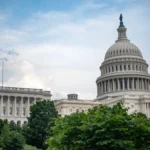








The U.S. crypto industry finds itself at a critical crossroads as Congress works to finalize sweeping market structure legislation in 2026. Sources familiar with discussions say that progress is stalled over two core issues: how to regulate stablecoin yields and how to address ethical concerns tied to former President Donald Trump’s crypto ventures.
The proposed legislation, if passed, would clarify regulatory authority between the U.S. Securities and Exchange Commission (SEC) and the Commodity Futures Trading Commission (CFTC), standardize disclosure requirements, and establish broader market rules for digital assets. While some stakeholders see these frameworks as essential for long-term stability, disagreements over key provisions have slowed momentum.
Estimates on the likelihood of passage vary widely within the industry, ranging from 25% to 60%. Ron Hammond, head of policy at Wintermute, described the odds as low, citing the complexity of reconciling interests across banks, crypto firms, and political stakeholders.
Stablecoin Rewards at the Heart of the Debate
One of the most contentious points is the treatment of stablecoin rewards. The GENIUS Act, passed last summer, currently restricts direct interest on stablecoin holdings but does allow third-party platforms like Coinbase to offer limited rewards. Banking groups argue that unrestricted yields could siphon deposits away from community banks, creating systemic risk, while crypto advocates maintain that yield allowances are crucial for innovation and competitiveness.
Negotiations between financial institutions and crypto firms have been ongoing, with multiple meetings held at the White House to reconcile differences. While banks have proposed stricter rules than those outlined in prior drafts, crypto stakeholders have pushed back, emphasizing the need to preserve the sector’s flexibility and competitive edge.
Kevin Wysocki, head of policy at Anchorage Digital, believes a compromise is possible. “If banks want a change, they need a bill. In some sense, banks need a market structure bill just as much as crypto does,” he said. Current industry projections suggest a 50% chance that the stablecoin provisions will be resolved in a manner acceptable to all parties.
Ethics and Political Considerations
Alongside policy disputes, the bill’s path is further complicated by ethics questions involving Trump’s involvement in crypto ventures. Reports indicate that the former president has earned approximately $1.4 billion from various cryptocurrency businesses, including a 20% stake in American Bitcoin mining operations. Democrats in the House Financial Services Committee have already questioned SEC leadership on oversight gaps connected to these ties.
The Senate Banking Committee is expected to play a pivotal role in determining whether ethical concerns will influence the bill’s content or timing. Chair Tim Scott has suggested that certain ethics issues might be referred to the broader Senate ethics committee, leaving procedural uncertainties in play. Meanwhile, the looming midterm elections add further complexity, with crypto-focused political action committees beginning to mobilize resources in anticipation of potential legislative outcomes.
Timeline and Next Steps
For now, the legislation’s fate largely depends on upcoming Senate Banking Committee proceedings. A previous markup session was abruptly postponed after Coinbase withdrew support for the draft bill. Observers expect new draft text to emerge before the committee reconvenes in March, setting the stage for renewed negotiations.
Democratic support remains uncertain, with no Democrats voting in favor of a prior Senate Agriculture Committee measure. Should the Senate approve a version of the bill, it would still need to pass the House, where competing versions exist. Lawmakers and industry groups alike acknowledge that bipartisan collaboration will be essential to deliver a coherent regulatory framework.
Implications for the Digital Asset Ecosystem

The stakes for the broader crypto and digital asset ecosystem are high. A stable, clearly defined market structure law would provide certainty for institutional and retail investors alike, while ensuring operational and compliance standards are met across exchanges, custodians, and stablecoin issuers.
At the same time, unresolved issues around stablecoin rewards could slow the growth of digital payments and decentralized finance applications that rely on flexible incentive structures. Similarly, ethical questions tied to high-profile figures in the industry highlight the need for transparency, governance, and trust in shaping sustainable crypto markets.
For companies navigating these shifts, understanding the trajectory of U.S. legislation is critical to risk management, treasury operations, and long-term participation in digital asset markets.
Staying Informed with Kenson Investments
At Kenson Investments, we monitor U.S. regulatory developments and their potential impacts on digital asset investments. We provide our clients with timely insights, guidance on market structure changes, and strategies to navigate evolving compliance requirements.
Explore our educational resources to understand how shifts in crypto legislation, stablecoin rules, and governance expectations could shape investment opportunities in 2026 and beyond. Staying informed allows you to position portfolios with confidence in a rapidly evolving environment.
Disclaimer: The information provided on this page is for educational and informational purposes only and should not be construed as financial advice. Cryptocurrency assets involve inherent risks, and past performance is not indicative of future results. Always conduct thorough research and consult with a qualified financial advisor before making investment decisions.
“The cryptocurrency and digital asset space is an emerging asset class that has not yet been regulated by the SEC and the US Federal Government. None of the information provided by Kenson LLC should be considered as financial investment advice. Please consult your Registered Financial Advisor for guidance. Kenson LLC does not offer any products regulated by the SEC, including equities, registered securities, ETFs, stocks, bonds, or equivalents.