









Digital asset markets are often described as decentralized. In practice, many systems rely on shared infrastructure. These dependencies shape how risk spreads across networks. They also influence how market participants evaluate exposure. At Kenson Investments, the focus is on understanding how infrastructure layers interact. This includes validators, oracle providers, liquidity venues, and custody pathways. Each layer introduces its own dependencies. When combined, they can create systemic patterns that are not always visible at the surface level.
Why Systemic Mapping Matters
Digital asset ecosystems do not operate in isolation. A single transaction may rely on multiple third-party systems. These include consensus validators, pricing oracles, and liquidity providers. When one component fails or becomes constrained, the effects can cascade. This is why risk management in crypto investments is increasingly focused on infrastructure. Price volatility is only one dimension. Operational dependencies can also affect access, settlement timing, and pricing accuracy. Market participants engaging in investing in cryptocurrencies often focus on assets themselves. However, infrastructure-level analysis provides additional context. It helps explain why certain disruptions occur and how they propagate across ecosystems.
Shared Infrastructure and Concentration Risk
Decentralization exists on a spectrum. Many networks depend on a relatively small number of validators. These validators are responsible for transaction validation and network security. When validator participation is concentrated, networks may become sensitive to coordination issues. This does not imply failure. It highlights how governance and participation influence resilience. From a digital asset portfolio management perspective, concentration risk is not limited to asset allocation. It also exists at the infrastructure level. Evaluating validator distribution can provide insight into how networks respond under stress conditions.

Oracle Dependencies and Data Integrity
Oracles play a critical role in digital asset ecosystems. They provide external data to blockchain environments. This includes pricing information, which is essential for many protocols. If multiple platforms rely on the same oracle provider, dependencies increase. A disruption in data feeds can affect multiple applications simultaneously. This introduces a shared point of exposure. Understanding oracle dependencies is a key component of blockchain and digital asset consulting. It allows for a more complete view of how pricing and execution interact across systems. Reliable data inputs are not guaranteed. Latency, outages, or manipulation risks can influence outcomes. For those exploring cryptocurrency investment strategies, recognizing these dependencies adds another layer of awareness.
Liquidity Venue Overlap
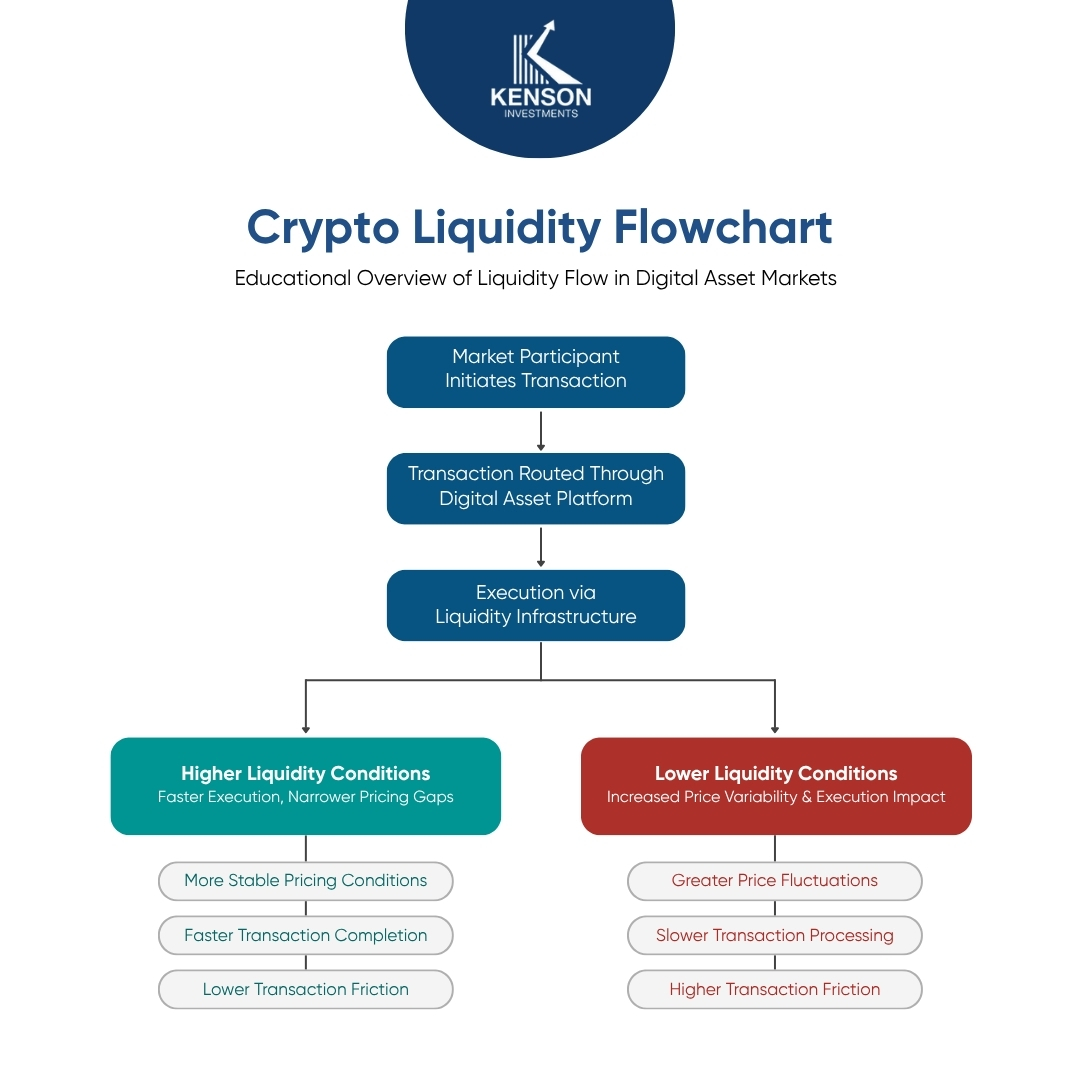
Liquidity in digital asset markets is often fragmented. However, many platforms source liquidity from overlapping venues. This creates interconnected pathways between exchanges and trading environments. When liquidity overlaps, stress in one venue can influence others. Reduced depth or execution delays may ripple across systems. This is particularly relevant during periods of heightened activity. Participants evaluating cryptocurrency investment solutions benefit from understanding where liquidity originates. It helps contextualize price movements and execution conditions.
Stablecoins and Settlement Layers
Stablecoins are often used as settlement instruments within digital ecosystems. They facilitate transfers and provide a reference unit for pricing. However, stablecoin usage also introduces dependencies. These include issuer reserves, redemption mechanisms, and network compatibility. When widely used, these factors become systemically relevant. The role of stablecoins for investment discussions extends beyond allocation. It includes understanding how settlement layers operate and where dependencies exist. This perspective supports broader digital asset management consulting efforts. It allows for a more complete view of how value moves across networks.
Infrastructure Overlap and Systemic Exposure
Many digital asset ecosystems share common infrastructure providers. This includes custodial services, node operators, and API providers. While this can improve efficiency, it also creates shared exposure. If a widely used provider experiences disruption, multiple systems may be affected. This is not unique to digital assets. However, the speed of blockchain-based systems can amplify the impact. Those involved in digital asset consulting for startups often assess infrastructure choices early. Selecting providers with diversified support can help reduce dependency concentration.

Evaluating Systemic Dependencies
Mapping dependencies requires a structured approach. It involves identifying key components and understanding how they interact. This process is central to digital asset consulting best practices. It moves beyond asset-level analysis to include infrastructure relationships. Some considerations include:
- Validator distribution and governance models
• Oracle provider diversity and reliability
• Liquidity sourcing and venue overlap
• Custody pathways and access points
These factors contribute to a broader understanding of navigating the digital asset market. They provide context for how systems behave under different conditions.
The Role of Data and Transparency
Transparency varies across digital asset ecosystems. Some networks provide detailed information on validator activity and transaction flows. Others may offer limited visibility.
Data availability influences how dependencies are assessed. It also affects how participants interpret system behavior. Engaging in investment analysis and portfolio management within digital assets requires adapting to these differences. It involves combining on-chain data with external insights.

Institutional Participation and Infrastructure Awareness
Institutional involvement in digital asset markets has increased in recent years. This has brought greater focus on infrastructure reliability and operational considerations. Organizations exploring blockchain asset consulting often prioritize system stability. They assess how infrastructure dependencies align with operational requirements. This shift has influenced innovative digital asset consulting solutions. The focus is no longer limited to asset selection. It includes understanding how systems function at a structural level.
Long-Term Considerations
Digital asset ecosystems continue to evolve. Infrastructure providers adapt. New networks emerge. Existing systems expand their capabilities. This dynamic environment requires ongoing evaluation. Dependencies that exist today may change over time. New forms of concentration may develop. For those considering long-term investment in digital assets, understanding systemic dependencies provides context. It supports a more informed perspective on how ecosystems develop.
Practical Takeaways
Systemic dependencies are not inherently negative. They are part of how complex systems function. The key is understanding where they exist and how they interact. Participants engaged in digital asset investments benefit from looking beyond surface-level metrics. Infrastructure analysis provides additional insight into system behavior. This approach aligns with broader trends in digital asset consulting services for businesses. Organizations are seeking deeper understanding rather than simple narratives.
Infrastructure Stress Scenarios and Market Behavior
Understanding how digital asset systems behave under stress is essential for building a complete picture of market structure. While normal conditions may suggest stability, periods of high volatility or network congestion often reveal underlying dependencies that are otherwise less visible. One common scenario involves sudden spikes in transaction activity. During these periods, networks can experience delays in confirmation times, increased transaction costs, or temporary throughput limitations. These effects are not isolated. They can influence connected systems, particularly those relying on shared validators or overlapping infrastructure providers.
Another important consideration is pricing dislocation. When data feeds from oracle providers lag or become inconsistent, pricing across platforms may temporarily diverge. This can affect execution conditions and create uncertainty around valuation. For those engaged in investment analysis and portfolio management, these moments highlight the importance of understanding how pricing inputs are sourced and distributed. Liquidity constraints can also emerge during stress events. Even when overall market activity increases, accessible liquidity may decrease if participants withdraw or reposition. This can impact execution timing and lead to wider spreads across venues. Evaluating these patterns is a key part of navigating the digital asset market with a more informed perspective.
These scenarios demonstrate that infrastructure dependencies are not theoretical. They become visible when systems are tested. By studying how networks respond under pressure, market participants can better understand operational risks and system behavior. Incorporating these observations into broader digital asset management consulting frameworks supports more comprehensive awareness. It encourages a shift from static evaluation toward dynamic understanding, where systems are assessed not only by design but also by how they perform in real-world conditions.
Understanding Digital Asset Market Structure
Kenson Investments focuses on providing educational insights into how digital asset ecosystems operate. This includes analyzing infrastructure dependencies and systemic patterns. Explore their approach to digital asset investments and learn how structured monitoring supports participation in evolving markets. For deeper insights, review their digital asset consultation resources designed to explain key concepts and operational considerations. To speak with a Digital Asset Specialist, visit the contact page and continue your learning journey.
Disclaimer
Disclaimer: The information provided on this page is for educational and informational purposes only and should not be construed as financial advice. Crypto currency assets involve inherent risks, and past performance is not indicative of future results. Always conduct thorough research and consult with a qualified financial advisor before making investment decisions.
“The crypto currency and digital asset space is an emerging asset class that has not yet been regulated by the SEC and US Federal Government. None of the information provided by Kenson LLC should be considered as financial investment advice. Please consult your Registered Financial Advisor for guidance. Kenson LLC does not offer any products regulated by the SEC including, equities, registered securities, ETFs, stocks, bonds, or equivalents”