








The transition from experimental blockchain networks to globally relevant financial infrastructure has introduced a new kind of risk, one that does not always appear in price charts. For allocators, the challenge is no longer access. It is discernment. As digital asset investments expand across custody, settlement, and liquidity layers, capital exposure increasingly depends on how infrastructure behaves under stress, not how it performs in stable conditions.

Institutional discipline begins with rejecting surface-level signals. High throughput, rapid adoption, or ecosystem growth rarely translate into resilience. In many cases, these attributes mask structural fragility. For investors engaged in investing in the digital age, the core question shifts from “what can this system do?” to “what happens when it fails?”
That distinction defines how experienced participants approach blockchain-based investment opportunities. It also explains why risk management in crypto investments has moved beyond volatility models toward deeper evaluation of governance, operational continuity, and infrastructure maturity.
Governance Frameworks: Where Risk Actually Lives
Governance remains one of the least understood drivers of capital risk in digital systems. Unlike traditional finance, where authority is explicit, blockchain governance often operates through distributed consensus, token-weighted voting, or developer-led upgrades. Each model introduces different forms of control risk.
In 2025, over 65 percent of major protocol incidents were linked to governance failures or decision bottlenecks rather than external attacks. This includes delayed patch deployments, disputed upgrades, and validator misalignment across networks.
For allocators relying on digital asset management consulting services, governance assessment has become a first-order requirement. This involves:
- Evaluating who can change protocol rules and how quickly
- Understanding incentive alignment between developers, validators, and token holders
- Monitoring governance participation rates, which in many protocols remain below 15 percent
Weak governance creates hidden asymmetry. Decision-making slows precisely when speed is required, particularly during liquidity shocks or exploit events. That dynamic directly impacts capital recovery timelines.
From a portfolio construction standpoint, consulting on digital asset management increasingly includes governance scoring models. These models aim to quantify decision latency, upgrade coordination, and stakeholder alignment across networks.
Operational Reliability: The Cost of Always-On Markets
Digital asset infrastructure operates continuously. Markets do not close. Settlement does not pause. This introduces operational stress conditions that traditional systems rarely encounter.
Between 2024 and 2026, major blockchain networks experienced more than 30 high-profile outages or performance degradations. These events ranged from validator failures to congestion spikes that pushed transaction fees above $100 in peak periods.
Operational reliability is no longer a technical concern. It is a capital protection issue.
Institutional frameworks evaluating digital asset portfolio management must account for:
- Network uptime consistency across cycles
- Transaction finality delays during congestion
- Dependency on third-party infrastructure providers
The collapse of several centralized service providers in prior cycles demonstrated how layered dependencies can amplify risk. Exchanges, custodians, and liquidity venues often rely on overlapping infrastructure. When one fails, the effects cascade.
For investors working with a global digital asset consulting firm, operational mapping now includes stress-testing infrastructure across scenarios such as liquidity surges, validator concentration shifts, and cross-chain bridge failures.
This is where security in digital asset management becomes measurable. Not through claims, but through system behavior under pressure.
Infrastructure Maturity: Separating Access from Durability
Emerging financial infrastructure tends to prioritize growth. Mature infrastructure prioritizes continuity. The distinction is critical.
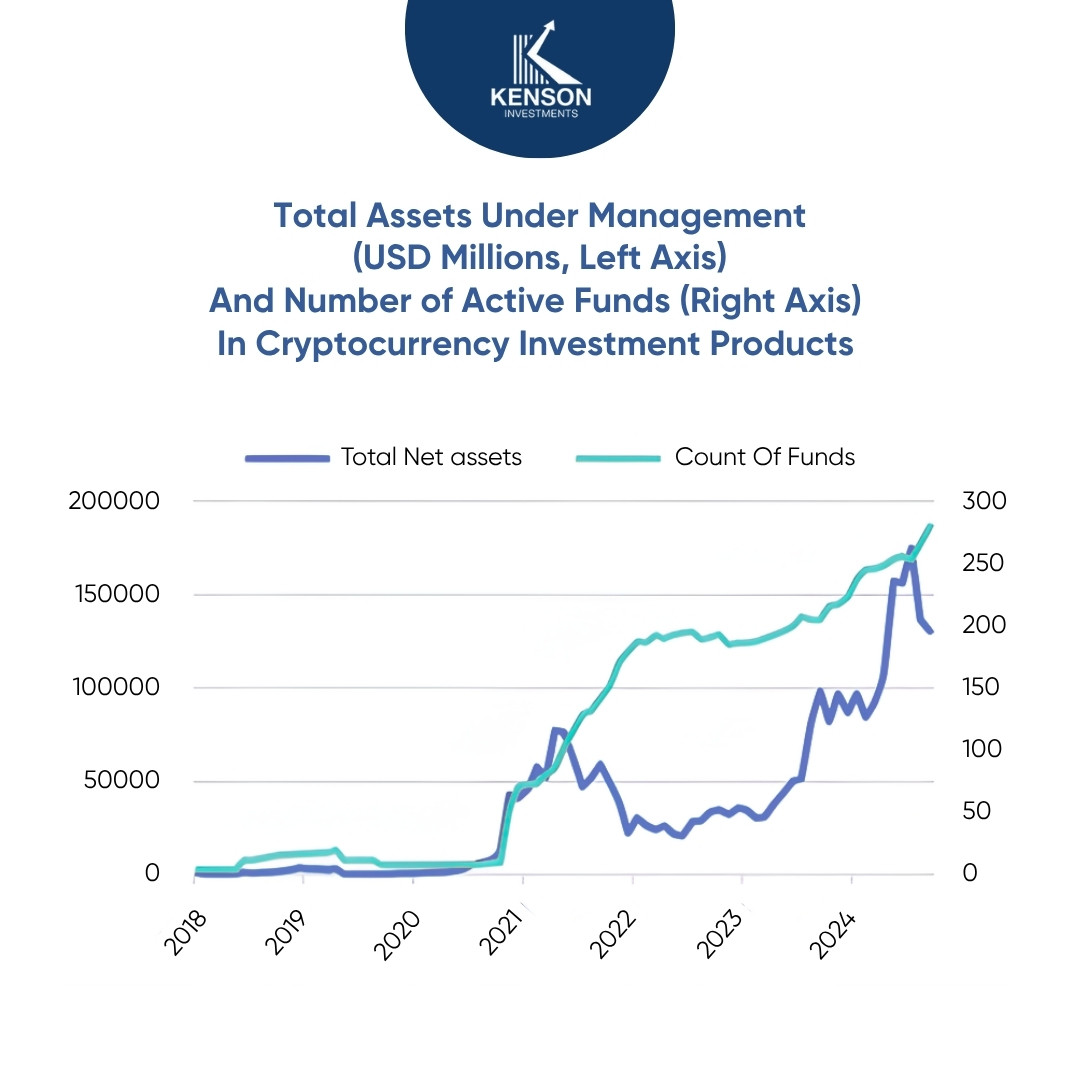
By 2026, total value locked in decentralized finance exceeded $150 billion, yet a significant portion remains concentrated in protocols less than three years old. This creates maturity mismatch risk. Capital enters faster than systems prove resilience.
For allocators, evaluating blockchain and digital asset consulting frameworks requires moving beyond adoption metrics. Key indicators of maturity include:
- Historical performance across multiple volatility cycles
- Audit frequency and depth, including independent verification
- Ecosystem concentration risk, particularly in validator distribution
Infrastructure maturity also determines how systems respond to external shocks. Stablecoin depegging events, for example, have repeatedly exposed fragility in collateral structures. Even widely used assets categorized under stablecoins for investment have shown sensitivity to liquidity imbalances and redemption pressure.
The discipline lies in recognizing that scale does not equal stability. Many systems scale rapidly without corresponding improvements in governance or operational robustness.
Data Integrity and Market Visibility Constraints
Institutional participation depends on reliable data. In digital asset markets, data fragmentation remains a persistent issue.
Unlike centralized markets, on-chain and off-chain activity often diverge. This creates blind spots in price discovery, liquidity tracking, and risk modeling. Estimates suggest that over 40 percent of trading volume in certain segments originates from venues with limited transparency.
For firms engaged in investment analysis and portfolio management, this creates a challenge. Decisions rely on incomplete information, particularly in smaller asset classes or emerging sectors such as altcoin investment options.
The distinction between altcoins vs. major cryptocurrencies becomes relevant here. Larger networks tend to offer better data visibility, stronger liquidity, and more reliable settlement behavior. Smaller networks may present growth narratives but often lack the infrastructure required for institutional-scale allocation.
Addressing this requires integrating multiple data layers:
- On-chain metrics such as active addresses and transaction volume
- Off-chain liquidity indicators across centralized venues
- Derivatives market signals reflecting forward positioning
These layers form the foundation of digital asset investment solutions designed for capital preservation rather than speculative exposure.
DeFi Infrastructure: Innovation Meets Structural Risk
Decentralized finance continues to evolve as a parallel financial system. By 2026, lending protocols, automated market makers, and derivatives platforms have introduced new forms of capital efficiency.
However, this innovation comes with layered risk.
For investors navigating DeFi finance assets with consultants, the key considerations include:
- Smart contract vulnerability exposure
- Liquidity fragmentation across chains
- Collateral volatility impacting loan stability
Despite rapid growth, DeFi protocols still face recurring exploit risks. Annual losses from smart contract vulnerabilities have averaged between $1.5 billion and $2 billion over the past three years.
This has elevated the importance of DeFi finance consulting services frameworks. These frameworks emphasize:
- Code audit validation and frequency
- Governance upgrade processes
- Cross-protocol dependency mapping
For capital allocators, participation in DeFi is less about yield generation and more about understanding infrastructure exposure.
How Kenson Approaches This
Institutional discipline is not a positioning statement. It is a process that prioritizes capital durability over participation speed.
Within Kenson’s framework, infrastructure evaluation begins with governance clarity. Systems must demonstrate consistent decision-making pathways under stress, not just during expansion phases. This reduces the risk of delayed responses in critical events.
Operational reliability is treated as a measurable variable. Historical uptime, transaction throughput stability, and dependency mapping form the basis of infrastructure scoring. Systems that fail under load are excluded from consideration, regardless of adoption metrics.
Infrastructure maturity is assessed through cycle exposure. Networks that have not operated across multiple volatility environments remain unproven. Capital is allocated only where resilience has been demonstrated, not projected.
Data integrity is approached through multi-layer validation. On-chain metrics, liquidity data, and derivatives signals are cross-referenced to reduce blind spots. This supports more informed positioning within digital asset management services.
This discipline aligns with the broader objective of long-term investment in digital assets, where consistency matters more than short-term opportunity capture.
Institutional Positioning in an Evolving Landscape
The evolution of digital financial infrastructure is accelerating. Tokenization, cross-chain interoperability, and programmable settlement layers are reshaping how capital moves.
At the same time, the gap between innovation and reliability remains significant.
For allocators working with strategic digital asset consulting partners, the objective is not to capture every emerging opportunity. It is to identify which systems can sustain capital exposure over time.
This involves continuous reassessment of:
- Governance evolution within major protocols
- Infrastructure upgrades impacting transaction efficiency
- Regulatory developments shaping access and compliance
It also requires recognizing that innovative solutions in digital asset consulting must adapt to changing market conditions. Static frameworks become obsolete quickly in a rapidly evolving environment.
A Measured Approach to Participation
Participation in digital asset markets does not require constant allocation. In many cases, restraint is a form of discipline.
Institutional capital tends to move after infrastructure proves reliability, not before. This lag is often misinterpreted as missed opportunity. In reality, it reflects a focus on downside protection.
For investors exploring digital asset advisory services, the key is aligning participation with infrastructure readiness. This reduces exposure to systemic weaknesses that remain unresolved.
The narrative around investing in cryptocurrencies continues to emphasize growth potential. Institutional discipline reframes the discussion toward survivability.
Build Clarity Before Capital Moves
Emerging financial infrastructure rewards preparation more than speed. Governance clarity, operational reliability, and system maturity define how capital performs when conditions change.
Kenson Investments focuses on structured evaluation, helping investors understand how digital systems behave under pressure, not just how they grow. Learn how disciplined research supports more informed positioning through comprehensive digital asset consulting services designed around transparency, consistency, and capital protection. Work with us.
Disclaimer: The information provided on this page is for educational and informational purposes only and should not be construed as financial advice. Crypto currency assets involve inherent risks, and past performance is not indicative of future results. Always conduct thorough research and consult with a qualified financial advisor before making investment decisions.
“The crypto currency and digital asset space is an emerging asset class that has not yet been regulated by the SEC and US Federal Government. None of the information provided by Kenson LLC should be considered as financial investment advice. Please consult your Registered Financial Advisor for guidance. Kenson LLC does not offer any products regulated by the SEC including, equities, registered securities, ETFs, stocks, bonds, or equivalents”