








Liquidity has always been constrained by friction. Settlement cycles, jurisdictional barriers, custodial fragmentation, and counterparty dependencies define how capital moves in traditional finance. Tokenization is altering that structure.

For investors allocating to digital asset investments, the shift is not about faster transactions alone. It is about redefining how collateral behaves across systems. Assets that were once static now move dynamically across venues, protocols, and balance sheets. This has implications for liquidity planning, exposure visibility, and capital preservation.
As blockchain-based investment opportunities expand into institutional workflows, collateral is no longer tied to a single custodian or clearing system. It becomes programmable, portable, and continuously observable. That changes both opportunity and risk.
From Static Collateral to Programmable Liquidity
Traditional collateral systems operate within tightly controlled frameworks. Assets are pledged, locked, and released based on predefined agreements. Movement is slow, often dependent on intermediaries, and visibility is fragmented.
Tokenization introduces a different model. Collateral exists as a digital representation on-chain, where ownership, transfer conditions, and usage rights are embedded in code. This allows assets to be mobilized across platforms without requiring manual reconciliation.
By 2026, tokenized real-world assets have surpassed $20 billion in on-chain value, with projections from major financial institutions suggesting growth toward $1 trillion within the decade. This expansion reflects growing demand for flexible collateral structures.
For firms engaged in consulting on digital asset management, this shift requires a reassessment of liquidity assumptions. Capital that can move instantly introduces both efficiency gains and coordination risk.
Collateral Mobility and Liquidity Efficiency
The most immediate impact of tokenization is efficiency. Assets can be reused across multiple transactions without full settlement cycles. This improves capital utilization.
In traditional markets, collateral reuse is limited by operational constraints. In tokenized systems, the same asset can support multiple positions through programmable logic. This concept, often referred to as collateral velocity, increases liquidity without increasing underlying capital.
However, higher velocity also compresses risk timelines.
For allocators working with a digital asset management consultant, the focus shifts to understanding how quickly exposure can change. Faster collateral movement means faster margin calls, faster liquidations, and less time to respond.
This is particularly relevant in decentralized finance environments. Investors navigating DeFi finance assets with consultants often encounter automated liquidation mechanisms triggered by real-time price feeds. These systems remove human discretion from risk management.
Efficiency improves. Reaction time decreases.
Transparency Gains and Exposure Visibility
Tokenized collateral provides a level of transparency that traditional systems cannot match. On-chain records allow continuous tracking of asset movement, ownership, and encumbrance.
For institutions focused on investment analysis and portfolio management, this visibility offers significant advantages:
- Real-time monitoring of collateral allocation
- Immediate identification of concentration risk
- Reduced reliance on delayed reporting
This transparency is particularly valuable in environments where collateral is reused across multiple venues. In legacy systems, tracking such reuse is complex and often incomplete. Tokenization creates a unified audit trail.
Yet transparency introduces new expectations. Investors must actively interpret data rather than rely on periodic disclosures.
For those engaged in digital asset advisory services, the ability to process and contextualize on-chain data becomes a core competency. Visibility without interpretation does not reduce risk.
Cross-Venue Collateral Movement and Fragmentation Risk
One of the defining features of tokenized collateral is its ability to move across venues. Assets can shift between centralized exchanges, custodial platforms, and decentralized protocols with minimal friction.
This cross-venue mobility expands liquidity access. It also introduces fragmentation risk.
Liquidity is no longer concentrated in a single system. It is distributed across multiple networks, each with its own rules, security assumptions, and governance structures.
For a global digital asset consulting firm, mapping these interconnections is critical. A disruption in one venue can affect collateral availability in another. The failure of a bridge, for example, can isolate assets and disrupt liquidity planning.
This interconnectedness has been observed in multiple market events between 2022 and 2025, where cross-chain vulnerabilities led to temporary liquidity dislocations exceeding $500 million in affected assets.
Collateral mobility amplifies both access and dependency.
Stablecoins and Collateral Standardization
Stablecoins play a central role in tokenized collateral systems. They provide a unit of account that enables consistent valuation across platforms.
By 2026, stablecoin market capitalization has exceeded $180 billion, with daily settlement volumes often surpassing traditional payment networks. Their role in collateral management continues to expand.
For investors considering stablecoins for investment, the key consideration is not yield. It is stability under stress. Depegging events have demonstrated that not all stablecoins maintain reliability during liquidity shocks.
Institutional frameworks evaluating digital asset investment solutions increasingly differentiate between collateral-grade stablecoins and transactional liquidity instruments. This distinction affects how assets are deployed within portfolios.
Risk Compression and Liquidation Dynamics
Programmable collateral introduces automation. Smart contracts enforce margin requirements and trigger liquidations without delay.
This removes operational uncertainty. It also compresses risk timelines.
In traditional systems, margin calls provide a buffer. Participants have time to respond. In tokenized environments, liquidation thresholds are enforced instantly based on price oracle inputs.
For firms focused on risk management in crypto investments, this requires continuous monitoring rather than periodic review. Exposure can shift within minutes.
The implications extend to portfolio construction. Assets with higher volatility profiles require greater collateral buffers to avoid forced liquidation. This affects allocation decisions across altcoins vs. major cryptocurrencies.
Major assets tend to offer deeper liquidity and more stable collateral behavior. Smaller assets may introduce additional volatility risk.
Institutional Adoption and Structural Change
Tokenization is not limited to crypto-native assets. Traditional financial instruments are increasingly being tokenized to improve collateral mobility.
Major banks and asset managers have initiated tokenization pilots involving bonds, funds, and structured products. These initiatives aim to reduce settlement times, improve transparency, and enhance liquidity management.
For investors working with digital asset consulting services for businesses, this convergence creates new opportunities and complexities. Traditional and digital systems begin to overlap, requiring integrated evaluation frameworks.
The rise of blockchain and digital asset consulting reflects this need. Institutions require structured approaches to assess how tokenized collateral interacts with existing portfolios.
How Kenson Approaches This
Collateral mobility is not treated as a feature. It is treated as a structural variable affecting capital stability.
Within Kenson’s framework, tokenized collateral is evaluated across three dimensions: governance, operational reliability, and liquidity behavior under stress.
Governance determines how collateral rules can change. Systems with unclear upgrade mechanisms introduce uncertainty. Only networks with consistent governance structures are considered.
Operational reliability is assessed through historical performance. Networks that experience frequent congestion or outages are excluded from collateral planning frameworks. Reliability is prioritized over speed.
Liquidity behavior is tested across volatility scenarios. This includes evaluating how quickly collateral can be mobilized, how liquidation mechanisms respond, and how stable valuation remains under pressure.
This approach aligns with the broader objective of long-term investment in digital assets, where capital preservation takes precedence over short-term efficiency gains.
DeFi, Collateral Reuse, and Systemic Considerations
Decentralized finance has accelerated the concept of collateral reuse. Assets can be deposited, borrowed against, and redeployed across protocols in layered structures.
This creates capital efficiency. It also introduces systemic complexity.
For those engaged in consultancy for DeFi finance investments, understanding these layers is essential. Collateral chains can become opaque, even in transparent systems, due to the speed and scale of interactions.
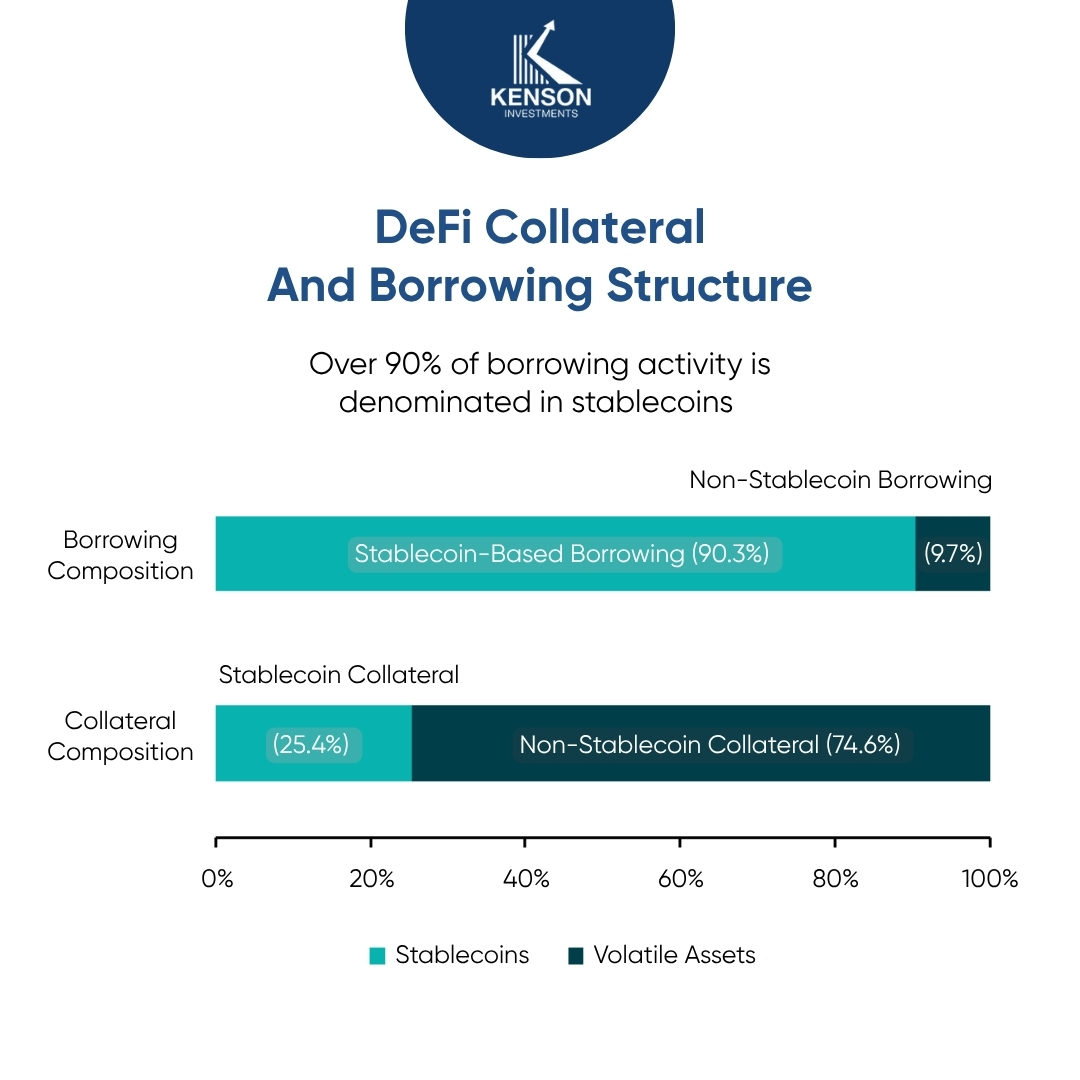
The concept of rehypothecation, familiar in traditional finance, takes on new dimensions in DeFi. Automated systems enable continuous reuse without centralized oversight.
This has led to situations where liquidity appears abundant until stress reveals underlying dependencies.
Investors relying on decentralized finance advisory frameworks must account for these dynamics when assessing exposure.
Liquidity Planning in a Tokenized Environment
Liquidity planning in tokenized systems differs fundamentally from traditional models.
Instead of focusing solely on asset allocation, planners must consider:
- Collateral mobility across venues
- Real-time valuation changes
- Automated liquidation thresholds
- Cross-chain dependencies
For firms offering finance asset management consulting, this requires integrating technology-driven monitoring systems with portfolio strategy.
Liquidity is no longer static. It is continuously evolving.
Strategic Implications for Allocators
Tokenized collateral changes how capital is deployed, monitored, and protected.
For allocators evaluating digital asset management services, the implications include:
- Greater flexibility in capital deployment
- Increased need for real-time risk oversight
- Enhanced transparency with higher analytical requirements
The ability to move collateral efficiently does not eliminate risk. It redistributes it.
Disciplined investors prioritize systems that demonstrate resilience, not just efficiency. This is particularly relevant when investing in cryptocurrencies within institutional frameworks.
Understand How Collateral Behavior Impacts Capital Stability
Tokenized collateral is redefining liquidity. Speed and transparency improve capital efficiency, but they also introduce new layers of risk that require disciplined evaluation.
Kenson Investments focuses on helping investors understand how collateral moves, behaves, and responds under stress across evolving financial systems.
Be informed on how structured analysis supports more informed decisions through comprehensive digital asset consulting services built around clarity, consistency, and capital protection. Contact us today.
Disclaimer: The information provided on this page is for educational and informational purposes only and should not be construed as financial advice. Crypto currency assets involve inherent risks, and past performance is not indicative of future results. Always conduct thorough research and consult with a qualified financial advisor before making investment decisions.
“The crypto currency and digital asset space is an emerging asset class that has not yet been regulated by the SEC and US Federal Government. None of the information provided by Kenson LLC should be considered as financial investment advice. Please consult your Registered Financial Advisor for guidance. Kenson LLC does not offer any products regulated by the SEC including, equities, registered securities, ETFs, stocks, bonds, or equivalents”