








Collateral is not a supporting feature in financial systems. It is the foundation that determines whether markets remain stable under pressure or unravel when liquidity tightens. In digital asset markets, this role is amplified.

For investors allocating capital into digital asset investments, collateral is no longer confined to static reserves or isolated margin accounts. It operates dynamically across exchanges, custodians, and decentralized protocols. This mobility introduces efficiency, but it also introduces complexity.
Understanding how collateral frameworks function is central to risk management in crypto investments. Margin requirements, asset eligibility rules, and valuation mechanisms now operate in environments where price discovery is continuous and liquidation triggers are automated. For allocators, the implications are structural, not tactical.
Collateral as a Stability Mechanism
In traditional finance, collateral mitigates counterparty risk. It ensures obligations can be met even if one party defaults. In digital financial systems, this function remains, but the execution changes.
Digital markets operate 24 hours a day, with fewer intermediaries and faster settlement cycles. As a result, collateral must be continuously sufficient, not periodically verified. This shifts the burden from operational processes to system design.
By 2026, over 60 percent of digital asset trading volume involves some form of collateralization, particularly in derivatives and lending markets. This includes centralized exchanges as well as decentralized platforms.
For firms engaged in digital asset management consulting services, evaluating collateral frameworks requires understanding how systems behave during volatility spikes. Stability is not measured during normal conditions. It is measured during stress.
Margin Requirements and Liquidation Mechanics
Margin requirements define how much collateral is needed to support a position. In digital markets, these requirements are enforced programmatically, often through smart contracts or automated exchange systems.
Unlike traditional markets, where margin calls allow time for adjustment, digital systems frequently enforce immediate liquidation once thresholds are breached. This reduces counterparty risk but compresses response time.
In periods of high volatility, liquidation cascades can amplify price movements. During the March 2020 and subsequent 2022 market events, billions of dollars in positions were liquidated within hours due to insufficient collateral buffers.
For investors working with a digital asset portfolio management framework, this dynamic requires conservative margin assumptions. Assets must be evaluated not just for return potential, but for their ability to maintain collateral value under stress.
This is where distinctions such as altcoins vs. major cryptocurrencies become relevant. Major assets tend to retain liquidity and collateral acceptance during downturns, while smaller assets may experience rapid devaluation, triggering forced liquidations.
Collateral Eligibility: What Qualifies and Why It Matters
Not all assets qualify as collateral. Eligibility rules determine which assets can be used to secure positions and how they are valued.
In digital systems, eligibility is influenced by:
- Liquidity depth
- Price volatility
- Market acceptance
- Correlation with other assets
For example, while stablecoins for investment are widely used as collateral due to price stability, they are not risk-free. Depegging events have demonstrated that even stable assets can fail under extreme conditions.
Eligibility rules vary across platforms. Centralized exchanges may accept a broader range of assets with higher haircuts, while decentralized protocols often rely on stricter criteria enforced by governance mechanisms.
For institutions relying on consulting on digital asset management, understanding these differences is essential. Collateral accepted in one system may not be transferable or recognized in another, creating fragmentation risk.
Valuation, Haircuts, and Risk Buffering
Collateral value is not static. It is subject to market pricing, which can change rapidly. To account for this, systems apply haircuts, reductions in collateral value used for margin calculations.
Haircuts are designed to absorb volatility. More volatile assets receive larger haircuts, reducing their effective collateral value.
For allocators working with a portfolio management consultant, haircut structures are a critical component of risk modeling. They determine how much leverage can be applied and how quickly positions may become undercollateralized.
In digital markets, where price movements of 10 to 20 percent within a day are not uncommon, haircut calibration must be conservative. Overly aggressive assumptions increase the risk of liquidation during normal market fluctuations.
This reinforces the importance of security in digital asset management, where capital protection depends on realistic valuation models rather than optimistic projections.
Collateral in Decentralized Finance
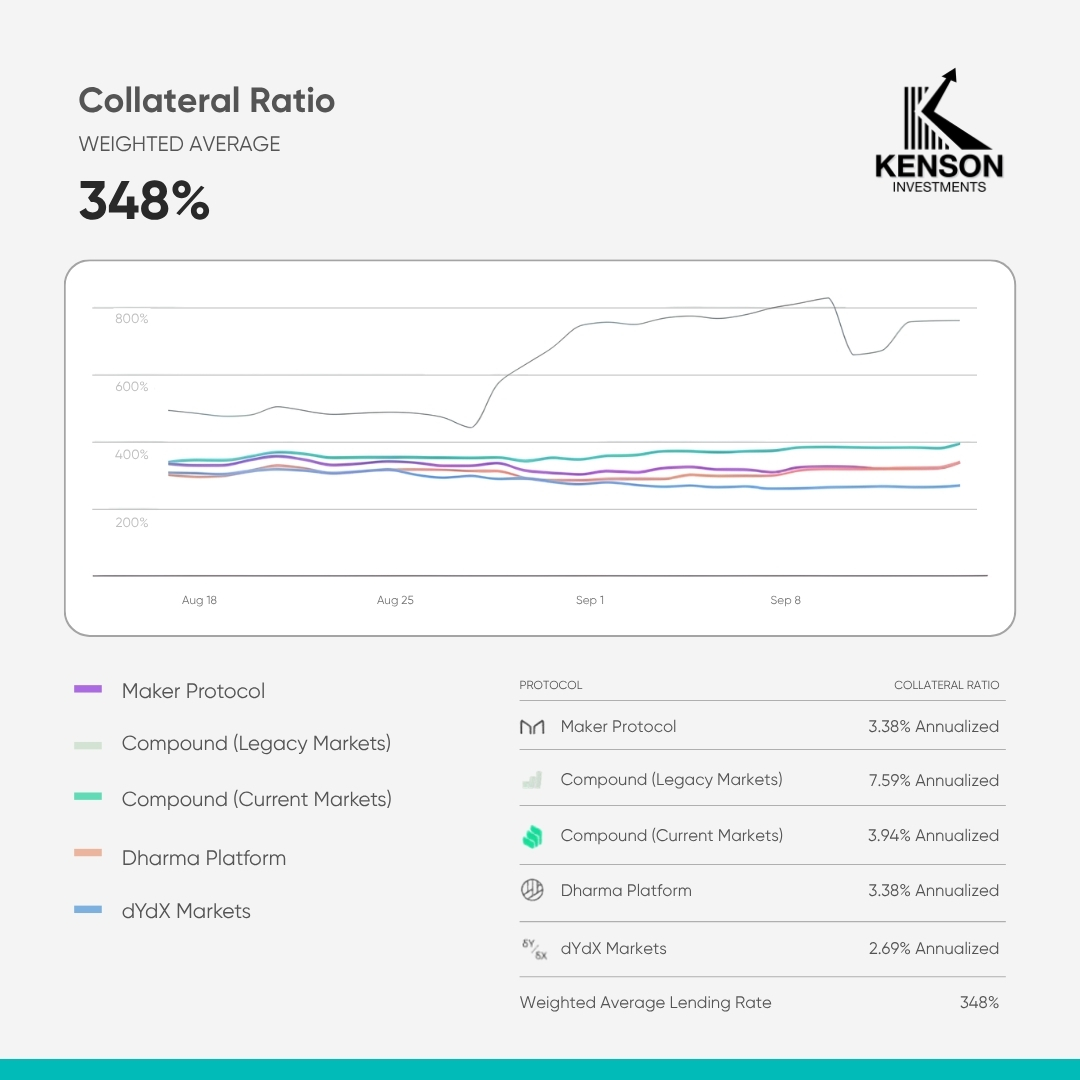
Decentralized finance has introduced new collateral structures. Assets are deposited into smart contracts, and borrowing capacity is determined algorithmically based on collateral value and predefined ratios.
By 2026, decentralized lending protocols collectively manage tens of billions in collateral, with utilization rates varying between 40 and 70 percent depending on market conditions.
For those navigating DeFi finance assets with consultants, the key challenge is understanding automated risk mechanisms. Liquidation thresholds are enforced without discretion, and price feeds rely on oracles that may lag during rapid market movements.
This creates scenarios where collateral appears sufficient until sudden price changes trigger liquidation events.
Engaging with DeFi finance consulting services requires evaluating:
- Oracle reliability
- Smart contract audit history
- Governance control over risk parameters
These factors determine how resilient collateral frameworks are in decentralized environments.
Institutional Evaluation of Collateral Reliability
Institutional allocators approach collateral differently. The focus is not on maximizing leverage, but on ensuring reliability across market cycles.
Evaluating collateral reliability involves:
- Historical performance during stress events
- Liquidity availability across venues
- Stability of valuation mechanisms
- Consistency of eligibility rules
For firms positioned as a global digital asset consulting firm, this evaluation extends beyond individual assets. It includes system-level analysis, how collateral behaves across interconnected platforms.
This is particularly relevant when considering blockchain-based investment opportunities, where infrastructure maturity varies significantly between networks.
Collateral that functions well in isolated conditions may behave differently when integrated into broader systems.
How Kenson Approaches This
Collateral is treated as a primary risk variable, not a secondary consideration.
Within Kenson’s framework, collateral analysis begins with eligibility. Only assets that demonstrate consistent liquidity and stability across market cycles are considered. This reduces exposure to sudden valuation shocks.
Margin structures are evaluated under stress scenarios. Systems that rely on aggressive leverage or insufficient buffers are excluded from allocation considerations.
Valuation mechanisms are assessed for reliability. This includes analyzing oracle systems, pricing models, and haircut structures. Inconsistent valuation introduces hidden risk.
Operational reliability is also critical. Platforms must demonstrate consistent performance during periods of high activity. Systems that fail under load are not considered suitable for collateral deployment. This aligns with a broader commitment to long-term investment in digital assets, where stability and consistency outweigh short-term performance.
Collateral Fragmentation and Systemic Risk
One of the emerging challenges in digital financial systems is fragmentation. Collateral is distributed across multiple platforms, each with its own rules and risk parameters.
This fragmentation creates inefficiencies and increases systemic risk. A disruption in one platform can affect collateral availability in another, particularly in interconnected systems.
For investors engaged in crypto asset management, understanding these interdependencies is essential. Collateral is no longer confined to a single balance sheet. It exists within a network of relationships.
Managing this complexity requires integrating finance asset management consulting frameworks that account for cross-platform exposure.
Strategic Implications for Allocators
Collateral frameworks influence every aspect of portfolio construction. They determine leverage capacity, liquidity access, and exposure stability.
For allocators evaluating digital asset management services, the implications include:
- Prioritizing assets with consistent collateral acceptance
- Maintaining conservative margin buffers
- Monitoring collateral performance continuously
This is particularly relevant when investing in cryptocurrencies within institutional frameworks. The ability to preserve capital during downturns often depends more on collateral quality than asset selection.
Build Resilience Through Collateral Discipline
Collateral defines how capital behaves when markets move. In digital systems, where liquidity shifts rapidly and risk is automated, disciplined collateral evaluation becomes essential.
Kenson Investments focuses on helping investors understand how collateral frameworks impact stability, exposure, and long-term performance across evolving financial systems. Figure out how structured insights support more informed positioning through comprehensive digital asset consulting services designed for clarity, consistency, and capital protection. Speak with our digital asset specialists.
Disclaimer: The information provided on this page is for educational and informational purposes only and should not be construed as financial advice. Crypto currency assets involve inherent risks, and past performance is not indicative of future results. Always conduct thorough research and consult with a qualified financial advisor before making investment decisions.
“The crypto currency and digital asset space is an emerging asset class that has not yet been regulated by the SEC and US Federal Government. None of the information provided by Kenson LLC should be considered as financial investment advice. Please consult your Registered Financial Advisor for guidance. Kenson LLC does not offer any products regulated by the SEC including, equities, registered securities, ETFs, stocks, bonds, or equivalents”