






Cryptocurrency headlines can trigger rapid price movements. Regulatory announcements, institutional developments, and unexpected network events often influence how market participants interpret changing conditions. However, an immediate market reaction does not always reveal the full significance of a story.
Understanding cryptocurrency market volatility requires more than watching prices. Readers must verify information, distinguish facts from speculation, and examine the conditions surrounding a reported event.
A repeatable review process can help reduce impulsive reactions. Before drawing conclusions from breaking news, examine five signals: source credibility, factual certainty, trading activity, underlying risks, and unanswered questions.
1. Verify the Original Announcement
The first step in crypto market analysis is locating the original source. Headlines and social media posts frequently summarize complex developments in a few sentences. Those summaries may omit important qualifications or present preliminary information as a confirmed outcome.
Start by identifying who made the announcement. Depending on the story, the original source might be a government agency, court, blockchain development team, company, or institutional organization.
Next, check the publication date and time. An old announcement can circulate again during periods of market uncertainty. This can create the impression that a new development has occurred when the information is already public.
Use this simple verification checklist:
- Locate the original announcement or official document.
- Confirm its publication date and time.
- Check whether the headline accurately reflects the source.
- Look for subsequent updates, corrections, or clarifications.
For example, a report about a proposed regulatory change differs significantly from a published final rule. Both may attract attention, but their status and practical implications are different.
Reliable source verification establishes a stronger foundation for understanding digital asset market trends without relying on viral commentary.
2. Separate Confirmed Facts From Speculation
Once the original source is verified, separate what is known from what people believe might happen next.
Breaking news often combines several types of information. An announcement may confirm that an institution is exploring a blockchain project, while commentators speculate about future adoption or potential market effects. These are different levels of certainty.
Create three categories when reviewing a story:
- Confirmed: Information explicitly stated in an official announcement or supported by reliable evidence.
- Interpretation: Analysis explaining what the confirmed information might mean.
- Speculation: Predictions about possible outcomes that have not been established.
Consider an institutional announcement involving digital asset infrastructure. The confirmed fact might be that a company has launched a pilot program. Whether the project will expand, attract widespread participation, or affect market prices remains uncertain.
This distinction matters because expectations can change before an event produces measurable results. It also helps readers avoid treating confident predictions as established facts.
When evaluating cryptocurrency investment discussions, remember that an announcement alone cannot establish future market performance. Independent research and careful interpretation remain essential, particularly when information is incomplete.
3. Examine Trading Volume and Liquidity Alongside Price
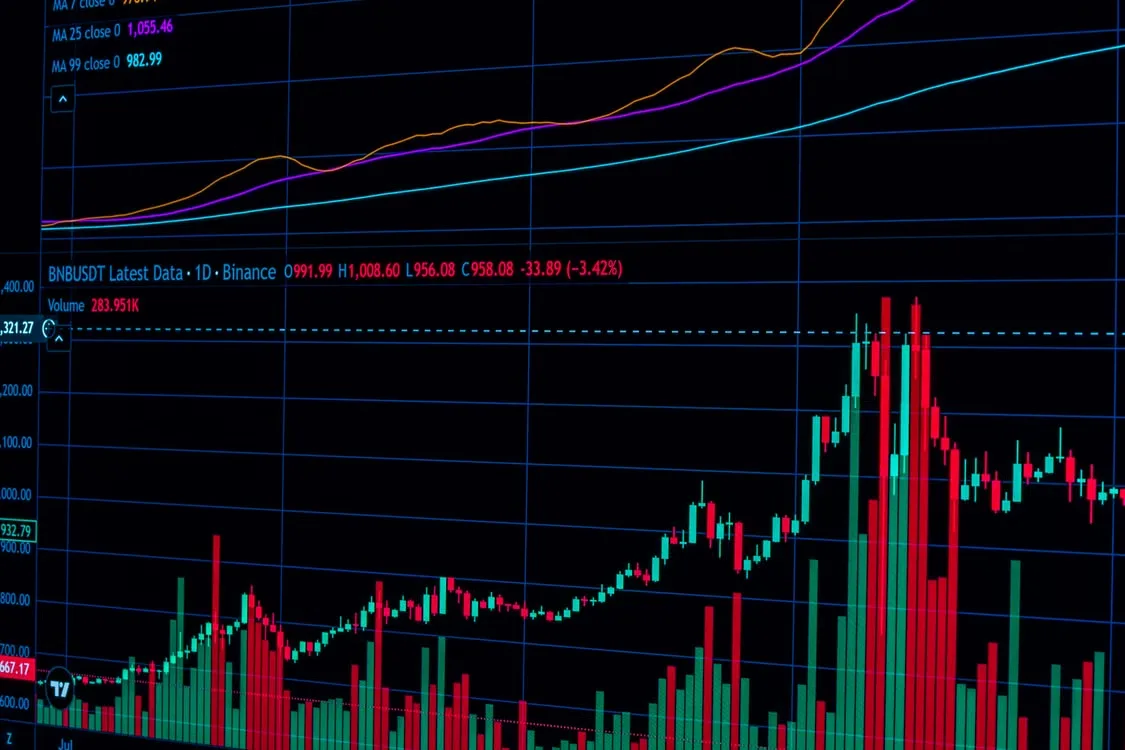
A price movement provides only part of the story. Trading volume and liquidity offer additional context about market activity and the conditions under which transactions occur.
Trading volume measures the amount of an asset exchanged during a specified period. Liquidity describes how readily an asset can be bought or sold without substantially affecting its market price.
These measures answer different questions. Volume helps show how much trading activity has occurred. Liquidity helps indicate how easily market participants can transact at available prices.
When reviewing a sudden movement, consider the following:
- Price change: How large was the movement, and over what period?
- Trading volume: Did activity increase relative to recent levels?
- Market depth: Were substantial buy and sell orders available near the quoted price?
- Spread: Did the difference between buying and selling prices widen?
For example, a sharp price movement in a thinly traded market may occur with relatively little trading activity. A similar movement in a deeper market may involve a much larger volume of transactions.
Neither scenario establishes what will happen next. Volume can reflect different motivations, and reported liquidity may change quickly.
This broader view of crypto market analysis helps readers understand market conditions without treating a price spike as a reliable prediction.
4. Identify the Regulatory, Technical, or Operational Risks
Not every announcement affects a digital asset in the same way. Understanding the type of development is essential before assessing its possible significance.
Regulatory news may concern a proposed policy, a court decision, an enforcement action, or new guidance. Each has a different status and scope. A development affecting one jurisdiction or business may not apply universally.
Technical announcements require a different review. Network upgrades, software vulnerabilities, validator disruptions, and transaction delays can affect blockchain operations. Their significance depends on the specific network, the severity of the issue, and the effectiveness of any response.
Institutional developments also need careful interpretation. A company announcing a pilot project has not necessarily committed to a broader rollout. A partnership announcement does not automatically establish the scale of future participation.
When reviewing a story, ask:
- Which network, organization, or jurisdiction does it concern?
- Is the development proposed, underway, completed, or delayed?
- What evidence supports the reported implications?
- Which operational or regulatory uncertainties remain?
These questions help place digital asset investments within their actual market and technical context. They also prevent readers from assuming that every headline has the same relevance across the cryptocurrency ecosystem.
5. Record What Remains Unknown
A useful review should end with a clear record of unresolved questions. This final step helps prevent incomplete information from becoming an unsupported conclusion.
After reviewing a headline, document three things: what is confirmed, what evidence is still missing, and what future developments could clarify the situation.
For example, a company may announce plans to introduce a new blockchain service. The announcement could confirm the intended launch, but leave questions about implementation dates, geographic availability, technical readiness, or actual user participation.
A practical news-review log might include:
- Announcement: What happened, according to the original source?
- Evidence: Which statements can be independently verified?
- Market context: What happened to price, volume, and liquidity?
- Outstanding questions: Which details remain unconfirmed?
- Follow-up: Which official source or development should be checked next?
Keep observations separate from assumptions. Update the record when credible new information becomes available, and correct earlier interpretations when the evidence changes.
This process supports a more disciplined understanding of cryptocurrency market volatility. It does not eliminate uncertainty or predict market direction. Instead, it makes the reasoning behind a conclusion easier to review.

The Kenson Perspective
Kenson Investments approaches the digital asset space with an emphasis on education, transparency, and awareness of potential risks. Breaking news is best evaluated through evidence and context rather than urgency or speculation.
A structured review process supports this approach. Verifying sources, examining market conditions, identifying uncertainties, and documenting unanswered questions can help readers better understand developments across digital asset markets.
Kenson’s educational resources are intended to help readers build digital asset literacy and understand the considerations involved in this evolving market. To learn more about the company’s approach. Additional educational material is available through the Knowledge Centre.
Build a More Consistent News-Review Process
Breaking news will continue to influence how people interpret cryptocurrency markets. However, the first headline rarely provides every detail needed to understand a development.
Verify the source, distinguish evidence from speculation, examine trading conditions, identify relevant risks, and record what remains unknown. Applying these steps consistently creates a clearer basis for evaluating new information.
To learn more about Kenson Investments and its digital asset approach, connect with the team.
Disclaimer: The information provided on this page is for educational and informational purposes only and should not be construed as financial advice. Cryptocurrency assets involve inherent risks, and past performance is not indicative of future results. Always conduct thorough research and consult with a qualified financial advisor before making investment decisions.
The cryptocurrency and digital asset space is an emerging asset class that has not yet been regulated by the SEC and US Federal Government. None of the information provided by Kenson LLC should be considered as financial investment advice. Please consult your Registered Financial Advisor for guidance. Kenson LLC does not offer any products regulated by the SEC, including equities, registered securities, ETFs, stocks, bonds, or equivalents.



