







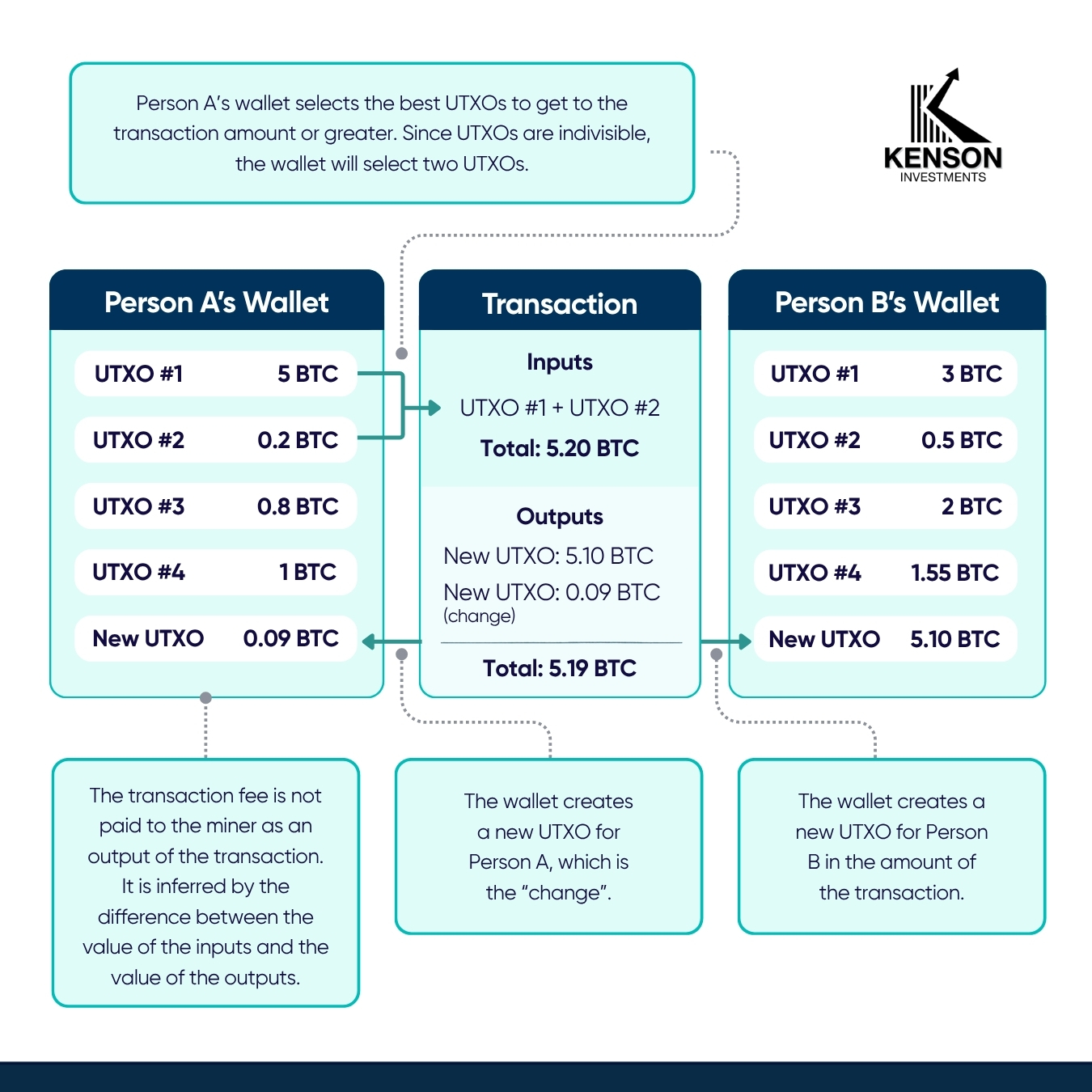
Bitcoin transactions involve more than the amount being transferred. Their structure also determines how much data must be processed and how much network capacity they consume. One important consideration is Bitcoin UTXO consolidation, which combines several unspent transaction outputs into fewer outputs.
This process can simplify the management of Bitcoin holdings. However, consolidation also requires a transaction with its own data footprint and associated network fee. The relationship between input count, script type, and prevailing fees helps explain why consolidation costs vary.
Understanding these mechanics supports informed participation in the digital asset market. It also provides useful context for operational planning, particularly when managing multiple Bitcoin outputs across wallets or transaction workflows.
What Is Bitcoin UTXO Consolidation?
UTXO stands for unspent transaction output. Bitcoin uses these outputs to track funds available for future transactions.
Rather than maintaining a single account balance that changes with every transfer, Bitcoin records individual outputs created by earlier transactions. A wallet can control many separate UTXOs, each representing an amount that remains available to spend.
For example, suppose a wallet contains 20 UTXOs worth 0.01 BTC each. Its combined value is 0.20 BTC. Spending a larger amount may require the wallet to select several of these outputs as transaction inputs.
Consolidation combines multiple existing UTXOs into fewer outputs controlled by the same wallet. In a typical consolidation transaction, several inputs contribute value toward one principal output, with the transaction fee deducted from the available amount.
The process changes how the funds are represented on the blockchain. It does not increase the total Bitcoin held before fees.
Why Input Count Affects Transaction Weight
Bitcoin transaction fees depend largely on transaction size and the prevailing fee rate. For transactions using SegWit, virtual size, measured in virtual bytes (vB), provides the standard basis for calculating fees.
Each input adds data to a transaction. That data includes information identifying the UTXO being spent and the unlocking data needed to authorize the spend. More inputs generally mean greater transaction weight and a higher fee at the same fee rate.
Consider two transactions sending Bitcoin to the same type of destination. One spends two UTXOs, while the other spends 15. The second transaction will generally require more data because it must reference and authorize more inputs.
This distinction matters when evaluating digital asset management. A wallet containing many small UTXOs may need more transaction data to spend a particular amount than a wallet holding fewer, larger outputs.
However, input count alone does not determine the final size. Output count, script types, and the unlocking data required by each input also influence transaction weight.

How Script Types Influence Transaction Size
Bitcoin supports different script types that determine how outputs are locked and how spending transactions authorize their use. These formats have different data requirements.
Common examples include:
- Legacy P2PKH: An older output format with relatively large input data requirements.
- Nested SegWit P2SH-P2WPKH: A SegWit-compatible format that uses a legacy-style output wrapper.
- Native SegWit P2WPKH: A SegWit format that generally reduces the virtual size of standard single-signature inputs compared with legacy inputs.
- Taproot P2TR: A newer output format that can support different spending conditions, with actual input size depending on the spending path.
For standard single-signature spends, these formats can produce different virtual sizes. More complex spending conditions may require additional witness or script data.
This means two wallets holding the same number of UTXOs may face different consolidation costs. Their output formats and spending requirements can produce different transaction weights.
When examining Bitcoin UTXO consolidation, script compatibility also matters. A wallet must be able to authorize the selected inputs correctly, and the resulting transaction must follow Bitcoin’s consensus rules.
Calculating Consolidation Fees
A basic fee estimate uses transaction virtual size and the selected fee rate.
For example, consider a hypothetical consolidation transaction with a virtual size of 1,200 vB and a fee rate of 15 satoshis per vB.
The estimated fee would be:
1,200 vB × 15 sat/vB = 18,000 satoshis.
At a fee rate of 60 sat/vB, the same transaction size would cost 72,000 satoshis. The transaction structure remains unchanged, but the fee rises because the prevailing rate is higher.
These figures are illustrative, not live network estimates. Actual transaction size depends on the inputs, outputs, script types, and wallet construction. The fee rate available at broadcast can also differ from an earlier estimate.
Network demand influences the fee rate users may need for their desired confirmation timeframe. During periods of congestion, competition for limited block space can increase fees. During quieter periods, lower fee rates may be sufficient.

The Trade-Off Between Consolidation and Future Spending Costs
Consolidation involves an immediate transaction fee in exchange for a different UTXO structure. Whether that trade-off makes operational sense depends on the wallet’s current outputs and anticipated transaction requirements.
A wallet with numerous small UTXOs may face higher input-related costs when spending them together later. Consolidation can reduce the number of inputs required for a subsequent transaction, potentially reducing its size.
However, consolidation does not automatically lower total costs. The consolidation transaction itself consumes block space and incurs a fee. If the resulting output is later spent in a transaction that requires similar data, the overall cost must account for both transactions.
For example, combining 20 small outputs into one output may simplify a later payment. Yet the initial consolidation fee adds to the cost of managing those funds. The outcome depends on the size of both transactions and the fee rates applicable when they are broadcast.
This is an important consideration in cryptocurrency investment strategies. Transaction structure affects operational expenses, but network fees and future requirements remain uncertain.
Operational Considerations for Wallet Management
A structured review of UTXO conditions can help clarify the practical implications of consolidation. Relevant considerations include:
- Output distribution: Assess how many UTXOs exist and whether their individual values are small relative to expected spending requirements.
- Script compatibility: Identify the script types involved and estimate their respective input sizes.
- Transaction purpose: Distinguish between consolidating outputs for simpler wallet management and preparing for a specific future payment.
- Fee sensitivity: Estimate costs under several hypothetical fee rates instead of relying on a single snapshot.
- Recordkeeping: Document transaction fees, input selection, and the resulting output structure for operational review.
These checks can support risk management in crypto investments by improving visibility into transaction expenses and wallet operations. They do not eliminate market volatility, transaction delays, or other risks associated with digital assets.
Privacy and Other Limitations
Consolidation also has implications beyond transaction fees.
Combining outputs in one transaction can create a visible on-chain relationship between those outputs. Observers may infer that the inputs were controlled by the same entity, although blockchain data alone does not always establish ownership with certainty.
This matters when reviewing security in digital asset management. Transaction construction can affect the information revealed through public blockchain records.
Consolidation also depends on the wallet’s technical capabilities. Some outputs may have different spending conditions, and not every output can necessarily be combined in a single transaction. Wallet software must construct valid inputs, satisfy authorization requirements, and account for network limits.
Dust limits and minimum relay policies may also affect whether certain small outputs can be spent economically. An output’s nominal value does not necessarily mean spending it is practical after transaction fees.

The Kenson Perspective
Kenson Investments approaches digital asset topics through education, preparation, and awareness of associated risks. Understanding transaction mechanics is one part of evaluating the operational considerations surrounding digital asset investments.
For Bitcoin transactions, this means recognizing that input selection, script types, and network conditions can influence costs. It also means distinguishing between an estimated fee and the amount ultimately required to complete a transaction.
A measured approach to digital asset management consulting considers these technical factors without assuming that one transaction structure suits every situation. Reviewing transaction requirements and documenting operational decisions can support more transparent processes.
Kenson’s educational resources explore blockchain infrastructure and the practical considerations involved in navigating the digital asset market. Readers can learn more about Kenson Investments’ approach, explore the Knowledge Centre for additional educational material, or contact Kenson Investments to speak with a Digital Asset Specialist about digital asset goals.
Disclaimer
The information provided on this page is for educational and informational purposes only and should not be construed as financial advice. Cryptocurrency assets involve inherent risks, and past performance is not indicative of future results. Always conduct thorough research and consult with a qualified financial advisor before making investment decisions.
The cryptocurrency and digital asset space is an emerging asset class that has not yet been regulated by the SEC and US Federal Government. None of the information provided by Kenson LLC should be considered financial investment advice. Please consult your Registered Financial Advisor for guidance. Kenson LLC does not offer any products regulated by the SEC, including equities, registered securities, ETFs, stocks, bonds, or equivalents.



