


A blockchain is a distributed system for recording and validating transactions or state changes according to shared protocol rules. Participating computers run software that checks data, communicates with peers, and maintains a consistent view of the network.
Calling blockchain simply an “immutable digital ledger” misses important mechanics. Blockchain systems combine networking, cryptography, replicated data, consensus, and economic or governance mechanisms. Bitcoin, Ethereum, and permissioned enterprise networks do not use identical transaction models, consensus systems, or governance structures. Those differences are fundamental when evaluating how a blockchain works and what risks it introduces.
How a Blockchain Transaction Moves Through the Network
A blockchain transaction begins when a user or application creates an instruction, such as transferring an asset or calling a smart contract. The sender authorizes that instruction with a digital signature generated from a private key. The signature allows network participants to verify authorization without revealing the private key itself.
Transactions are not necessarily encrypted. On many public blockchains, transaction details are visible to anyone who examines the ledger. Privacy depends on the network, application, and cryptographic techniques being used.
After creation, a transaction is usually propagated across a peer-to-peer network. Nodes check it against protocol rules, which can include signature validity, balances, sequencing, and execution conditions. Valid transactions can then be selected for a block.
Inclusion is not always the same as finality. A block can sometimes be reorganized or superseded before a transaction reaches the level of certainty expected by the network. The conceptual flow is transaction creation, digital signature, propagation, validation, block inclusion, consensus or finality, and an updated network state.
Blocks, Hashes and Cryptographic Linkage
A block packages data accepted by the network during a particular period or sequence. Depending on the blockchain, it may contain transactions, execution results, timestamps or sequence information, and commitments to network state.
Blocks also contain cryptographic information that links them to earlier blocks. A cryptographic hash takes input data and produces a fixed-length output. Changing the underlying data changes the resulting hash, which makes unauthorized historical alteration detectable. Many blockchains also use structures such as Merkle trees to create compact commitments to sets of transactions.
This design makes blockchain history tamper-resistant, not absolutely tamper-proof. NIST describes blockchains as tamper evident and tamper resistant. Rewriting history also depends on consensus, economic security, node behavior, software correctness, and governance, not cryptography alone.
Nodes, Validators and Block Producers Are Different Roles
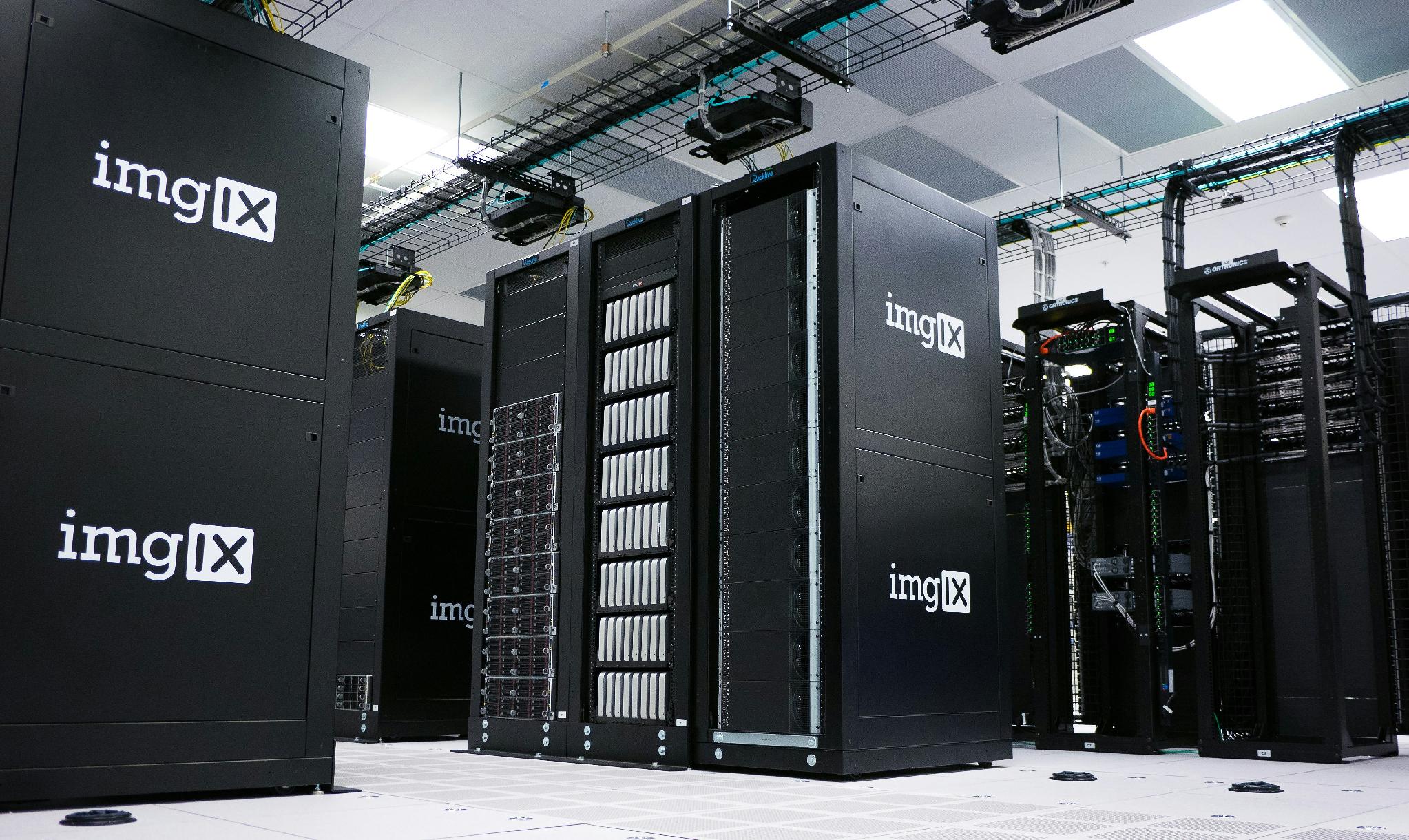
A node runs software that communicates with peers and follows the blockchain’s protocol rules. Depending on its design, it may relay transactions, verify blocks, maintain state, serve application requests, or store historical data. Not every node stores every historical transaction. Networks can support full, archival, light, and infrastructure nodes.
Validators or block producers perform a more specific role. They participate in the process used to propose, attest to, or otherwise approve blocks according to the network’s consensus rules.
Ethereum provides a useful illustration. Ethereum’s node documentation distinguishes execution and consensus clients from validator software used for direct proof-of-stake participation. A node can therefore verify the chain without necessarily acting as a validator.
Miners are another distinct category. They are associated with Proof of Work systems. Treating “node,” “validator,” and “miner” as interchangeable hides important differences in how networks are operated and secured.
Consensus Determines How the Network Agrees
Distributed networks need a way to decide which transactions are valid, how they are ordered, and which version of the network state should be treated as canonical. Consensus mechanisms combine rules, incentives, and coordination processes to solve that problem.
In Proof of Work systems such as Bitcoin, miners expend computational resources to compete in block production. The network uses accumulated work and a chain-selection rule to determine which history participants should follow.
Proof of Stake uses a different security model. Validators commit stake and participate according to protocol rules. Depending on the system, misbehavior can lead to economic penalties such as slashing. Ethereum’s proof-of-stake documentation provides one concrete implementation example.
Permissioned networks can use still other approaches, including Byzantine fault tolerant or quorum-based systems in which known or approved participants reach agreement.
Consensus design affects finality, resource requirements, participation, performance, attack costs, and concentration risk. No one model is universally superior.
Transaction Finality Is Not the Same on Every Blockchain
Finality describes the point at which a transaction can be treated as sufficiently difficult, economically costly, or procedurally impossible to reverse.
Some Proof of Work networks provide probabilistic finality, where confidence increases as additional blocks build on top of a transaction. Other systems provide explicit or deterministic finality through validator voting, checkpoints, or quorum rules.
This matters for payments, trading, and settlement. A transaction appearing in a block does not carry identical settlement certainty on every network. For that reason, blockchain settlement finality should be assessed as part of the network’s architecture rather than inferred from headline transaction speed.
Kenson examines these distinctions in greater depth in Programmable Settlement Finality: Why “Irreversible” Means Different Things Onchain.
Public and Permissioned Networks Use Different Trust Models
Blockchain is not synonymous with a public, permissionless network.
Public blockchains generally allow broad participation according to protocol rules. Users may be able to submit transactions, run nodes, or participate in consensus without individual approval from one central operator.
Permissioned blockchains restrict some roles to approved entities. Restrictions can apply to writing transactions, validating blocks, viewing information, operating infrastructure, or participating in governance.
Neither model is automatically better. Public networks can offer open participation and independent verification, while permissioned systems can provide tighter access control, privacy, and defined governance. Those benefits come with different trust assumptions.
The important questions are who can read, write, validate, govern, and operate critical infrastructure. Kenson’s Public vs. Permissioned Blockchains examines these infrastructure differences in greater depth.
Smart Contracts Add Programmable State
Modern blockchain networks can maintain more than a chronological list of asset transfers. They may track account balances, ownership, validator information, contract storage, and application-specific state.
Smart contracts are programs executed according to the rules of a blockchain environment. They can transfer assets, issue tokens, enforce protocol logic, manage permissions, coordinate governance, or operate decentralized applications. Ethereum’s smart-contract documentation provides a useful implementation example.
They should not automatically be treated as legal contracts. The term describes executable code, while the legal status of an arrangement depends on the relevant jurisdiction and circumstances.
Smart contracts also introduce their own risks. Bugs, incorrect assumptions, upgrade mechanisms, administrative permissions, oracle dependencies, and execution costs can affect outcomes. These issues are part of institutional smart contract governance when programmable systems are used in business or financial infrastructure.
More complex implementation issues belong in specialist material such as Kenson’s Advanced Smart Contract Development Techniques.
Layer 1 Provides the Base Network
A Layer 1 is the base blockchain on which the network’s core rules operate. Depending on the architecture, it can provide consensus, execution, settlement, data availability, and security.
Bitcoin and Ethereum are examples of Layer 1 networks, but their designs differ substantially. The term describes the network’s architectural position, not one specific technical model.
Layer 1 resources are finite. Block space, computation, bandwidth, storage, and validator capacity create limits on how much activity a network can process. During periods of high demand, those limits may appear as higher fees, longer delays, or congestion.
Different networks make different trade-offs among throughput, hardware requirements, decentralization, and security. There is no single scalability design that removes every constraint.
Kenson’s Understanding Blockchain Layer 1: Foundations and Innovations provides deeper coverage of base-layer architecture.
Layer 2 Extends Capacity With Additional Assumptions
Layer 2 systems attempt to expand capacity by moving some transaction processing away from the base chain while relying on it for settlement, data availability, or security to varying degrees.
Rollups are a prominent example. Other systems can use payment channels, state channels, or different execution environments. Ethereum’s scaling documentation notes that security and settlement relationships vary significantly across scaling technologies and implementations.
The phrase “Layer 2” should not be interpreted as meaning every scaling network inherits exactly the same security as its underlying Layer 1. Architecture matters. Users may also depend on sequencers, proof systems, bridges, upgrade controls, and data-availability arrangements.
Layer 2 dependence should therefore be treated as part of institutional blockchain infrastructure analysis rather than merely a throughput feature. Kenson’s Layer 2 Trading Networks provides more specialized coverage of scaling infrastructure.
Interoperability Connects Separate Consensus Domains
Independent blockchains do not naturally share consensus, state, assets, or messages. Cross-chain infrastructure attempts to bridge those boundaries.
Bridges can lock an asset on one network and issue a representation elsewhere. Messaging systems can transmit information between chains. Other interoperability protocols use validator sets, light-client verification, or shared-security designs.
These systems expand connectivity but introduce additional assumptions. A wrapped asset is not necessarily identical to its native counterpart, and a bridge can add smart-contract, validator, multisig, custody, or message-verification risk. Ethereum’s bridge documentation similarly distinguishes bridge designs and their added security assumptions. Those dependencies can become a material form of cross-chain risk exposure.
Kenson’s research on Blockchain Interoperability and Cross-Chain Security Risks explores these dependencies further.
Governance and Security Extend Beyond Cryptography
Blockchains evolve. Software is updated, vulnerabilities are fixed, parameters can change, and communities sometimes disagree about which version of a protocol to follow.
Governance can involve developers, validators, miners, foundations, token holders, client teams, businesses, and users. Some networks formalize decisions through onchain voting. Others rely mainly on offchain discussion and voluntary software adoption.
A useful review therefore asks who can propose changes, who can activate them, whether participants can reject an upgrade, and what emergency powers exist. This is part of blockchain governance stability. A network may be decentralized in one dimension while relying on a small number of entities for client development, infrastructure, upgrades, or other critical functions.
Security likewise depends on more than cryptography. Consensus design, validator or miner incentives, software correctness, network connectivity, key management, economic security, and governance all matter.
Blockchain Has Practical Limits
Blockchain architecture is useful when multiple parties need a shared system with verifiable rules and limited reliance on a single record keeper. It is not automatically the right database architecture for every application.
• Finite throughput and block space
• Transaction fees and congestion
• Latency and finality delays
• Storage and state growth
• Hardware and bandwidth requirements
• Validator or miner concentration
• Governance and upgrade risk
• Smart-contract vulnerabilities
• Key-management risk
• Oracle dependencies for applications
• Bridge and interoperability risk
• Software bugs and operational outages
These constraints can form part of programmable financial infrastructure risk when blockchain networks are used for financial applications or blockchain settlement infrastructure.
For analysts and institutions, the relevant question is not simply whether a network uses blockchain. It is whether the network’s architecture, security assumptions, and operational controls fit the activity being placed on it.
How to Evaluate a Blockchain Network
A useful network review gathers evidence instead of assigning a simplistic investment score.
Network Purpose
What is the network designed to do? Which applications or workloads rely on it? Does actual use match the stated purpose?
Consensus
What consensus mechanism does the network use? Who can participate in block production? What technical or economic assumptions protect the chain?
Nodes and Validators
What node and validator roles exist? What hardware or capital requirements apply? Is block production or infrastructure concentrated among a small number of participants?
Finality
How does the network establish finality? Is finality probabilistic, economic, or deterministic? Under what conditions could transactions be reorganized or reversed?
Permission Model
Who can read, write, validate, and govern? Is participation permissionless, permissioned, or hybrid?
Smart Contracts
Does the network support programmable execution? What runtime and security assumptions apply? How are contract upgrades or administrative controls handled?
Governance
Who can change protocol rules? How are upgrades coordinated and adopted? Can participants reject changes? What emergency authority exists?
Scalability
What constrains throughput and computation? What happens during congestion? Does routine use depend heavily on Layer 2 infrastructure?
Interoperability
How does the network communicate with other chains? Which bridges, messaging systems, or wrapped assets are involved? What additional verification assumptions do they introduce?
Economics and Security
How are validators or miners compensated? What roles do fees and issuance play? What economic resources make attacks costly?
Operational Maturity
How long has the network operated? Has it experienced outages, reorganizations, exploits, or major software failures? How transparently were incidents disclosed and resolved?
The result should separate what is verified from what remains an architectural assumption or practical constraint. It should not be reduced to a numerical rating or investment recommendation.

Understand the Architecture Before Evaluating the Asset
Blockchain networks can differ at almost every important layer: consensus, permissioning, finality, execution, governance, scaling, and interoperability. Those differences determine what participants must trust and what can fail.
Understanding these mechanics provides a stronger foundation for institutional blockchain infrastructure analysis than treating every blockchain as the same technology with different tokens attached.
Explore the Kenson Investments Knowledge Centre for deeper research into blockchain architecture, market infrastructure, and digital assets. Organizations evaluating technical infrastructure or operational dependencies can also contact Kenson Investments for additional educational information.
Disclaimer: The information provided on this page is for educational and informational purposes only and should not be construed as financial advice. Crypto currency assets involve inherent risks, and past performance is not indicative of future results. Always conduct thorough research and consult with a qualified financial advisor before making investment decisions.
The crypto currency and digital asset space is an emerging asset class that has not yet been regulated by the SEC and US Federal Government. None of the information provided by Kenson LLC should be considered as financial investment advice. Please consult your Registered Financial Advisor for guidance. Kenson LLC does not offer any products regulated by the SEC including, equities, registered securities, ETFs, stocks, bonds, or equivalents.