









Digital asset markets do not close. There are no defined sessions, no overnight pauses, and no reset between trading days. Activity continues across time zones, driven by global participation and constant information flow. This environment changes how organizations approach digital asset investments and how they maintain operational control. For participants navigating these conditions, awareness is not periodic. It is continuous. That is where operational discipline becomes critical. Kenson Investments studies this always-on structure through the lens of digital asset consulting best practices, focusing on how systems, processes, and monitoring frameworks adapt to uninterrupted market activity.
Why Always-On Markets Require a Different Mindset
Traditional systems operate within defined hours. Risk can be reviewed, reassessed, and recalibrated between sessions. In contrast, digital asset markets require ongoing evaluation. Price movements can occur at any hour. Liquidity conditions can shift rapidly. External events, such as regulatory announcements or network disruptions, can trigger immediate reactions. This is why risk management in crypto investments is not a scheduled function. It is embedded within infrastructure. Kenson’s approach aligns with broader principles seen in blockchain and digital asset consulting, where operational readiness replaces periodic oversight.
Real-Time Monitoring as a Core Function
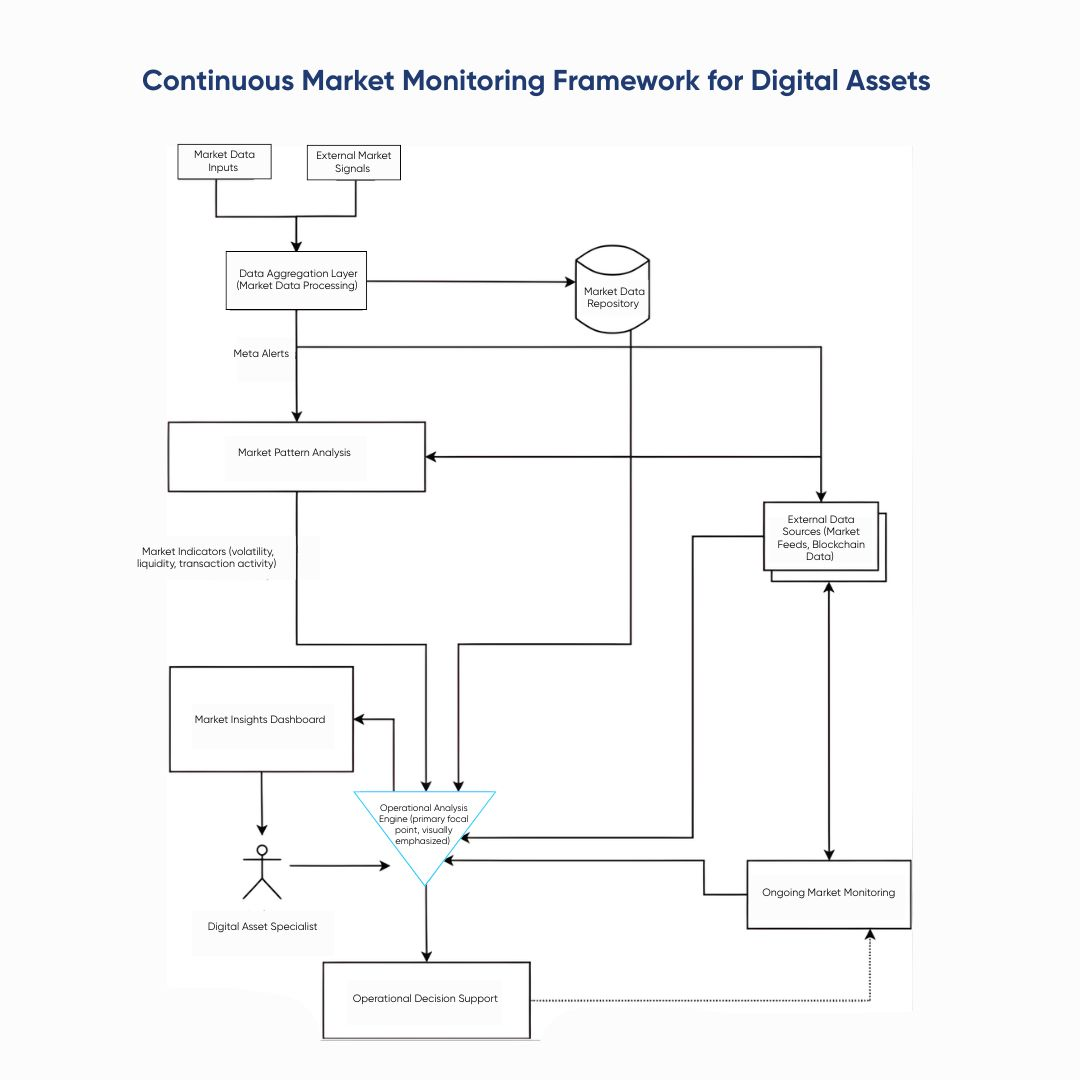
In always-on environments, monitoring is not limited to price tracking. It includes system health, liquidity conditions, network performance, and external signals. Effective digital asset portfolio management requires visibility across multiple layers:
- Market data feeds
- Exchange connectivity
- Network congestion levels
- Volatility indicators
- Execution pathways
Organizations engaged in crypto asset management increasingly rely on infrastructure that aggregates and processes this information in real time.

This level of observability supports structured decision-making. It also reduces reliance on delayed or fragmented data.
Infrastructure Observability and System Awareness
Observability refers to how well internal systems can be understood based on the data they generate. In digital asset environments, this includes transaction flow, execution latency, and system stability. For organizations involved in digital asset management consulting, observability is not optional. It is a requirement for maintaining operational awareness. Key components include:
- Logging and diagnostics
- Performance metrics
- Alert systems
- Redundancy checks

Without clear visibility, response times increase. In always-on markets, delayed responses can compound risk exposure.
Escalation Protocols in Continuous Systems
Monitoring alone is not sufficient. Systems must be supported by clear escalation protocols. When predefined thresholds are reached, whether related to volatility, liquidity, or system performance, actions must be triggered. This structured approach reflects elements commonly discussed in hedge fund risk management, where predefined rules guide responses rather than ad hoc decision-making. Typical escalation layers include:
- Automated alerts
- Internal review processes
- Decision checkpoints
- Execution adjustments
These frameworks help maintain consistency. They also reduce reliance on subjective interpretation during high-pressure conditions.
Operational Preparedness in a 24/7 Environment
Preparedness in always-on markets extends beyond systems. It includes people, processes, and contingency planning. Organizations engaged in digital asset management consulting services often emphasize readiness across multiple dimensions:
- Staff availability across time zones
- Incident response planning
- Infrastructure redundancy
- Communication workflows
Preparedness also involves scenario analysis. This includes understanding how systems respond to:
- Sudden liquidity shifts
- Network congestion
- Exchange outages
- External market events

These measures contribute to resilience. They also support continuity during periods of elevated market activity.
Continuous Awareness and Strategic Context
Operational awareness is not limited to technical monitoring. It also includes understanding broader market dynamics. For example, participants often assess:
- Adoption trends
- Network activity levels
- Market structure changes
- Liquidity distribution
This aligns with themes seen in strategic digital asset consulting, where operational data is combined with contextual analysis. At a structural level, continuous awareness supports more informed participation in blockchain-based investment opportunities. It helps identify patterns, but it does not eliminate uncertainty.
Balancing Short-Term Activity and Long-Term Perspective
Always-on markets can create a focus on short-term movements. However, long-term considerations remain relevant. Participants exploring long-term investment in digital assets often balance:
- Immediate market signals
- Broader adoption trends
- Infrastructure development
This balance is also reflected in cryptocurrency investment strategies, where short-term volatility is evaluated alongside longer-term positioning.

Operational discipline supports this balance. It allows participants to respond to immediate conditions while maintaining a structured framework.
The Role of Structured Processes
In environments without defined trading hours, structure becomes a stabilizing factor. Processes define how data is interpreted, how decisions are made, and how actions are executed. Organizations involved in digital asset management company operations often rely on:
- Standard operating procedures
- Defined thresholds
- Consistent reporting frameworks
These processes reduce variability. They also improve consistency across different conditions.
Data, Signals, and Interpretation
Data is abundant in digital asset markets. The challenge lies in interpretation. Signals can include:
- Price movements
- Volume changes
- Network activity
- External announcements
However, signals do not always translate into clear outcomes. This is why navigating the digital asset market requires both data and context. Participants engaging with crypto investment consulting frameworks often focus on filtering relevant information while avoiding overreaction to noise.
Operational Discipline as a Competitive Factor
As digital asset markets mature, operational discipline becomes more important. Organizations that maintain structured monitoring, clear escalation protocols, and resilient systems are better positioned to manage uncertainty. This is particularly relevant in environments characterized by:
- Continuous activity
- Rapid information flow
- Variable liquidity conditions

Rather than focusing solely on outcomes, this approach emphasizes process integrity and system reliability.
Applying Continuous Awareness in Practice
Kenson Investments applies these principles through a structured approach to monitoring and operational readiness. Their work aligns with broader themes in digital assets consulting and emphasizes:
- Real-time system visibility
- Defined escalation pathways
- Continuous evaluation of market conditions
This approach reflects a commitment to maintaining awareness rather than reacting after the fact.
Understanding the Implications
Always-on markets require a shift in perspective. They demand continuous engagement, structured processes, and resilient systems. Participants exploring investing in the digital age must consider how operational discipline influences outcomes. It does not eliminate risk, but it supports more consistent decision-making. For those seeking to better understand these dynamics, structured frameworks and ongoing education play a central role.
Continuous Awareness with Kenson Investments
Kenson Investments focuses on helping individuals and organizations better understand how digital asset markets operate in real time. Explore their approach to digital asset investments and learn how structured monitoring supports participation in evolving markets. For deeper insights, review their digital asset consultation resources designed to explain key concepts and operational considerations. To speak with a Digital Asset Specialist, visit the contact page and continue your learning journey.
Disclaimer
Disclaimer: The information provided on this page is for educational and informational purposes only and should not be construed as financial advice. Crypto currency assets involve inherent risks, and past performance is not indicative of future results. Always conduct thorough research and consult with a qualified financial advisor before making investment decisions.
The cryptocurrency and digital asset space is an emerging asset class that has not yet been regulated by the SEC and US Federal Government. None of the information provided by Kenson LLC should be considered as financial investment advice. Please consult your Registered Financial Advisor for guidance. Kenson LLC does not offer any products regulated by the SEC including equities, registered securities, ETFs, stocks, bonds, or equivalents.