








Tokenization has moved well beyond proof-of-concept issuance. By 2025, the harder problem is distribution. Issuers can mint tokenized funds, bonds, or structured products, but value only materializes if those instruments reach end investors through familiar channels. Private banks, registered investment advisors, and qualified distribution platforms sit at the center of this challenge.
Unlike retail crypto markets, institutional wealth distribution is deeply embedded in legacy systems. Portfolio accounting tools, compliance engines, custodial interfaces, and advisor dashboards are tightly coupled. Any new product that forces advisors to leave those environments introduces friction and risk. This reality is shaping how tokenized financial products are designed, approved, and delivered.

Why Distribution, Not Issuance, Is the Bottleneck
Issuance has become modular. Smart contracts standardize ownership records, automate corporate actions, and enable near real-time settlement. Distribution, however, requires alignment across multiple layers. Advisors need products to appear alongside traditional assets. Compliance teams need clear eligibility rules. Custodians require enforceable controls over transfer and safekeeping.
Industry data underscores this shift. In 2024, more than 70 percent of institutional tokenization pilots stalled at the distribution stage, not issuance. The missing piece was integration into existing advisor and custody workflows. As a result, institutions increasingly focus on digital asset consulting services for businesses that address distribution architecture rather than token mechanics alone.
Integration With Wealth Platform Workflows
For private banks and RIAs, distribution begins at the advisor interface. Tokenized products must be visible in portfolio construction tools, performance reports, and client statements. This does not mean reinventing front ends. Instead, tokenized assets are increasingly abstracted to resemble traditional securities within advisor systems.
This abstraction layer maps onchain identifiers to familiar instruments, such as funds or notes, with standardized data fields. Advisors rebalance portfolios without interacting directly with wallets or block explorers. This approach supports digital asset portfolio management while preserving advisor productivity.
Firms offering blockchain and digital asset consulting often emphasize this mapping layer as critical infrastructure. Without it, tokenized products remain operationally siloed, limiting adoption regardless of underlying performance.
Compliance and Eligibility Controls
Distribution channels are governed by strict eligibility rules. Accredited status, jurisdictional limits, and product-specific constraints must be enforced automatically. Tokenized distribution infrastructure increasingly embeds these controls at the asset level.
Transfer restrictions can prevent unauthorized holders. Whitelisting ensures only approved wallets or custodial accounts receive tokens. These controls integrate with compliance stacks that advisors already use, enabling real-time checks during order placement. This alignment is central to digital asset consulting for compliance and reduces manual review burdens.
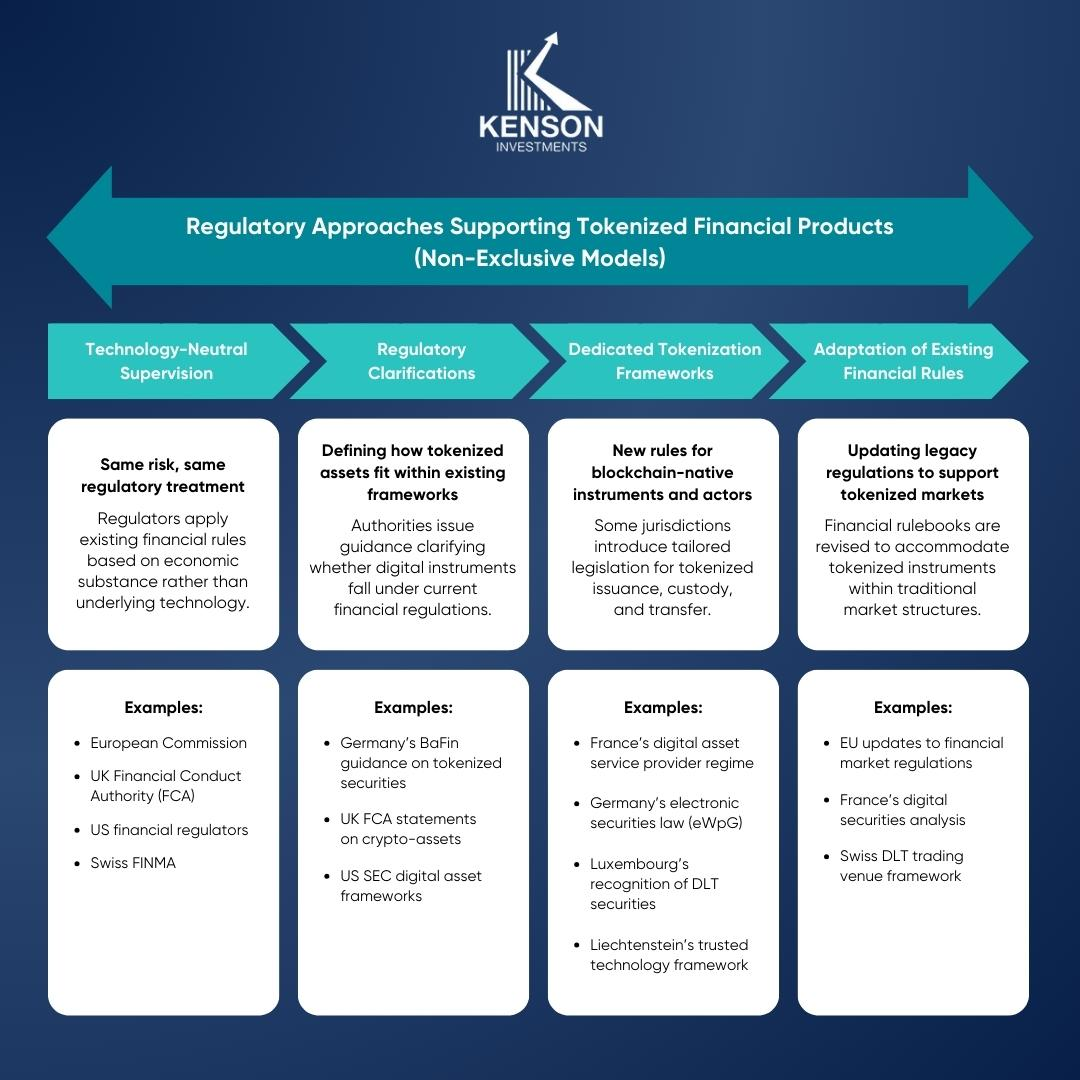
As regulators clarify expectations around digital assets, particularly in Europe and parts of Asia, institutions view programmable compliance as an advantage rather than a constraint. It allows broader distribution without compromising oversight.
Custodial Interfaces and Asset Safekeeping
Custody remains one of the most sensitive points in distribution. Private banks and RIAs rely on qualified custodians to safeguard client assets. Tokenized products must fit within those custody frameworks, whether through onchain custody, omnibus structures, or hybrid models.
In practice, many tokenized assets are held by custodians that abstract key management away from advisors and clients. Tokens appear as book-entry positions within custody platforms, even though settlement occurs onchain. This model supports security in digital asset management and aligns with fiduciary obligations.
Custodians are also expanding services around corporate actions, reporting, and reconciliation for tokenized products. These capabilities are essential for scaling distribution beyond early adopters.
Advisor Education and Product Framing
Distribution is not purely technical. Advisors need to understand how tokenized products behave within portfolios. Liquidity terms, valuation frequency, and settlement timelines differ from traditional instruments. Clear framing helps advisors communicate these nuances to clients.
Here, digital asset advisory services play a role in translating infrastructure into investment context. Advisors are not asked to become crypto specialists. Instead, they need enough clarity to position tokenized products alongside existing allocations.
This educational layer supports informed investment analysis and portfolio management without encouraging speculative behavior. It also reduces the risk of misalignment between client expectations and product mechanics.
Qualified Channels and Controlled Access
Most tokenized products today distribute through qualified channels rather than open marketplaces. These channels include private bank platforms, RIA networks, and institutional marketplaces with gated access. Controlled distribution supports compliance and liquidity management, especially for private credit and alternative strategies.
Over time, interoperability between these channels will matter. Investors may hold tokenized assets across multiple custodians or platforms. Distribution infrastructure must support portability without breaking controls, a challenge that continues to shape best practices in digital asset consulting.
Interoperability, Secondary Liquidity, and the Next Phase of Distribution
As tokenized products move beyond pilots, distribution infrastructure must support more than initial placement. The next phase centers on interoperability, secondary liquidity, and data standards that allow products to circulate across qualified channels without operational breakage.
Interoperability Across Custodians and Platforms
Interoperability is not about moving assets freely in the retail sense. For private banks and RIAs, it means controlled portability. An investor may change custodians, consolidate reporting, or rebalance across platforms, while eligibility and compliance rules remain intact.
Tokenized distribution infrastructure increasingly relies on standardized identifiers and permission frameworks that travel with the asset. These frameworks allow a tokenized fund or note to be recognized consistently across custodians and wealth platforms. Ownership can change without re-onboarding the investor at every step.
This capability matters because institutional clients rarely operate within a single platform. Without interoperability, tokenized assets risk becoming trapped liquidity. This is why digital asset management consulting services now focus on cross-platform compatibility as a core requirement rather than a future enhancement.
Secondary Liquidity and Controlled Trading
Secondary liquidity remains one of the most debated topics in tokenization. While public markets prize continuous trading, private wealth channels prioritize stability and suitability. Tokenized distribution infrastructure reflects this preference.
Most tokenized products trade through periodic windows, negotiated transfers, or approved secondary venues rather than open order books. These mechanisms provide optional liquidity without encouraging short-term turnover. Advisors can reposition portfolios while maintaining alignment with client objectives.
From a market structure perspective, this approach changes how liquidity is measured. Volume is less visible, but execution certainty improves. For institutions focused on risk management in crypto investments, predictable liquidity often outweighs raw turnover.
Secondary liquidity also relies on accurate valuation data. Tokenized products increasingly integrate offchain NAV calculations with onchain settlement triggers. This hybrid model supports transparency without exposing sensitive portfolio data publicly.
Data Standards and Reporting Consistency
Distribution at scale depends on data consistency. Advisors and compliance teams require standardized fields for valuation, income, and risk metrics. Tokenized assets must feed these data points into existing reporting systems alongside traditional securities.
Industry initiatives are converging around common schemas for tokenized instruments. These schemas define how data is published, updated, and reconciled. They also support auditability, an increasingly important factor for institutional adoption.
For firms providing consulting on digital asset management, data standards are often the differentiator between successful distribution and stalled integration. Without clean data, even well-structured products struggle to gain traction.
Advisor Trust and Client Experience
Ultimately, distribution succeeds or fails at the advisor-client interface. Clients do not care whether an asset is tokenized. They care about outcomes, transparency, and trust. Advisors need confidence that tokenized products behave predictably within portfolios.
This is why many institutions emphasize gradual integration. Tokenized products appear first as small allocations, often in alternatives or fixed income sleeves. Advisors observe performance, liquidity, and reporting before expanding exposure. This measured approach supports long-term investment in digital assets without forcing abrupt change.
Education remains ongoing. Advisors increasingly rely on strategic digital asset consulting partners to stay informed as infrastructure evolves. The goal is not constant trading, but informed stewardship.
Competitive Landscape and Platform Strategy
The competitive landscape for tokenized distribution infrastructure is intensifying. Asset managers, fintech platforms, and custodians all seek to control key layers of the stack. Some focus on issuance and lifecycle management. Others emphasize advisor interfaces or compliance tooling.
Private banks and RIAs are responding by favoring modular systems. Rather than committing to a single vendor, they assemble interoperable components that fit existing operations. This modularity aligns with innovative solutions in digital asset consulting, where flexibility often outperforms proprietary lock-in.
As assets under management in tokenized products move into the tens of billions, distribution infrastructure becomes a strategic asset. Firms that solve integration challenges early gain a durable advantage in client trust and operational efficiency.
Building Distribution That Works Inside Real Institutions
Understanding tokenized share class migration requires clarity, education, and careful planning, including considerations around RWA tokenization investment and tokenfi rwa. At Kenson Investments, our Digital Asset Specialists focus on helping market participants interpret infrastructure shifts, assess operational readiness, and understand how blockchain-based structures interact with existing fund frameworks, including insights relevant to institutional supply chain digitization, Solana DeFi risk management, and ai cloud mining.
Explore our educational resources on digital asset consultation to enhance ROI with digital asset consulting, review insights on digital asset investments relevant to nft investors, or contact us to learn how structured market awareness and consultancy for DeFi finance investments support informed decision-making.
Disclaimer: The information provided on this page is for educational and informational purposes only and should not be construed as financial advice. Crypto currency assets involve inherent risks, and past performance is not indicative of future results. Always conduct thorough research and consult with a qualified financial advisor before making investment decisions.
“The crypto currency and digital asset space is an emerging asset class that has not yet been regulated by the SEC and US Federal Government. None of the information provided by Kenson LLC should be considered as financial investment advice. Please consult your Registered Financial Advisor for guidance. Kenson LLC does not offer any products regulated by the SEC including, equities, registered securities, ETFs, stocks, bonds, or equivalents”