
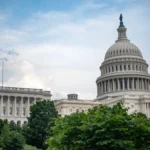







Circle’s receipt of final approval from the Office of the Comptroller of the Currency on July 10, 2026, gives the USDC ecosystem a federally regulated trust-bank component. Circle National Trust, formally chartered as First National Digital Currency Bank, N.A., will initially provide fiduciary digital asset custody services to Circle and its affiliates. Reserve management may be added later, subject to the bank’s approved business plan and supervisory requirements.
The headline can easily create the wrong impression. Circle National Trust is not becoming a conventional deposit-taking bank, and the OCC’s earlier charter decision states that the bank itself will not issue the stablecoin. USDC issuance and trust-bank activities remain legally distinct functions within the broader corporate structure.
That distinction matters to institutions. A federal charter can strengthen governance, examination, custody, and reporting, but it does not eliminate the need to evaluate reserve liquidity, redemption mechanics, affiliate relationships, blockchain operations, or insolvency exposure.
Federal Supervision Is Not Deposit Insurance
A national trust bank is federally chartered and supervised by the OCC. Its fiduciary activities, governance, cybersecurity, capital position, liquidity, compliance program, and operating controls can therefore be examined under a federal banking framework.
That does not mean USDC holdings receive Federal Deposit Insurance Corporation protection. Circle National Trust will not be an insured depository institution, according to the OCC’s conditional charter approval. The FDIC explains that its coverage applies to eligible deposit products held at FDIC-insured institutions, such as checking accounts, savings accounts, money market deposit accounts, and certificates of deposit. A stablecoin is not automatically converted into an insured deposit because an affiliated company receives a bank charter.
Institutional due diligence must therefore separate three questions:
Is the entity supervised by a banking regulator? Are the relevant assets held under enforceable fiduciary or custodial arrangements? Does any specific balance qualify for deposit insurance?
These questions measure different protections. Treating them as interchangeable can obscure the actual counterparty and recovery structure.
What Changes in the Custody Architecture
Circle National Trust will initially provide fiduciary digital asset custody for Circle and its affiliates. Depending on demand, the bank may later serve a limited number of banks, regulated derivatives organizations, and other institutional customers.
This adds a federally supervised layer to the digital asset custody architecture supporting USDC. It can place private key management, wallet authorization, transaction approval, recordkeeping, cybersecurity, and asset safeguarding under bank-level policies and examination.
For institutional users, the relevant controls extend beyond secure key storage. Due diligence should assess:
Who can authorize transfers from controlled wallets? How are signing responsibilities separated? What happens when credentials are compromised? Can transactions be paused during an incident? How are blockchain records reconciled with internal books? Who approves changes to custody software or smart contract integrations?
These questions form part of broader digital asset internal controls. A regulated custodian may reduce some operational uncertainty, but the control environment still depends on technology design, personnel access, vendor relationships, and incident-response procedures.
Reserve Custody and Reserve Management Are Different
The charter also creates a possible path for Circle National Trust to manage the USDC reserve. That capability was described as a future activity, rather than an immediate service at opening.
Custody means safeguarding assets and maintaining records. Reserve management includes decisions and processes involving liquidity, maturities, eligible instruments, concentration limits, cash availability, and redemption funding. Institutions should not assume that placing both functions within a regulated structure makes them identical.
The Bank for International Settlements’ 2026 analysis argues that stablecoins intended to operate as money require reliable redemption at par, low-risk reserve assets, intraday liquidity, and credible support during periods of stress. Regulation of the custodian addresses only part of that framework. The reserve must also remain sufficiently liquid when redemption requests rise sharply.
Strong stablecoin liquidity infrastructure depends on more than the nominal value of reserve assets. Maturity mismatches, settlement cutoffs, banking hours, asset-sale capacity, and concentration among reserve counterparties can all affect how quickly redemptions are processed.

Segregation Determines What Happens in Insolvency
A central due-diligence question is whether reserve and custodial assets are legally segregated from the issuer, the trust bank, affiliated companies, and third-party custodians.
Operational segregation means assets are recorded separately. Legal segregation determines whether creditors can reach them during bankruptcy or receivership. The two should not be confused.
International guidance on stablecoin arrangements and cross-border payments states that reserve assets should be properly recorded, safely custodied, segregated from group and custodian assets, and protected against creditor claims if the issuer becomes insolvent. It also emphasizes robust legal claims and timely redemption under normal and stressed conditions.
Institutional reviews should examine trust documents, account titles, beneficial ownership records, perfection of security interests, governing law, custodian agreements, and recovery procedures. A federal charter may improve supervisory visibility, but bankruptcy remoteness still depends on contractual structure and applicable law.
Affiliate Relationships Still Require Scrutiny
Circle National Trust will operate within the Circle corporate group and initially serve affiliates. That creates practical efficiencies, but also raises conflict-of-interest questions.
The OCC reviewed the proposed structure under affiliate transaction rules, including Sections 23A and 23B of the Federal Reserve Act and Regulation W. Those rules are intended to limit certain exposures and require appropriate terms for transactions between banks and affiliates.
Institutions should still determine how service fees are established, whether the bank can independently challenge affiliate decisions, who controls reserve-management mandates, and how related-party transactions are disclosed.
Board independence, compliance escalation, audit access, and the authority of fiduciary officers become important indicators of institutional digital asset readiness. A charter changes the supervisory perimeter, but it does not make every related-party decision free from commercial incentives.
Reporting Can Improve Visibility Without Removing Risk
OCC supervision introduces ongoing expectations around capital, liquidity, audits, information security, governance, and material changes to the bank’s business plan. The charter conditions required minimum capital, eligible liquid assets, quarterly assessments, an external audit, and OCC review of key systems and operational architecture.
These requirements can make risk easier to observe. They may also give institutional counterparties more standardized information for vendor assessments, compliance workflows, and operational reviews.
Reporting does not prevent every failure. Disclosures can become outdated between reporting dates, technical incidents may occur without warning, and blockchain transfers can continue outside conventional banking hours. Effective digital asset risk management still requires transaction monitoring, concentration analysis, redemption testing, legal review, and contingency planning.
Kenson Investments’ educational material on stablecoin market structure and digital asset risk management resources helps informed market participants separate regulatory status from the underlying operational protections.
Regulation Changes the Questions, Not the Need to Ask Them
Circle National Trust gives the USDC ecosystem a federally supervised custody institution and a potential future reserve manager. That is materially different from operating only through state money-transmission licenses, commercial-bank relationships, and third-party custodians.
It does not make USDC an FDIC-insured deposit, remove redemption risk, eliminate affiliate conflicts, or determine how every claim would be treated during insolvency. Its significance lies in bringing more of the supporting infrastructure within a defined supervisory framework.
For institutions, the due-diligence process should now examine how the trust bank interacts with the issuer, reserve holders, custodians, blockchain networks, banking partners, and redemption channels. The presence of federal supervision can reduce uncertainty in some areas while making the remaining dependencies easier to identify.
Build a Clearer View of Stablecoin Infrastructure
Stablecoin analysis increasingly requires an understanding of legal entities, reserve structures, custody systems, redemption procedures, and regulatory boundaries, not simply token supply or transaction volume.
Kenson Investments provides educational research on stablecoins, institutional blockchain infrastructure, custody, and compliance-aware market development. Explore our digital asset market education to follow how regulated infrastructure is changing the responsibilities and risk assessments surrounding blockchain-based financial systems.
Disclaimer: The information provided on this page is for educational and informational purposes only and should not be construed as financial advice. Crypto currency assets involve inherent risks, and past performance is not indicative of future results. Always conduct thorough research and consult with a qualified financial advisor before making investment decisions.
“The crypto currency and digital asset space is an emerging asset class that has not yet been regulated by the SEC and US Federal Government. None of the information provided by Kenson LLC should be considered as financial investment advice. Please consult your Registered Financial Advisor for guidance. Kenson LLC does not offer any products regulated by the SEC including, equities, registered securities, ETFs, stocks, bonds, or equivalents”