


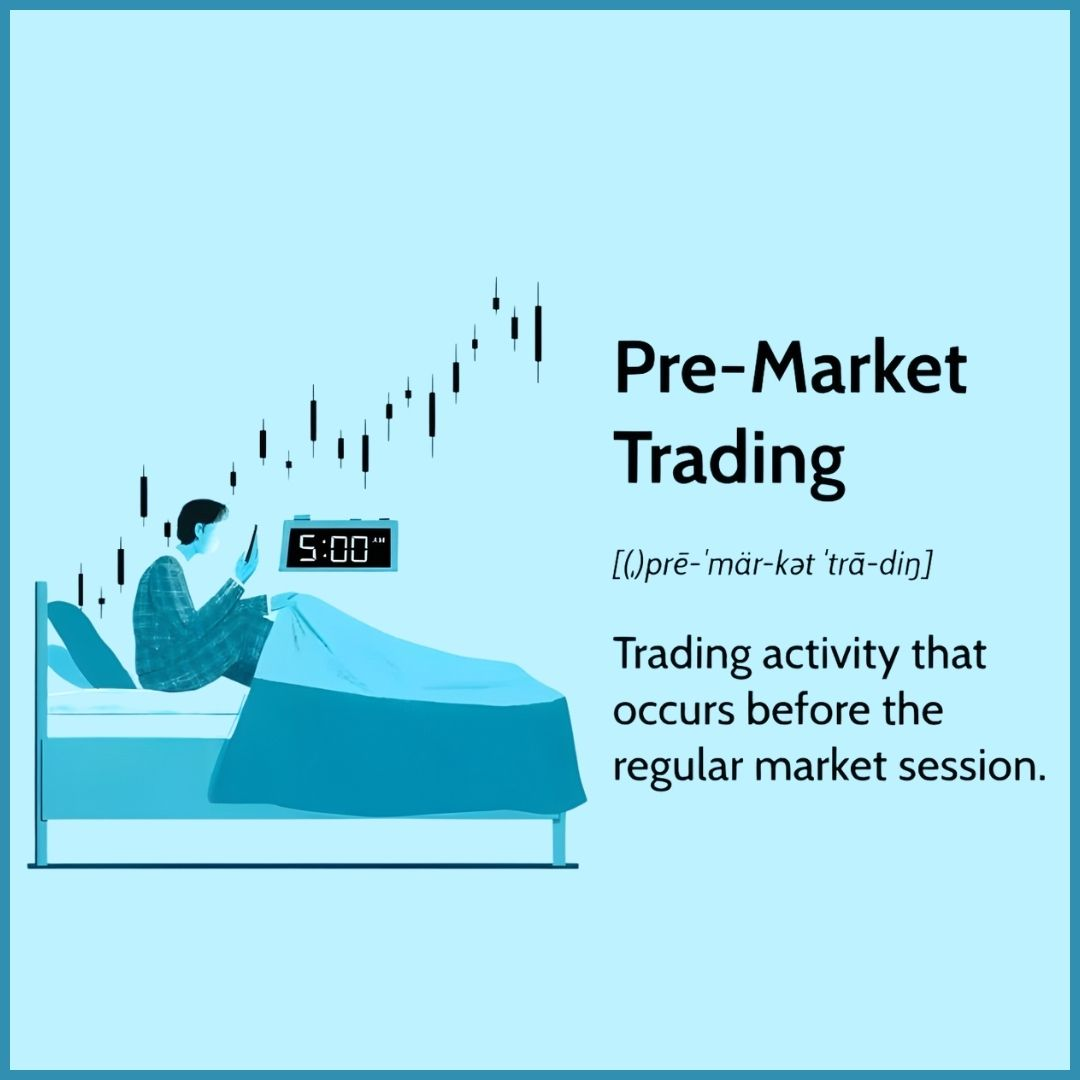
In traditional financial markets, time has historically served as a structural safeguard. Trading hours imposed pauses that limited exposure, reduced reactionary behavior, and created natural intervals for reassessment. Participants could step away, review developments, and return when markets reopened. These pauses were not merely operational conveniences; they functioned as behavioral circuit breakers.
Continuous crypto markets alter this structure entirely. Digital assets trade without interruption, across global venues, every hour of every day. There is no opening bell, no closing session, and no enforced downtime. As a result, the concept of “waiting it out”, relying on time itself to absorb volatility or emotional stress, no longer holds.
This shift has direct implications for behavioral risk, risk management in crypto investments, and long-term investment in digital assets. Understanding how continuous crypto markets reshape decision-making is essential for anyone assessing blockchain-based financial systems from an institutional perspective.
The Structural Difference Between Continuous and Session-Based Markets
Session-based markets impose boundaries. These boundaries:
- Limit the duration of exposure within a single trading day
- Reduce the speed at which reactions compound
- Introduce mandatory reassessment points
Continuous crypto markets remove those boundaries. Price discovery, liquidity shifts, and information dissemination occur without interruption. Market participants are no longer insulated by time-based constraints.
In digital assets, uncertainty compounds more rapidly because:
- News can emerge at any moment
- Price movements do not pause for interpretation
- Liquidity conditions change continuously across jurisdictions
This structure fundamentally changes how risk manifests. Market exposure is no longer episodic; it is persistent.
Why “Waiting It Out” Once Worked
The idea of waiting through volatility relies on two assumptions:
- That markets will pause, allowing emotions to settle
- That participants can disengage without consequence
In traditional systems, both assumptions were often valid. Overnight closures and weekend gaps introduced enforced distance between participants and price movements. These intervals allowed for reflection, review of data, and recalibration of strategy.
In continuous crypto markets, disengagement is optional rather than structural. The market continues regardless of participant presence. This creates an environment where behavioral risk increases, not because participants act irrationally, but because the system no longer protects them from constant stimuli.

Continuous Crypto Markets and Behavioral Risk
Behavioral risk refers to errors introduced by human response patterns rather than flawed analysis. In uninterrupted markets, these risks intensify.
Key contributors include:
- Constant visibility of price movements
- Immediate access to execution
- Absence of cooling-off periods
Digital assets expose participants to persistent feedback loops. Price changes are visible in real time, across devices, without enforced breaks. This environment encourages monitoring rather than assessment.
Over time, constant exposure can degrade decision quality. Reaction replaces evaluation. The issue is not market volatility itself, but the lack of structural friction that once moderated human response.
Speed, Reflexivity, and Emotional Overexposure
Reflexivity describes the interaction between market behavior and participant perception. In continuous markets, reflexivity accelerates.
When markets move without pause:
- Reactions influence price
- Price reinforces reactions
- Feedback loops compress decision timelines
Digital assets amplify this effect due to global participation and rapid information propagation. The result is an environment where emotional exposure persists longer than in session-based markets.
Without time-based separation, participants are more likely to interpret short-term movements as signals rather than noise. This increases behavioral risk even among those pursuing long-term investment in digital assets.
Why Risk Management Must Replace Time-Based Assumptions
In traditional systems, time acted as a passive risk mitigant. In continuous crypto markets, risk management must be explicit.
Risk management in crypto investments increasingly depends on:
- Predefined decision frameworks
- Process-based exposure controls
- Structured review intervals are independent of market hours
The absence of market closures means that discipline cannot rely on external constraints. Instead, it must be embedded within operational design.
This shift places greater emphasis on internal governance, documentation, and procedural clarity.

Continuous Markets and the Illusion of Optional Engagement
One of the more subtle challenges in digital assets is the illusion that engagement is optional. While participants can step away, the market does not.
This creates asymmetry between perception and reality. Participants may believe they are disengaging, but exposure persists through price discovery, liquidity changes, and correlated market activity.
In continuous crypto markets, risk exists independently of attention. This reinforces the need for predefined structures that operate regardless of participant presence.
Implications for Long-Term Investment in Digital Assets
Long-term investment in digital assets is often discussed in terms of holding periods. However, duration alone does not mitigate behavioral risk in continuous markets.
Key considerations include:
- Long-term positioning does not reduce exposure to short-term volatility
- Emotional fatigue accumulates even when positions remain unchanged
- Strategic intent can erode under persistent stimuli
Continuous markets require long-term strategies to be supported by operational discipline rather than reliance on patience alone.
Without process, time does not neutralize risk; it compounds it.
Decision Frameworks as the New Market Pause
In the absence of structural pauses, decision frameworks function as artificial boundaries.
Effective frameworks typically include:
- Defined conditions for action and inaction
- Pre-established review cycles
- Documentation of assumptions and constraints
These frameworks introduce friction where none exists naturally. They slow response, enforce consistency, and reduce the influence of transient market movements.
Within continuous crypto markets, structured decision frameworks are not optional enhancements; they are foundational components of risk control.
Behavioral Risk Is Not a Retail Phenomenon
Behavioral risk is often mischaracterized as a retail issue. In reality, continuous markets affect all participants.
Institutional exposure to digital assets introduces additional layers of complexity:
- Multi-venue liquidity
- Cross-border regulatoryconsiderations
- Operational dependencies
Without enforced market closures, institutional processes must compensate through governance and procedural rigor.
The absence of pauses increases the importance of clearly defined roles, escalation protocols, and review mechanisms.

Innovative Investment Solutions Must Address Market Structure
Innovative investment solutions in digital assets are often evaluated based on technology or access. However, structural compatibility with continuous markets is equally critical.
Solutions that fail to account for uninterrupted trading environments risk amplifying behavioral exposure rather than mitigating it.
Effective solutions emphasize:
- Process over prediction
- Controls over speed
- Governance over responsiveness
In this context, innovation is less about acceleration and more about constraint.
Continuous Markets and Security Considerations
Continuous exposure also intersects with security in digital asset operations. Persistent engagement increases the surface area for errors related to fatigue, attention drift, and process shortcuts.
Security incidents often occur during periods of cognitive overload rather than analytical failure. Continuous markets contribute to this environment by eliminating downtime.
Risk management in crypto investments, therefore, extends beyond market exposure into operational resilience.
Rethinking Patience in a 24/7 Environment
Patience is often cited as a virtue in long-term strategies. In continuous crypto markets, patience must be operationalized rather than assumed.
Waiting without structure is indistinguishable from inaction under stress. Structured patience, by contrast, is supported by:
- Clear thresholds
- Scheduled evaluations
- Defined boundaries
This distinction is critical in environments where markets never disengage.
The Role of Education in Continuous Market Awareness
Understanding market structure is a prerequisite for effective participation. Continuous crypto markets require a different cognitive posture than session-based systems.
Education that emphasizes:
- Market mechanics
- Behavioral risk
- Process design
is essential for aligning expectations with reality.
Digital assets do not merely introduce new instruments; they introduce a new temporal framework for markets themselves.
Final Remarks: Time Is No Longer a Shield
Continuous crypto markets remove the protective function that time once provided. There is no waiting for calm, no enforced pause for reflection, and no structural barrier between impulse and execution.
In this environment, risk management in crypto investments depends on deliberate design rather than inherited market conventions. Behavioral risk increases not because participants lack discipline, but because the system no longer supplies it by default.
Long-term investment in digital assets, therefore, requires frameworks that replace time with structure and patience with process.
Building Structure in a Market That Never Stops
At Kenson Investments, we focus on education around market structure, behavioral risk, and risk management in crypto investments within continuous trading environments. We believe that understanding how continuous crypto markets reshape decision-making is essential for evaluating digital assets responsibly.
Our educational resources examine how innovative investment solutions can prioritize process, governance, and operational discipline in systems where time no longer acts as a safeguard. We invite readers to engage with our research to better understand how long-term investment in digital assets intersects with continuous market design. Register now!
Disclaimer: The information provided on this page is for educational and informational purposes only and should not be construed as financial advice. Cryptocurrency assets involve inherent risks, and past performance is not indicative of future results. Always conduct thorough research and consult with a qualified financial advisor before making investment decisions.
“The cryptocurrency and digital asset space is an emerging asset class that has not yet been regulated by the SEC and the US Federal Government. None of the information provided by Kenson Investments should be considered as financial investment advice. Please consult your Registered Financial Advisor for guidance. Kenson Investments does not offer any products regulated by the SEC, including equities, registered securities, ETFs, stocks, bonds, or equivalents.”