










A prediction market price is often interpreted as the probability of an event occurring. When an event contract trades at $0.70, for example, observers may read the price as a 70% chance of that outcome. However, prediction market probability is not always a direct measurement of an event’s true likelihood. The displayed price reflects trading activity, contract rules, market conditions, and participants’ willingness to buy or sell.
Understanding this distinction matters when evaluating prediction-market data as an information source. A price can aggregate useful expectations while still reflecting uncertainty, limited liquidity, or structural biases. Interpreting the number correctly requires examining how it was formed, what the contract represents, and which participants contributed to the market.
What Does a Prediction-Market Price Represent?
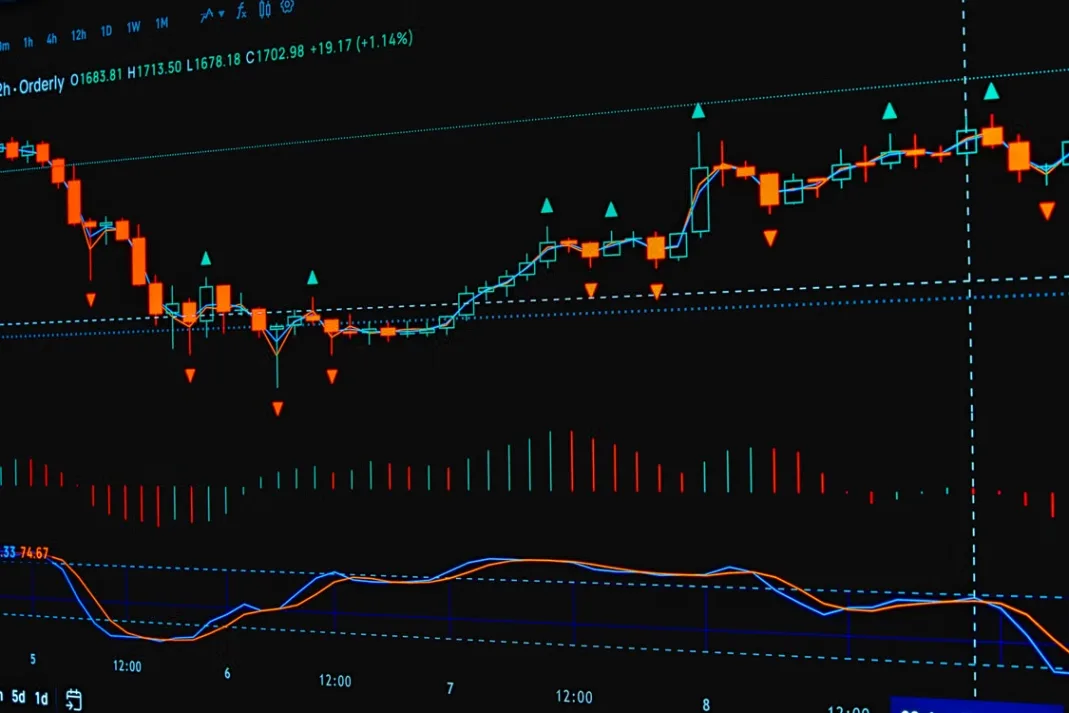
Image Alt-text: A graphical representation of Bitcoin price prediction.
Image Caption: Market-implied probabilities reflect contract terms, trading conditions, and the time of observation.
Many event contracts pay a predetermined amount if a specified outcome occurs and nothing if it does not. In a simplified binary contract with a $1 payout, a price of $0.60 can be interpreted as an implied probability of 60%.
This interpretation assumes several conditions, including a clearly defined settlement outcome, a known payout, and limited complications from transaction costs or other market frictions. Under these assumptions, the contract price offers a convenient reference point for comparing market expectations.
However, an implied probability is not the same as an independently verified probability. The price records the terms at which participants are willing to transact. It does not establish that the market has discovered an objectively correct forecast.
For prediction market probability to be meaningful, analysts must understand the relationship between the contract’s financial terms and the event being measured.
Why Price and Probability Can Diverge
A contract price can contain information without being an unbiased estimate. Several factors explain why.
Market Frictions Affect Prices
Trading costs, bid-ask spreads, limited liquidity, and restrictions on participation can influence observed prices. A quoted price may reflect the most recent transaction rather than the level at which a substantial volume could trade.
In a thin market, a relatively small order can move the displayed price considerably. The resulting change may appear to indicate a meaningful shift in expectations, even when little new information has entered the market.
Transaction costs can also influence participation. If entering or adjusting a position becomes expensive, some participants may refrain from trading even when their assessments differ from the prevailing price.
Analysts should therefore distinguish between a current quote, a completed transaction, and a price supported by substantial trading activity. These observations provide different levels of evidence.
Participant Mix Shapes the Information
Prediction markets aggregate the views of their participants, but participants are not necessarily representative of the broader population or all relevant experts.
Some may have specialized knowledge. Others may rely on public reporting, personal judgment, or incomplete information. Participation may also be concentrated among individuals with similar perspectives, shared information sources, or common incentives.
Consequently, a market price reflects the information and incentives of those who can and choose to participate. It should not automatically be treated as a survey of public opinion or a consensus among qualified specialists.
Participant diversity, access to relevant information, and the distribution of trading activity can all affect how informative a price becomes.
Contract Design Defines the Question
An event contract measures a specific outcome under its stated rules. Small differences in wording, deadlines, thresholds, or settlement criteria can produce materially different prices.
For example, contracts concerning whether a policy will be announced by a particular date and whether it will formally take effect by that date measure different events. A price associated with one contract cannot automatically be transferred to the other.
Ambiguous settlement language introduces another concern. If participants disagree about what qualifies as the outcome, the price may incorporate uncertainty about contract interpretation alongside uncertainty about the event itself.
Before interpreting prediction market probability, analysts should read the resolution criteria, identify the relevant time horizon, and establish precisely what the contract pays for.

The Role of Liquidity and Market Structure
Liquidity affects how reliably a displayed price represents broader trading interest. Deep markets generally allow larger transactions with less price disruption, while thin markets may experience substantial movement from limited activity.
Bid and ask prices also matter. The midpoint between them is sometimes used as a reference, but it may not represent an executable transaction price. Wide spreads can signal disagreement, limited participation, or higher costs of trading.
Market structure introduces further considerations. Trading restrictions, fees, position limits, and platform-specific rules may affect who participates and how prices respond to information.
These conditions do not make prediction-market prices useless. They establish the context needed to assess their reliability. A price supported by consistent trading and narrow spreads may offer a stronger signal than an isolated quote in a thin market, although neither guarantees accuracy.
Implied Probability Is Not Calibration
A market price should also be evaluated against outcomes over time. Calibration describes whether events assigned a particular probability occur at approximately the expected frequency across a sufficiently large and appropriate sample.
For instance, if a forecasting system repeatedly assigns events a probability of 70%, a well-calibrated system would expect roughly 70% of those events to occur over many comparable observations. One event cannot establish calibration, and a small sample may produce misleading conclusions.
This distinction separates a plausible interpretation of a price from evidence that its probability estimates perform reliably. Historical evaluation requires consistent event definitions, recorded prices at comparable times, and careful treatment of resolved and unresolved contracts.
Calibration also depends on the dataset. Results from one event category or market structure may not generalize to another.
A Practical Framework for Interpreting Prices
A disciplined review of prediction-market data should consider five questions:
- What is the exact event? Read the contract wording and settlement criteria.
- How active is the market? Review trading volume, liquidity, and bid-ask spreads where available.
- Who may be influencing the price? Consider participation limits and possible concentration among market participants.
- What does the price omit? Account for fees, transaction constraints, uncertainty about settlement, and other frictions.
- Has reliability been tested? Look for historical calibration evidence across comparable events.
These checks help separate useful information from assumptions that the displayed number may not support. They also make comparisons across contracts more meaningful by establishing whether the underlying events and market conditions are genuinely comparable.
The Kenson View: Context Before Conclusions
At Kenson Investments, disciplined digital-asset education emphasizes interpreting market information within its operational and structural context. Prediction-market prices can offer insight into collective expectations, but responsible analysis requires understanding the mechanisms that produce those prices.
For prediction market probability, this means examining contract specifications, market depth, participant incentives, and the quality of available evidence before concluding. A numerical signal is a starting point for analysis, not a substitute for examining its limitations.
Continue learning with Kenson Academy’s educational resources to strengthen your understanding of market structure, data interpretation, and evidence-based analysis. A consistent framework for evaluating market signals supports more detailed research without treating any single price as a definitive forecast.
Disclaimer: The information provided on this page is for educational and informational purposes only and should not be construed as financial advice. Cryptocurrency assets involve inherent risks, and past performance is not indicative of future results. Always conduct thorough research and consult with a qualified financial advisor before making investment decisions.
“The cryptocurrency and digital asset space is an emerging asset class that has not yet been regulated by the SEC and the US Federal Government. None of the information provided by Kenson LLC should be considered as financial investment advice. Please consult your Registered Financial Advisor for guidance. Kenson LLC does not offer any products regulated by the SEC, including equities, registered securities, ETFs, stocks, bonds, or equivalents.”



