








Collateral used to sit in one place. It was pledged, monitored, and released within a single system. In digital asset markets, that assumption no longer holds. Today, collateral exists across multiple blockchains, exchanges, custodians, and decentralized protocols. Assets move between networks, are wrapped into synthetic representations, or locked into cross-chain bridges. This fragmentation introduces flexibility, but it also creates a layered set of operational risks.

For allocators engaged in digital asset investments, understanding where collateral resides is no longer sufficient. The critical question is how that collateral behaves when it is distributed across systems with different rules, security models, and liquidity conditions.
The Rise of Multi-Network Collateral Systems
The growth of blockchain ecosystems has accelerated fragmentation. Ethereum remains a dominant base layer, but capital is increasingly distributed across layer-2 networks, alternative chains, and application-specific environments.
By 2026, more than 60 percent of total value locked in decentralized finance is spread across multiple networks rather than concentrated on a single chain. Cross-chain bridges alone have facilitated billions in asset transfers, enabling collateral mobility but also introducing new dependencies.
For firms engaged in blockchain and digital asset consulting, this evolution requires a shift from single-system analysis to multi-network mapping. Collateral is no longer a static reserve. It is a distributed resource that can exist simultaneously in multiple representations.
Wrapped assets, for example, allow Bitcoin to be used as collateral on Ethereum-based platforms. While this expands utility, it also creates layered risk. The underlying asset and its wrapped version depend on different systems for security and verification.
Liquidity Fragmentation and Market Depth Illusions
Fragmentation affects liquidity in subtle ways. On the surface, markets may appear deep and active. In reality, liquidity is often distributed across venues, chains, and protocols.
This creates what can be described as liquidity mirages.
For allocators involved in digital asset portfolio management, visible liquidity on one platform does not guarantee executable depth across the broader ecosystem. Capital may be locked in separate pools, each governed by its own rules.
This is particularly relevant when comparing altcoins vs. major cryptocurrencies. Major assets tend to maintain liquidity across multiple networks, while smaller assets often rely on isolated liquidity pools that can dry up quickly under stress.
Fragmentation increases the difficulty of executing large transactions without impacting price. It also complicates exit strategies during periods of volatility.
Cross-Chain Bridges and Dependency Risk
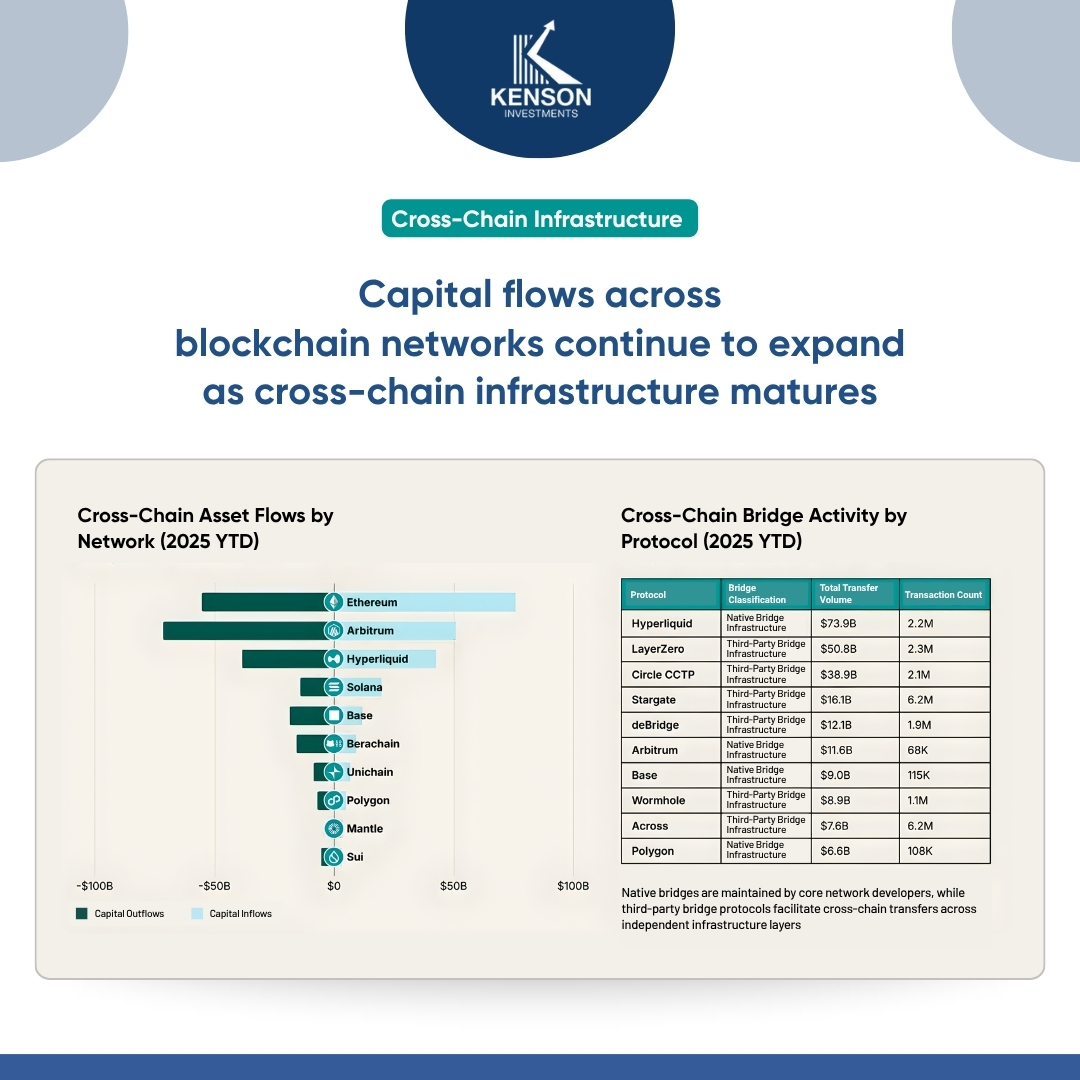
Cross-chain bridges play a central role in connecting fragmented systems. They allow assets to move between networks, enabling broader use of collateral.
However, bridges introduce a critical layer of dependency.
Between 2021 and 2025, cross-chain bridge exploits accounted for over $2 billion in losses across the digital asset ecosystem. These incidents highlight the risks associated with transferring collateral between systems with different security assumptions.
For institutions relying on digital asset advisory services, evaluating bridge infrastructure is essential. Key considerations include:
- Security architecture and audit history
- Custodial versus non-custodial design
- Liquidity backing for bridged assets
Collateral that depends on bridge integrity carries additional risk. If a bridge fails, the collateral may become inaccessible or lose value.
This directly impacts security in digital asset management, where asset availability is as important as asset valuation.
Collateral Visibility and Data Fragmentation
Fragmentation also affects visibility. When collateral is distributed across multiple systems, tracking it becomes more complex.
Onchain transparency provides detailed data within individual networks. However, aggregating this data across chains requires sophisticated tools and processes.
For firms engaged in investment analysis and portfolio management, this creates a data integration challenge. Without a unified view, assessing total exposure becomes difficult.
This is particularly relevant for investors navigating DeFi finance assets with consultants, where positions may span multiple protocols and chains simultaneously.
Incomplete visibility increases the risk of misjudging collateral sufficiency, particularly in leveraged environments.
Stablecoins and Network-Specific Liquidity
Stablecoins serve as a bridge between fragmented systems. They provide a consistent unit of account across networks, facilitating liquidity movement.
However, stablecoin liquidity is also fragmented.
The same stablecoin can exist in different forms across multiple blockchains. Each version may have varying levels of liquidity, redemption mechanisms, and usage patterns.
By 2026, stablecoin supply is distributed across dozens of networks, with Ethereum, Tron, and newer chains each hosting significant volumes. This distribution affects how easily stablecoins can be deployed as collateral.
For investors evaluating stablecoins for investment, network-specific liquidity must be considered alongside overall market capitalization.
Institutional frameworks focused on digital asset investment solutions increasingly differentiate between:
- Native stablecoin liquidity on a given chain
- Bridged or wrapped versions with additional dependencies
This distinction influences collateral eligibility and usability.
Operational Complexity in Institutional Workflows
For institutions, fragmentation introduces operational complexity that extends beyond technical considerations.
Managing collateral across multiple systems requires:
- Coordinated custody arrangements
- Cross-platform monitoring tools
- Defined processes for asset transfer and reconciliation
Firms offering digital asset management consulting services must design workflows that account for these complexities.
This includes integrating data from multiple sources, ensuring consistent valuation, and maintaining real-time awareness of collateral positions.
For a global digital asset consulting firm, the ability to manage fragmentation efficiently becomes a key differentiator.
Without structured processes, operational risk increases. Errors in tracking or transferring collateral can lead to delays, losses, or missed opportunities.
DeFi Fragmentation and Collateral Reuse
Decentralized finance amplifies fragmentation through composability. Assets can be deposited, borrowed against, and redeployed across multiple protocols.
This creates layered collateral structures that span different networks.
While this increases capital efficiency, it also introduces systemic complexity.
For those engaged in consultancy for DeFi finance investments, understanding these layers is critical. Collateral may be reused multiple times, with each layer introducing additional dependencies.
This is where decentralized finance advisory frameworks play a role. They help identify:
- Hidden leverage within collateral chains
- Interdependencies between protocols
- Points of failure that could trigger cascading effects
Transparency exists, but interpreting it requires expertise.
Institutional Evaluation of Fragmented Collateral
Institutional allocators approach fragmentation with caution. The focus is on maintaining control and visibility despite distributed infrastructure.
Evaluating fragmented collateral involves:
- Mapping asset location across networks
- Assessing liquidity depth on each platform
- Understanding dependencies between systems
For firms providing digital asset management consulting, this evaluation is continuous rather than static.
This is particularly relevant in investing in the digital age, where infrastructure evolves rapidly and new networks emerge frequently.
Allocators must adapt their frameworks to account for these changes without compromising capital protection.
How Kenson Approaches This
Collateral fragmentation is treated as a structural constraint rather than a temporary inefficiency.
Within Kenson’s framework, the priority is maintaining clarity across distributed systems.
This begins with limiting unnecessary complexity. Assets are selected based on their ability to maintain liquidity and transparency across multiple networks.
Exposure to highly fragmented or illiquid collateral structures is minimized.
Real-time monitoring systems are used to track asset positions across platforms, ensuring that visibility is maintained even as collateral moves.
Dependencies on cross-chain bridges and wrapped assets are evaluated carefully. Systems with elevated operational or security risk are excluded from consideration. This approach supports broader objectives in long-term investment in digital assets, where stability and control outweigh short-term efficiency gains.
Strategic Implications for Allocators
Collateral fragmentation changes how capital is deployed and managed.
For allocators evaluating digital asset management services, the implications include:
- Increased importance of liquidity mapping across networks
- Greater reliance on monitoring systems for real-time visibility
- Need for conservative assumptions regarding asset transferability
Fragmentation does not eliminate opportunity. It redistributes risk.
Investors engaged in crypto asset management must balance the benefits of expanded access with the challenges of distributed infrastructure.
This is particularly relevant when investing in cryptocurrencies within institutional frameworks, where consistency and risk control are priorities.
The Direction of Fragmented Financial Infrastructure
Fragmentation is unlikely to reverse. As blockchain ecosystems continue to evolve, new networks and protocols will emerge.
Efforts to improve interoperability, including cross-chain messaging and unified liquidity layers, are underway. However, these solutions introduce their own complexities and risks.
For firms engaged in digital assets consulting, the focus is shifting toward managing fragmentation rather than eliminating it.
This requires integrating innovative solutions in digital asset consulting with disciplined operational processes.
Maintain Control in a Fragmented Market
Collateral fragmentation is a defining feature of modern digital financial systems. It expands access but also increases complexity, requiring disciplined oversight and structured processes.
Kenson Investments supports investors in understanding how collateral behaves across networks, helping maintain visibility, control, and consistency in evolving markets.
Comprehensive digital asset consulting services can support more informed positioning through clarity, risk awareness, and a commitment to long-term capital protection. Reach out to us.
Disclaimer: The information provided on this page is for educational and informational purposes only and should not be construed as financial advice. Crypto currency assets involve inherent risks, and past performance is not indicative of future results. Always conduct thorough research and consult with a qualified financial advisor before making investment decisions.
“The crypto currency and digital asset space is an emerging asset class that has not yet been regulated by the SEC and US Federal Government. None of the information provided by Kenson LLC should be considered as financial investment advice. Please consult your Registered Financial Advisor for guidance. Kenson LLC does not offer any products regulated by the SEC including, equities, registered securities, ETFs, stocks, bonds, or equivalents”