




Executive Summary
Financial compliance has historically operated through documents, representations, post-trade supervision, and human oversight. Transfer agents validated eligibility. Legal agreements governed lockups. Jurisdictional restrictions were monitored through reporting and enforcement after settlement occurred. Tokenized infrastructure is altering that sequence.
Instead of relying primarily on contractual promises and supervisory review, market participants are embedding programmable compliance controls directly into digital instruments. Transfer permissions, jurisdictional eligibility, holding limits, and lockup conditions are increasingly enforced at the protocol layer. Transactions that violate rules do not merely trigger remediation; they fail to execute.
This transition from document-based compliance to executable restriction logic represents a structural shift in risk timing. Enforcement moves from ex post supervision to ex ante determinism. The compliance event occurs at the moment of transfer, not after settlement.
For high-net-worth investors and institutional allocators, this shift has capital consequences. It affects liquidity predictability, governance transparency, operational resilience, and jurisdictional exposure. It reduces certain forms of counterparty and compliance risk while introducing new technical, legal, and liquidity constraints.
This paper analyzes how programmable compliance controls reshape market structure, how embedded tokenized asset restrictions alter liquidity dynamics, and how disciplined managers must adapt governance and capital planning accordingly.
I. From Document-Based Compliance to Executable Logic
Why This Matters to Investor Capital
Traditional compliance frameworks depend on layered processes:
- Offering memoranda define eligibility.
- Subscription documents capture representations.
- Transfer agents review ownership changes.
- Custodians and administrators reconcile records.
- Regulators enforce breaches after detection.
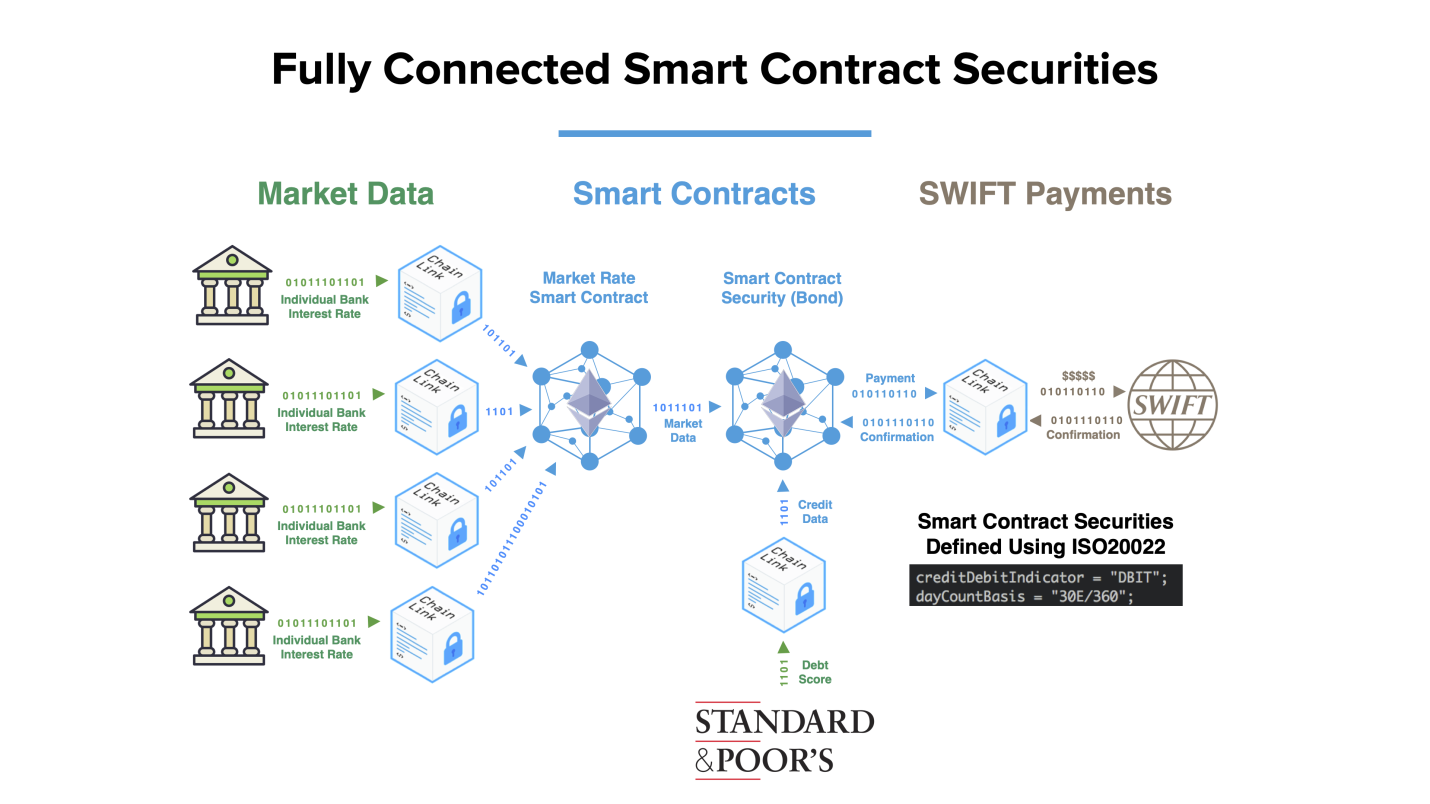
This structure assumes settlement can occur before verification is complete, provided representations are documented and auditable. Enforcement is supervisory. In tokenized markets, compliance logic can be coded directly into smart contracts. If a wallet address is not whitelisted, the transfer reverts. If a holding cap is exceeded, the transaction fails. If a jurisdictional flag is triggered, settlement cannot finalize.
Risk timing shifts. Under document-based systems, non-compliant transfers may settle and require remediation. Under programmable systems, non-compliant transfers are structurally prevented. For allocators, this reduces certain regulatory and reputational exposures. However, it introduces operational determinism. Code executes precisely as written. There is no discretionary override unless explicitly designed. Capital protection requires understanding both sides of that equation.
Structural Change in Risk Sequencing
The migration toward tokenized asset restrictions embedded at the protocol layer alters the sequence of events: Legacy Sequence:
Trade → Settlement → Supervision → Remediation
Programmable Sequence:
Rule Check → Settlement (if compliant) → Audit Trail
This reduces post-settlement enforcement risk but introduces pre-settlement gating risk.
The gating function can:
- Limit transferability.
- Impose investor concentration caps.
- Enforce jurisdictional exclusion.
- Apply time-based lockups automatically.
In regulated environments such as those shaped by MiCA in the European Union and evolving SEC custody and tokenization guidance in the United States, this architecture aligns with increasing expectations around real-time compliance enforcement.
However, enforcement precision creates liquidity rigidity.
II. How Programmable Compliance Controls Alter Risk Timing
Risk Reduction through Deterministic Enforcement
Deterministic enforcement reduces:
- Unauthorized transfer risk.
- Accidental regulatory breach.
- Holding concentration violations.
- Restricted period violations.
For institutional allocators, this reduces operational compliance risk. If restrictions are encoded directly into token contracts, enforcement does not depend on administrative vigilance alone. For example, several regulated tokenized private credit platforms now enforce accredited investor verification through on-chain whitelisting. Only pre-approved addresses can receive transfers. Attempts to transfer outside the eligibility perimeter fail. This reduces supervisory overhead and regulatory breach probability. From a capital preservation standpoint, predictable compliance enforcement lowers headline regulatory risk.
Risk Introduced Through Code-Based Finality
However, deterministic systems introduce rigidity.
If compliance logic is overly restrictive or incorrectly implemented:
- Liquidity may freeze.
- Legitimate transfers may fail.
- Emergency restructuring may require contract upgrades.
Unlike document-based frameworks, code executes without contextual interpretation. For instance, tokenized funds in pilot environments have implemented hard-coded transfer lockups that prevent secondary liquidity during stress periods. While this protects regulatory posture, it can constrain capital mobility when market conditions deteriorate. Determinism replaces discretion. Allocators must evaluate whether programmable restrictions incorporate governance escape mechanisms, upgrade pathways, and multi-signature oversight to address exceptional circumstances.
Kenson’s Interpretation of Risk Timing
From our perspective, the shift toward embedded compliance alters where risk resides. It reduces supervisory ambiguity but concentrates risk in code correctness and governance structure. When enforcement becomes deterministic, capital risk migrates from human process failure to architectural design failure. The relevant question for allocators is not whether programmable enforcement is superior. It is whether governance over that code is disciplined, audited, and adaptable under stress.
III. Operational Trade-Offs of Automatic Enforcement
Efficiency Gains
Embedding programmable compliance controls reduces:
- Manual verification delays.
- Transfer agent reconciliation cycles.
- Administrative overhead.
- Ambiguity in eligibility review.
Automated enforcement increases auditability. Every transfer attempt leaves a traceable record of rule validation. In cross-border issuance environments shaped by MiCA or IOSCO-aligned guidance, such automation supports regulatory reporting consistency. For capital committees evaluating governance discipline, this transparency is constructive.
Operational Complexity
At scale, however, programmable restrictions introduce new operational layers:
- Smart contract audits become mission-critical.
- Upgrade governance must be clearly defined.
- Key management becomes compliance-critical.
- Whitelist maintenance requires real-time accuracy.
If a compliance parameter changes, updating token contracts may require coordinated governance votes or contract migration. This introduces operational risk. In practice, some tokenized securities platforms have implemented modular compliance layers, separating transfer logic from core asset logic. While this enhances flexibility, it also increases system interdependency. From a capital protection standpoint, complexity increases failure surface area. Operational oversight must therefore be as rigorous as legal oversight.
IV. Legal Alignment across Jurisdictions
Regulatory Developments 2024–2026
Recent regulatory evolution increases relevance:
- MiCA introduced clearer frameworks for crypto-asset issuance and service providers in the EU.
- SEC proposals in the United States emphasized custody, safeguarding, and transfer agent obligations.
- IOSCO guidance addressed digital asset market integrity.
- BIS commentary highlighted tokenization’s impact on settlement and compliance infrastructure.
These frameworks increasingly expect real-time control mechanisms rather than after-the-fact remediation. Programmable enforcement aligns structurally with this direction. However, jurisdictional divergence complicates encoding.
An asset transferable in one jurisdiction may be restricted in another. Embedding geographic gating into token contracts requires accurate jurisdictional tagging and wallet identification standards. This raises privacy, technical, and legal coordination challenges.
Interaction between Code and Off-Chain Rights
Tokenized securities typically represent claims governed by off-chain legal documentation. Smart contracts enforce transfer conditions, but ultimate ownership rights may still be defined in legal agreements.
This creates dual-layer governance:
- On-chain rule enforcement.
- Off-chain legal recourse.
If discrepancies arise between encoded logic and legal documentation, resolution becomes complex. Allocators must evaluate whether token documentation clearly reconciles smart contract restrictions with governing law. Code cannot supersede statutory rights, but it can prevent transfer before dispute resolution occurs. The interaction between programmable enforcement and traditional legal rights must be contractually harmonized.
V. Liquidity Consequences of Embedded Restrictions
Reduced Transferability
Embedded tokenized asset restrictions may:
- Limit eligible counterparties.
- Restrict geographic resale.
- Impose holding caps.
- Enforce lockup schedules.
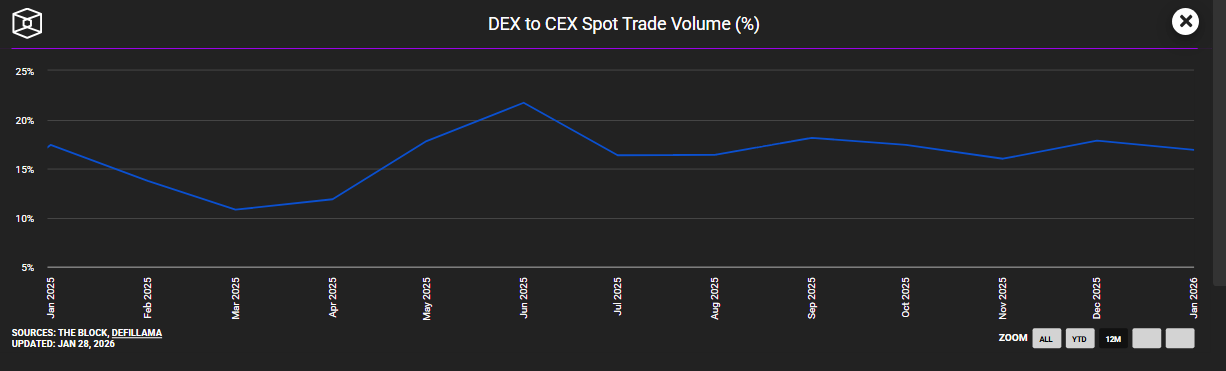
Each reduces secondary liquidity depth. While this protects regulatory compliance, it narrows exit pathways. In private credit tokenization pilots observed between 2024 and 2026, liquidity has been intentionally constrained through whitelist-only trading venues. Secondary transfers are permitted only within pre-approved networks. This reduces regulatory ambiguity but limits price discovery. Allocators must assess whether expected liquidity profiles reflect encoded constraints.
Liquidity Tiering and Capital Planning
Programmable restrictions necessitate explicit liquidity tiering within portfolios.
Assets with embedded lockups or jurisdictional gates should be classified differently from freely transferable instruments.
Capital planning models must account for:
- Upgrade delays.
- Whitelist update lags.
- Jurisdictional gating effects.
- Holding cap enforcement.
Liquidity assumptions under stress must incorporate enforcement friction.
Deterministic compliance reduces regulatory uncertainty but increases exit constraint visibility.
VI. Auditability and Governance Under Code-Based Restriction Systems
The migration toward programmable compliance controls shifts compliance risk from procedural oversight to architectural integrity. The control surface changes. Instead of relying primarily on supervisory review, institutions rely on code execution, permission layers, and upgrade governance. For investor capital, the central issue is not whether restrictions exist, but whether the enforcement architecture itself is resilient.
Auditability as a Risk Variable
In document-based systems, auditability relies on record retention, reconciliation trails, and regulatory examination. In code-based systems, auditability expands to include:
- Smart contract source verification
- Independent security audits
- Formal verification of rule logic
- On-chain event logging
- Governance proposal transparency
Auditability improves in certain dimensions. Every transfer attempt leaves a cryptographically verifiable trail. Eligibility checks are recorded. Rule failures are explicit rather than inferred. However, new risks emerge. If audit scope is incomplete, or if upgrade rights are concentrated in a small administrative group, compliance becomes vulnerable to key compromise or governance failure. For allocators, this translates into a shift in due diligence emphasis. Evaluating compliance architecture now requires reviewing code audits, key management policies, and governance vote thresholds. Operational oversight must extend beyond financial statements into system architecture. Deterministic enforcement does not eliminate risk. It concentrates it.
Governance Design and Upgrade Rights
One of the most significant capital considerations under embedded tokenized asset restrictions is upgrade governance. Compliance rules change. Jurisdictional definitions evolve. Regulatory expectations expand. A static smart contract may become outdated. The architecture must answer:
- Who can modify compliance parameters?
- Under what quorum thresholds?
- With what delay?
- Under what emergency override authority?
If upgrade authority is unilateral, capital risk increases. If governance is too rigid, legitimate regulatory changes may be difficult to implement. This trade-off directly affects investor capital. A highly restrictive token that cannot adapt to regulatory updates may face forced migration, fragmentation of liquidity, or legal dispute. Conversely, a token whose compliance logic can be modified without multi-party authorization introduces governance capture risk. From a capital protection standpoint, the optimal structure is neither immutability nor unilateral flexibility. It is controlled adaptability. For allocators focused on long-term investment in digital assets, embedded restriction logic must be evaluated as a structural allocation variable.
Regulatory Alignment and Supervisory Visibility
Regulators in 2024–2026 have increasingly emphasized technology-neutral compliance outcomes. MiCA requires clear governance and operational resilience standards for crypto-asset service providers. IOSCO has highlighted the importance of consistent supervisory visibility across digital markets. The BIS has noted that tokenization does not eliminate the need for oversight; it changes its form. Programmable enforcement aligns with these trends by providing machine-enforced eligibility and transfer validation. However, regulators may require demonstrable human governance layers in addition to code execution.
The interaction between automated restriction logic and supervisory expectations remains dynamic. Allocators must therefore evaluate not only whether restrictions are encoded, but whether regulators recognize and accept the enforcement architecture. Capital discipline requires anticipating supervisory interpretation risk.
VII. Liquidity, Transferability, and Capital Planning Consequences
Embedded compliance logic introduces predictable enforcement but alters liquidity dynamics in measurable ways.
Transfer Gating and Secondary Market Depth
When transfer permissions depend on whitelist inclusion or jurisdictional verification, secondary market participation narrows. Eligible counterparties are pre-defined. Geographic gating may exclude large capital pools. This creates segmented liquidity. In traditional markets, compliance may limit participation in theory but does not always prevent secondary trades from occurring before remediation. In programmable environments, segmentation is absolute.
Liquidity depth is therefore a function of eligibility perimeter size. For capital allocators, this matters because exit optionality narrows. Liquidity modeling must incorporate enforcement boundaries. Assets with embedded holding caps or investor concentration limits may behave differently under stress than unrestricted instruments.
Lockups and Time-Based Controls
Time-based lockups are commonly encoded in tokenized private credit and structured instruments. Smart contracts prevent transfers until a predefined timestamp. While this reduces regulatory violation risk, it eliminates discretionary release flexibility unless explicitly coded. Capital planning must therefore reflect:
- Hard lock durations
- Upgrade pathways for exceptional circumstances
- Secondary trading venue design
Lockups that cannot be adjusted in exceptional scenarios may amplify stress if liquidity needs change. Determinism increases predictability but reduces adaptability.
Concentration Caps and Holding Limits
Certain tokenized instruments enforce maximum ownership percentages per wallet or per verified identity. These caps reduce systemic concentration risk and may align with regulatory diversification rules. However, they can also:
- Prevent large allocators from scaling exposure efficiently
- Create fragmented ownership structures
- Introduce operational complexity in nominee structures
From a capital efficiency standpoint, embedded holding caps may alter position sizing strategy. Allocators must assess whether concentration limits align with portfolio construction objectives.
VIII. Capital Implications of Deterministic Enforcement
The transition from discretionary supervision to deterministic enforcement changes capital behavior.
Reduced Legal Ambiguity
Automated eligibility enforcement reduces the probability of accidental regulatory breach. For institutional allocators, this lowers reputational and supervisory risk.
Predictable enforcement increases confidence in rule application consistency.
However, deterministic systems can create edge-case rigidity. If a legitimate transfer fails due to technical misclassification, remediation may require governance action rather than administrative correction.
Capital must therefore account for procedural latency in exceptional cases.
Shift from Process Risk to Architecture Risk
Document-based compliance distributes risk across multiple actors: transfer agents, custodians, administrators, legal counsel.
Programmable compliance centralizes risk in code and governance design.
Failure modes shift from process error to architectural vulnerability.
This shift affects capital allocation decisions. When evaluating exposure to tokenized instruments, allocators must consider:
- Audit coverage depth
- Governance decentralization
- Upgrade path clarity
- Key management safeguards
The capital question becomes whether the compliance architecture is robust enough to justify liquidity trade-offs.
Deterministic vs Discretionary Enforcement
Discretionary enforcement allows contextual interpretation. Deterministic enforcement allows no ambiguity.
The capital consequence is trade-off clarity.
Determinism:
- Reduces regulatory unpredictability
- Improves audit traceability
- Increases structural rigidity
- Amplifies code dependency
Discretion:
- Allows contextual flexibility
- Introduces supervisory drift
- Creates interpretive inconsistency
Neither is inherently superior. The capital calculus depends on governance integrity.
IX. Systemic Market Structure Implications
As programmable compliance scales, market infrastructure evolves.
Transfer agents may transition into permission administrators. Custodians may operate compliance verification nodes. Regulators may require visibility into rule execution logs.
This convergence alters service provider roles.
Institutional allocators should anticipate:
- Standardization of compliance modules
- Interoperable identity verification layers
- Cross-jurisdiction compliance tagging
- Increased regulatory technology integration
Markets that adopt standardized restriction logic may experience deeper liquidity due to interoperability.
Conversely, fragmented compliance architectures may create liquidity silos.
Capital protection requires monitoring systemic interoperability trends.
X. Cross-Jurisdiction Alignment and Fragmentation Risk
The scalability of programmable compliance controls depends on regulatory convergence. As of 2024–2026, convergence remains partial.
MiCA has established a harmonized framework across the European Union for crypto-asset issuance and service provision. The United States continues to develop guidance through SEC rule proposals relating to custody, safeguarding, and tokenized securities treatment. IOSCO has emphasized consistent market integrity standards across jurisdictions. The BIS has addressed tokenization’s implications for settlement finality and supervisory access.
Despite this progress, jurisdictional divergence persists. This dynamic underscores the importance of digital assets consulting that integrates regulatory mapping with infrastructure evaluation.
Jurisdictional Encoding Challenges
When compliance logic is embedded into token contracts, jurisdictional rules must be encoded precisely. This requires:
- Accurate geographic tagging of investor wallets.
- Recognition of multi-jurisdiction investor structures.
- Ongoing updates as regulatory frameworks evolve.
Encoding geographic restrictions is not trivial. Residency, beneficial ownership, and investor classification may differ between jurisdictions. Hard-coding eligibility criteria introduces the risk of misclassification.
For institutional capital, the risk is twofold:
- Over-restriction, which unnecessarily limits liquidity and capital access.
- Under-restriction, which exposes issuers to regulatory breach.
Programmable enforcement reduces ambiguity but increases dependency on accurate jurisdictional metadata.
Regulatory Interpretation Risk
Even when compliance logic aligns with current rules, interpretation can evolve. A jurisdiction may reinterpret investor qualification standards or redefine distribution thresholds.
If compliance rules are rigidly embedded, updating logic requires coordinated governance action. During that interval, capital may be temporarily constrained.
Allocators must assess whether governance frameworks anticipate regulatory evolution. Controlled adaptability is critical. Static compliance code in a dynamic regulatory environment creates exposure.
From a capital protection perspective, jurisdictional fragmentation is not theoretical. It directly affects transferability and secondary market viability.
XI. Secondary Markets Under Embedded Restrictions
Tokenized instruments with embedded compliance often trade on permissioned venues rather than open networks. Transfer is restricted to verified participants.
This structure reduces regulatory exposure but alters price discovery and liquidity formation.
Segmented Liquidity Pools
Permissioned markets create defined participation perimeters. Liquidity depth becomes a function of whitelist breadth.
If eligible investor pools are narrow, bid-ask spreads widen. Secondary pricing becomes episodic rather than continuous.
For allocators, this shifts liquidity modeling from volume-based assumptions to eligibility-based assumptions.
Liquidity is no longer only a function of demand; it is a function of permission.
Impact on Valuation and NAV Stability
Embedded tokenized asset restrictions can create pricing discontinuities. If secondary trading is limited to narrow cohorts, price formation may lag underlying asset value changes.
For funds holding such instruments, NAV stability may reflect restriction gating rather than fundamental stability.
Capital committees must distinguish between true volatility suppression and liquidity-induced pricing lag.
Deterministic compliance may stabilize regulatory exposure while obscuring exit friction.
Capital Planning Under Restriction Friction
Institutions allocating to programmable instruments must integrate restriction friction into capital planning models.
This includes:
- Redemption horizon assumptions.
- Stress exit scenarios under whitelist constraints.
- Governance delay modeling for rule modification.
Traditional liquidity buckets may underestimate restriction friction.
Capital preservation requires conservative modeling.
XII. Interaction Between Smart Contract Enforcement and Off-Chain Legal Rights
Tokenized securities typically represent legally enforceable claims defined in off-chain documentation. Smart contracts govern transfer mechanics, but legal rights reside in contractual agreements.
This dual-layer architecture introduces coordination risk.
Priority of Legal vs Technical Control
If a smart contract prevents transfer, but legal documentation permits it under exceptional conditions, resolution requires governance intervention.
Conversely, if a smart contract allows transfer but off-chain documentation prohibits it, legal remedies may follow.
For institutional capital, clarity of hierarchy is essential. Documentation must explicitly reconcile smart contract logic with governing law.
Without alignment, capital faces dispute risk.
Insolvency and Enforcement Considerations
In insolvency scenarios, courts rely on legal documentation rather than smart contract logic alone.
If ownership rights are disputed, on-chain restriction enforcement may not determine final outcome.
Allocators must ensure that token structures clearly map on-chain state to legally recognized ownership claims.
Code-based enforcement reduces operational ambiguity but does not replace legal adjudication.
XIII. Operational Oversight at Scale
As programmable compliance scales across markets, operational oversight must evolve accordingly.
Key Management as a Compliance Vector
Administrative keys controlling whitelist updates, jurisdictional tagging, and rule modification represent concentration risk.
If compromised, compliance perimeter integrity is breached.
Institutional-grade key management must therefore include:
- Multi-signature authorization.
- Hardware security module integration.
- Segregation of duties.
- Redundant custody safeguards.
Capital exposure increases if compliance administration depends on single-actor control.
Continuous Monitoring and Reporting
Deterministic enforcement generates machine-readable logs. Institutions should leverage this transparency for continuous compliance monitoring.
Supervisory reporting may increasingly rely on on-chain validation rather than post-trade reconciliation.
Allocators evaluating programmable frameworks should confirm that monitoring systems integrate both on-chain events and off-chain legal triggers.
Auditability must extend beyond code correctness to operational execution integrity.
XIV. Comparative Capital Outcomes: Programmable vs Traditional Compliance
From a capital perspective, programmable compliance creates measurable differences in outcome under stress.
Under Traditional Compliance
- Transfers may occur before verification.
- Remediation is possible after breach.
- Liquidity may be broader but legally uncertain.
- Supervisory interpretation may vary.
Under Programmable Compliance
- Non-compliant transfers fail automatically.
- Regulatory exposure declines.
- Liquidity is gated.
- Governance risk becomes central.
Capital protection involves evaluating which risk profile aligns with allocation objectives.
Deterministic enforcement reduces certain headline risks but increases dependency on governance design.
XV. Market Infrastructure Evolution 2024–2026
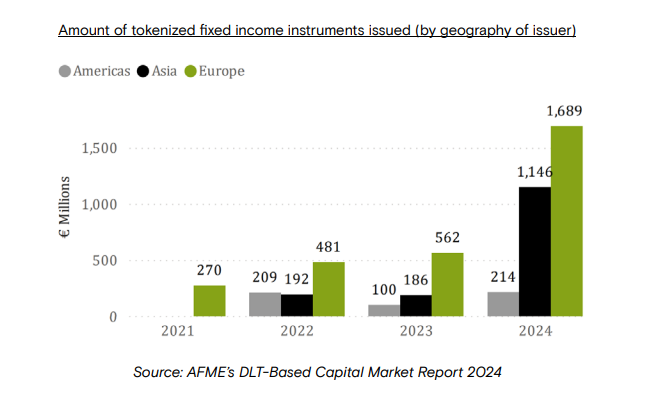
Between 2024 and 2026, institutional tokenization pilots have increasingly incorporated compliance modules at issuance.
Tokenized private credit platforms embed investor verification directly into issuance contracts. Regulated trading venues integrate identity frameworks for eligibility gating. Cross-border tokenization projects incorporate jurisdictional filters aligned with MiCA-compliant structures.
These developments indicate that compliance embedding is not experimental. It is becoming structural.
At scale, standardized compliance modules may emerge, reducing fragmentation. However, fragmentation risk remains where proprietary compliance architectures limit interoperability.
Allocators must monitor whether compliance logic converges toward interoperable standards or remains siloed.
Interoperability enhances liquidity. Fragmentation restricts it. Standardization trends are reshaping crypto asset management, where compliance modules increasingly define operational boundaries.
XVI. Capital Structure Implications of Infrastructure-Level Compliance
As programmable compliance controls scale, capital formation itself changes.
In traditional issuance environments, compliance frameworks sit adjacent to capital instruments. Legal documentation defines eligibility and transfer conditions, but enforcement is supervisory. Capital can circulate broadly within legal perimeters, even if monitoring is imperfect.
When compliance becomes embedded in infrastructure, capital instruments become conditional by design.
This produces three structural effects.
First, compliance risk shifts from supervisory detection to architectural precision. Investors are less exposed to inadvertent regulatory breach, but more exposed to governance design errors.
Second, liquidity becomes structurally segmented. Capital does not flow freely across markets; it flows within permissioned boundaries.
Third, capital mobility becomes predictable but constrained. The absence of discretionary override reduces interpretive risk but removes flexibility during stress.
For institutional allocators, this changes how digital exposures integrate into broader portfolios. Liquidity assumptions must reflect encoded transfer constraints rather than theoretical legal permissions.
Determinism enhances predictability. Predictability narrows flexibility.
XVII. Deterministic Enforcement and Market Behavior
Market participants adapt behavior in response to embedded restriction logic.
When tokenized asset restrictions enforce holding caps, investors distribute exposure across multiple eligible vehicles. When jurisdictional gating exists, capital pools organize along geographic lines. When lockups are hard-coded, pricing adjusts to reflect time-bound illiquidity.
Over time, this may produce markets that are structurally more compliant but more segmented.
Segmentation has consequences:
- Price dispersion may widen across venues.
- Liquidity may cluster within compliant networks.
- Arbitrage opportunities may narrow due to transfer friction.
From a capital protection standpoint, segmentation reduces certain contagion channels but may increase localized liquidity shocks.
Investors must recognize that deterministic enforcement shapes market topology.
XVIII. Interaction With Institutional Custody and Transfer Agents
The rise of infrastructure-level compliance alters the roles of custodians and transfer agents.
Historically, transfer agents verified investor eligibility before recording ownership changes. In programmable systems, eligibility may be validated automatically before transfer.
Custodians increasingly serve as key managers and whitelist administrators rather than pure safekeeping providers.
This redefinition introduces concentration considerations.
If compliance administration is centralized within a limited number of custodial providers, systemic risk concentrates. If administration is decentralized but poorly coordinated, operational fragmentation increases.
Institutional capital must assess the custody layer not only for safekeeping quality but for compliance control integrity.
The operational perimeter expands.
XIX. Stress Scenarios Under Embedded Restrictions
The resilience of programmable compliance becomes most visible under stress.
Consider three stress conditions:
- Regulatory Reinterpretation
A jurisdiction updates eligibility criteria unexpectedly. Compliance logic must be updated. If upgrade governance is slow or contentious, liquidity may stall. - Technical Vulnerability
A flaw is discovered in restriction logic. Transfers may need to be paused. Governance action may be required before remediation. - Market Shock
Large investors seek exit simultaneously. Holding caps and whitelist limitations reduce counterparty depth. Liquidity gaps widen.
In each case, deterministic enforcement removes ambiguity but does not eliminate stress.
Capital modeling must integrate these structural scenarios. Deterministic compliance reduces rule-breaking risk but does not remove liquidity risk.
XX. Interoperability and Standardization
been the push toward interoperability standards.
Regulatory bodies and market infrastructure consortia have emphasized harmonized tokenization frameworks to prevent fragmentation.
If compliance logic is standardized across issuers and jurisdictions, liquidity depth may improve. If proprietary restriction architectures dominate, markets may fragment into isolated permissioned silos.
Interoperability directly affects capital efficiency.
Institutional allocators should evaluate whether programmable compliance frameworks align with emerging standards or create isolated liquidity pools.
Standardization supports scalable liquidity. Fragmentation constrains it.
XXI. Capital Efficiency vs Regulatory Certainty
Embedded programmable compliance controls represent a trade-off between capital efficiency and regulatory certainty.
On one side:
- Reduced breach probability.
- Clear audit trails.
- Automated enforcement.
- Consistent rule application.
On the other:
- Reduced transfer flexibility.
- Upgrade governance complexity.
- Liquidity segmentation.
- Architecture dependency.
The appropriate balance depends on investor mandate.
For institutions prioritizing regulatory clarity and governance discipline, deterministic enforcement may justify liquidity friction.
For capital requiring high turnover flexibility, restriction friction must be priced into allocation decisions.
The discipline lies in recognizing that both dimensions exist simultaneously.
XXII. Long-Term Structural Implications
The embedding of compliance into infrastructure signals a broader evolution.
Financial markets are migrating from interpretive compliance frameworks toward executable rule sets. As digital assets scale, compliance will increasingly operate at the protocol layer.
This does not eliminate legal oversight. It redistributes it.
Supervision shifts from ex post review to ex ante design approval. Regulators evaluate architecture rather than only transactions.
For institutional allocators, this evolution increases the importance of architectural literacy. Governance committees must understand compliance design as part of risk assessment.
Capital protection becomes partially dependent on code governance quality.
XXIII. Risk Reallocation Rather Than Risk Elimination
Programmable enforcement does not eliminate risk. It reallocates it.
Risk moves:
- From supervisory discretion to architectural rigidity.
- From process error to upgrade governance.
- From documentation ambiguity to metadata accuracy.
- From enforcement delay to liquidity friction.
Understanding this reallocation is essential.
Allocators should resist framing programmable compliance as inherently safer or inherently restrictive. It is structurally different.
Risk modeling must adapt accordingly.
XXIV. Synthesis: What Programmable Compliance Means for Allocators
For capital committees evaluating governance discipline, the implications are practical.
Embedded compliance:
- Reduces interpretive regulatory drift.
- Increases predictability of rule enforcement.
- Narrows eligible liquidity pools.
- Concentrates risk in governance and code architecture.
The quality of programmable design determines whether risk is net reduced or simply transformed.
Instruments governed by robust audit processes, transparent upgrade rights, diversified key management, and clear legal reconciliation provide structural clarity.
Instruments governed by opaque logic, centralized control, or fragmented standards introduce architectural exposure.
The allocator’s role is to differentiate between these categories.
Institutional Interpretation and Capital Discipline
The embedding of programmable compliance controls into financial instruments is not merely a technical shift. It alters the distribution of authority, the sequencing of risk, and the architecture of liquidity.
From a capital protection standpoint, programmable enforcement reduces interpretive compliance drift. It narrows the probability of accidental regulatory breach. It increases audit traceability. It makes rule application consistent across transactions.
However, deterministic enforcement also concentrates risk within governance design, metadata accuracy, and upgrade authority. When compliance is encoded directly into smart contracts, architecture becomes the primary risk vector.
Capital exposure is therefore shaped by four structural variables:
- Code integrity and audit coverage
• Governance dispersion and upgrade authority thresholds
• Jurisdictional encoding accuracy
• Liquidity impact of transfer gating
The core question is not whether embedded compliance is desirable. It is whether its governance architecture is robust enough to justify its liquidity constraints.
Programmable systems eliminate ambiguity. They do not eliminate fragility.
For allocators, this requires architectural literacy. Governance integrity must be evaluated alongside asset quality. Liquidity segmentation must be modeled alongside yield expectations. Determinism must be stress-tested under exceptional conditions.
The protection of capital in programmable markets depends less on speed of adoption and more on structural discipline in implementation.
Kenson Investments: Governance-Centered Allocation in Programmable Markets
Kenson Investments approaches digital market infrastructure through a capital preservation lens grounded in structural risk control.
Our evaluation of programmable compliance environments focuses on three interlocking dimensions:
1. Architecture Resilience
We examine independent smart contract audits, formal verification where applicable, upgrade governance dispersion, and key management redundancy. Compliance logic must be verifiable and adaptable under supervisory change without introducing unilateral control risk.
2. Liquidity Integrity
We model exit scenarios under whitelist gating, jurisdictional segmentation, concentration caps, and lockup constraints. Liquidity assumptions are calibrated under stress conditions, not normal trading environments.
3. Legal Reconciliation
We ensure smart contract restrictions align with enforceable legal documentation. On-chain enforcement must not create ambiguity regarding off-chain ownership rights or insolvency treatment.
We do not treat tokenized asset restrictions as superficial safeguards. We treat them as capital allocation variables. If embedded compliance reduces net risk without materially impairing liquidity flexibility, exposure can be scaled responsibly. If it introduces rigidity without proportional regulatory benefit, allocation sizing reflects that constraint.
Our objective is consistency across market cycles. Programmable compliance enhances governance clarity when designed carefully. It introduces structural exposure when implemented without layered oversight.
Capital discipline requires distinguishing between the two. Institutional allocators increasingly rely on digital asset advisory services that extend beyond asset selection into governance architecture review.
XXV. The Future of Compliance as Infrastructure
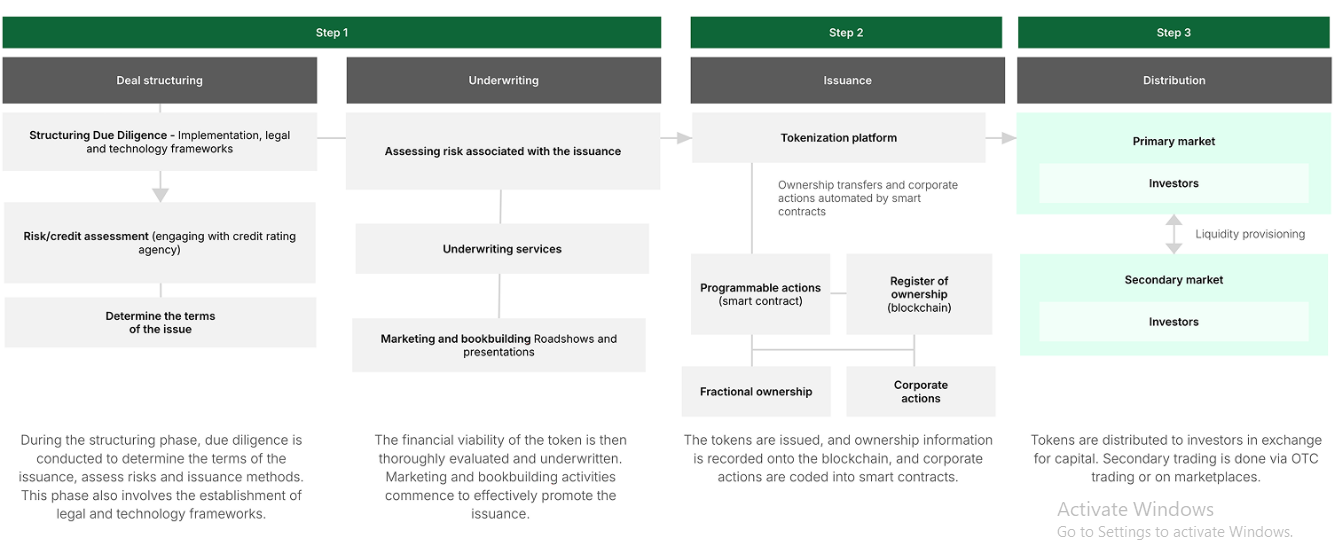
The migration toward embedded enforcement suggests a broader structural trajectory: compliance will increasingly become part of market plumbing rather than an overlay. Historically, compliance operated as a supervisory overlay on top of transactional infrastructure. Digital markets reverse that hierarchy. Compliance becomes part of transaction validation itself.
This has systemic consequences. First, it reduces reliance on interpretive enforcement. Market participants no longer rely solely on representations. Validation is binary.
Second, it changes regulatory supervision from reactive investigation to architectural approval. Supervisors may increasingly evaluate rule logic before issuance rather than investigating after breach. Third, it shifts the locus of risk from behavioral misconduct to design integrity.
As this model scales, institutional participation will likely require standardized compliance modules, interoperable identity frameworks, and cross-jurisdictional rule mapping. Standardization may enhance liquidity depth if eligibility definitions converge. Divergence may fragment markets into regional silos. For capital allocators, the long-term implication is clear: compliance architecture becomes part of market structure analysis. The sophistication of a digital market will not be defined solely by throughput or settlement speed. It will be defined by how transparently and flexibly compliance logic is governed.
XXVI. Capital Allocation in an Era of Deterministic Markets
Deterministic enforcement reshapes portfolio construction principles. In discretionary systems, risk management often relied on probability and interpretation. In deterministic systems, risk management must anticipate structural inevitabilities. If compliance logic prevents transfer under certain conditions, capital planning must assume those conditions will occur.
If upgrade governance requires multi-party approval, stress models must incorporate decision latency. If jurisdictional filters segment liquidity pools, exit modeling must reflect perimeter constraints. Determinism replaces probability with condition-based modeling. For institutional allocators, this produces a more mechanical risk environment. Variables are defined. Boundaries are encoded. Friction points are visible.
However, visibility does not equate to flexibility. Capital protection in deterministic markets requires:
- Conservative liquidity tiering
• Governance evaluation equal to asset evaluation
• Regulatory scenario modeling
• Stress simulation under rule-bound constraints
The structural clarity of programmable compliance can strengthen institutional confidence when governance is robust. When governance is opaque, clarity becomes rigidity. The institutional edge will belong to allocators who evaluate embedded compliance not as a binary improvement, but as a structural trade-off. This shift materially affects risk management in crypto investments, where enforcement timing becomes predictable but inflexible.
Conclusion
The transition from document-based compliance to infrastructure-level enforcement represents a structural evolution in financial markets. Programmable compliance controls shift enforcement timing from supervision to execution. Embedded tokenized asset restrictions redefine transferability, liquidity, and governance responsibility. This evolution reduces certain regulatory ambiguities while introducing architectural rigidity. It enhances auditability while concentrating governance risk. It strengthens predictability while narrowing flexibility. For institutional capital, the question is not whether programmable enforcement is inevitable. It is how exposure is governed within that architecture.
Markets will continue encoding compliance into instruments themselves. The advantage will belong to those who evaluate not only asset economics, but compliance design integrity. Capital protection in programmable markets requires architectural scrutiny equal to financial scrutiny.
Engage With Kenson Investments
As compliance logic migrates into market infrastructure, allocators must assess more than asset selection. They must evaluate how governance, auditability, and liquidity constraints are encoded at the protocol level.
Kenson Investments approaches digital market exposure through a capital protection lens that prioritizes structural risk control and governance integrity with the necessary educational resources.
To explore how programmable compliance architectures influence capital allocation decisions in evolving digital markets, we invite you to review our institutional research and framework materials. Reach out to us today.