









A digital vault is the combination of wallets, backups, account protections and written procedures that keep your digital assets safe and recoverable. A strong setup separates long-term savings from spending money, stores recovery material offline in more than one place, and includes a plan for theft, loss and inheritance.
Key takeaways
About 158,000 personal wallet compromises were recorded in 2025, roughly triple the 2022 level.
Use tiers: a cold vault for savings, a hot wallet for spending, and only trading balances on exchanges.
Your seed phrase is the master key; how you back it up matters as much as which wallet you use.
A vault is incomplete without a tested recovery and inheritance plan.
Self-custody gives investors full control, and full responsibility. Most losses come not from sophisticated hacking but from phishing, careless backups, signing malicious transactions, or holders becoming unreachable without a plan. This guide sets out a personal threat model, a tiered vault design, step-by-step setup, what to do in an incident, and how to plan for heirs. If you are still choosing a wallet, start with Wallets Explained; for institutional approval structures, see wallet architecture.
Your Personal Threat Model
Identify what you are protecting, from whom, and how it could fail. For most individuals, the main threats are phishing and scams, malware, exposed seed phrases, account takeovers, losing access to backups, and family members being unable to recover assets.
| Threat | How it happens | Primary defence |
| Phishing and fake apps | Fake sites, ads, support agents or extensions ask for your seed or a signature | Never enter a seed online; bookmark official sites |
| Malicious signatures | Approving a contract that can drain tokens later | Read transactions on a hardware screen; limit approvals |
| Malware | Clipboard hijackers swap addresses; keyloggers | Dedicated device for crypto; verify addresses |
| Exposed recovery phrase | Photo in cloud, notes app, email | Offline, physical backups only |
| Account takeover | SIM swap or email compromise used to reset exchange logins | Hardware-key or app 2FA; secure email |
| Loss or damage | Fire, flood, forgotten PIN, lost device | Multiple backups in separate locations |
| Physical coercion | Threats against known holders | Privacy, multisig with geographically separated keys |
| Holder unavailable | Illness or death without instructions | Inheritance plan |
Context: Chainalysis estimated more than $3.4 billion stolen in 2025, including about 158,000 personal wallet compromises (Chainalysis via Fortune). Our guide to identifying crypto scams covers social-engineering tactics.
Designing a Tiered Vault
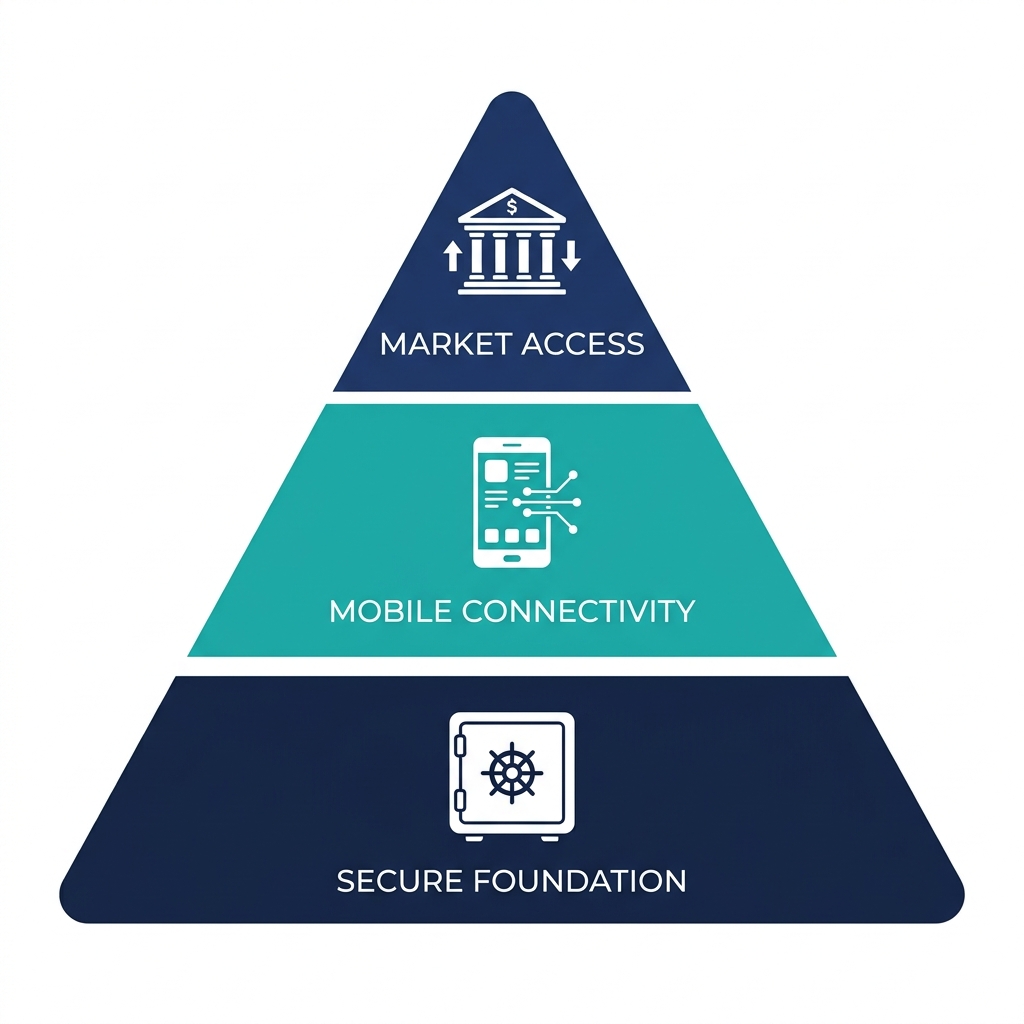
Split holdings by purpose. Keep long-term savings in cold storage that rarely moves, a smaller amount in a hot wallet for regular use, and only what you actively trade on an exchange. Each tier gets security proportional to its value.
| Tier | Purpose | Typical setup | Share of holdings (illustrative) |
| Vault (cold) | Long-term savings | Hardware wallet or 2-of-3 multisig; offline seed backups | Majority |
| Spending (hot) | Regular payments, apps, DeFi | Mobile or browser wallet | Small, replaceable amount |
| Trading (custodial) | Active buying and selling | Exchange account with strong 2FA and withdrawal allowlist | Only what is needed |
Moving funds from the vault should be deliberate and infrequent. Keeping assets on exchanges adds counterparty exposure; see venue selection risk.
Step-by-Step Vault Setup
Buy hardware wallets directly from the manufacturer; check packaging and initialize as new.
Generate the seed phrase on the device. Never photograph it, type it or store it digitally.
Record the seed on durable media (stamped metal resists fire and water) and store at least two copies in separate secure locations.
Consider an optional passphrase (an extra word) for added protection, stored separately from the seed.
For larger holdings, consider a 2-of-3 multisig so no single lost or stolen device or backup can drain funds.
Send a small test amount, then practise a full recovery on a spare device before moving significant funds.
Secure the email and phone number linked to any exchange accounts; use hardware security keys where possible.
Use a dedicated device or browser profile for crypto activity; keep software updated.
Record which wallets, networks and addresses you use, without recording keys, in a document kept with your estate papers.
Free educational tool
How ready are you to manage your own digital vault?
The Readiness Quiz helps you assess your understanding of custody, security and digital asset risk before moving funds into self-custody.
Educational tool. Results are not investment advice.
Failure Scenarios and How the Vault Holds Up
Laptop infected with malware: the hardware wallet still requires on-device confirmation, so funds in the vault stay safe if you verify on its screen.
Hardware wallet lost: restore from the seed onto a new device; coins live on the blockchain, not the device.
One seed backup destroyed in a fire: the second copy in another location allows recovery.
Seed backup stolen: with a passphrase or multisig, a single stolen backup is not enough to move funds; move assets to a new setup promptly anyway.
Signed a malicious approval in a hot wallet: only the small spending tier is exposed; revoke approvals and move remaining funds.
Incident Response: If Something Goes Wrong
Act quickly: move any unaffected funds to a newly generated wallet on a clean device.
Revoke approvals from compromised wallets using a reputable approval-management tool.
Lock down accounts: change passwords, reset 2FA, contact exchanges through official channels.
Record evidence: transaction hashes, addresses, screenshots and timestamps.
Report: notify exchanges that received stolen funds and file a report with law enforcement.
Beware recovery scams: people offering to “recover” stolen crypto for a fee are frequently scammers.
Inheritance and Continuity Planning
Without a plan, digital assets can be permanently lost when a holder dies or becomes incapacitated. A good plan lets trusted people recover assets when needed, without giving them access today, and is documented alongside your will or estate plan.
Write a letter of instruction explaining what you hold, where, and how recovery works, without including keys.
Store seed backups so that heirs can access them through an executor or secure facility, but no single person can today.
Multisig setups can name a trusted person or professional as one key holder.
Some qualified custodians and specialist services offer inheritance features; weigh convenience against counterparty risk.
Review the plan when holdings, wallets or family circumstances change.
Security Checklist
Holdings split into vault, spending and trading tiers.
Seed phrases stored offline on durable media, in at least two locations.
Recovery tested on a spare device.
Hardware-key or app-based 2FA on all exchange and email accounts.
Withdrawal allowlists enabled on exchanges.
Every transaction verified on a hardware wallet screen.
Unused token approvals revoked periodically.
Inheritance instructions documented and reviewed annually.
Frequently Asked Questions
Is it safe to store my seed phrase in a password manager?
It is convenient but places the master key on internet-connected devices. Most security guidance recommends offline, physical backups for significant holdings.
Should I use a custodian instead of self-custody?
A qualified custodian shifts key-management risk to a provider in exchange for fees and counterparty risk. Some investors combine both.
Can stolen crypto be recovered?
Sometimes, if funds reach an exchange that freezes them, but recovery is uncommon. Prevention is far more effective.
Work With Kenson Investments
Kenson Investments’ digital asset specialists focus on education around custody, security and long-term stewardship. Explore our digital asset consultation services or contact the team to learn more.
Disclaimer: The information provided on this page is for educational and informational purposes only and should not be construed as financial advice. Digital assets involve significant risk, including the possible loss of principal, and past performance is not indicative of future results. Always conduct thorough research and consult a qualified financial advisor before making investment decisions.
Digital asset regulation in the United States is still developing. Some areas, such as payment stablecoins, now have a federal framework, but comprehensive market-structure legislation has not yet been enacted. None of the information provided by Kenson LLC should be considered financial investment advice. Please consult your Registered Financial Advisor for guidance. Kenson LLC does not offer any products regulated by the SEC, including equities, registered securities, ETFs, stocks, bonds, or equivalents.



