







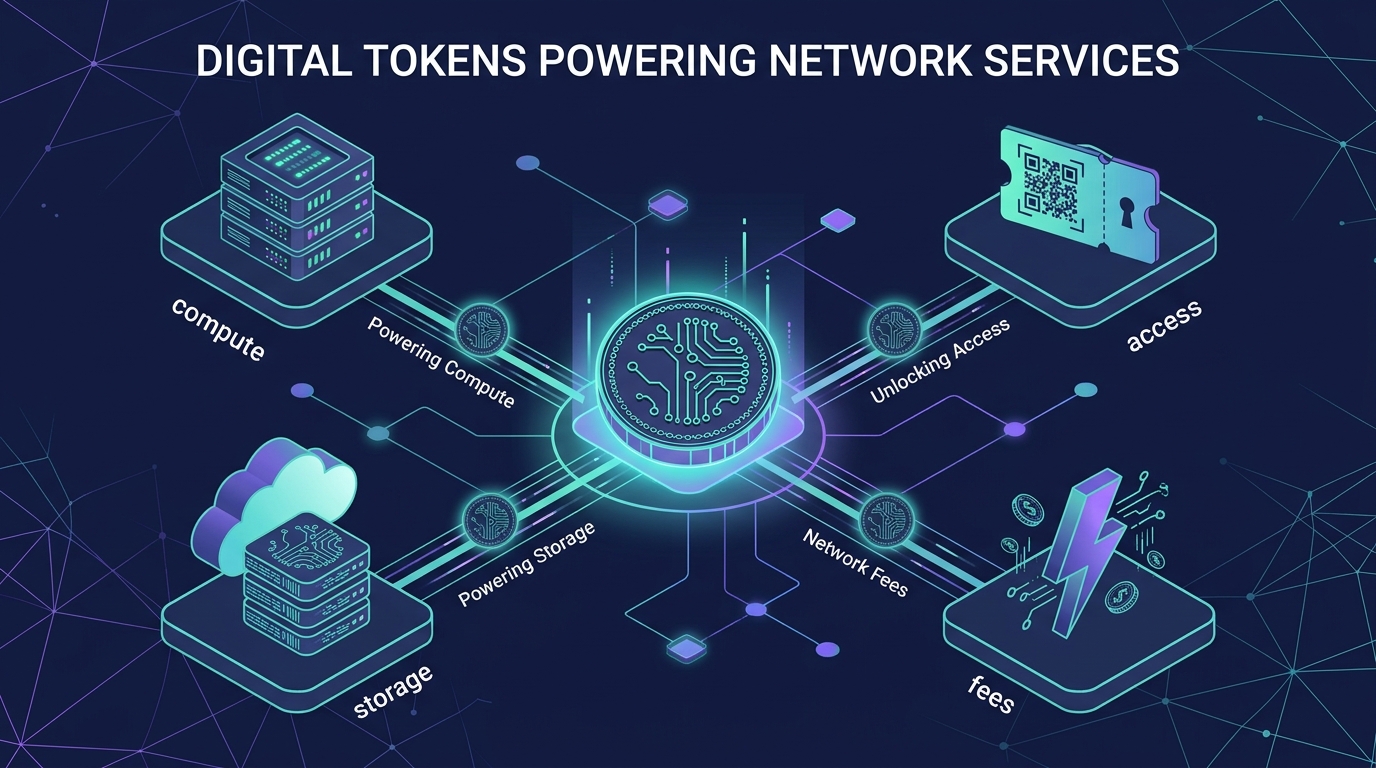
A utility token is a digital asset that gives holders access to a product or network function, such as paying transaction fees, buying compute or storage, or unlocking features. Its value depends on real demand for that function, the token’s supply design, and whether usage translates into demand for the token itself.
Key takeaways
Utility is a function, not a guarantee of value: many tokens with genuine uses have still lost most of their value.
In the US, a March 2026 SEC–CFTC interpretation groups many such assets as digital commodities or digital tools, generally outside securities law, though how a token is sold still matters.
The key question is value accrual: does more usage create more demand for the token, or just for the service?
Token unlocks, concentrated ownership, thin liquidity and regulatory changes are the main risks to diligence.
Utility tokens power much of the blockchain economy, from fee tokens that pay for transactions to tokens used to buy decentralized storage or GPU compute. For investors, they are among the hardest assets to value: there are no cash flows to discount, and the link between a network’s success and its token’s price is often weaker than it looks. This guide defines the category narrowly, explains how value can accrue, and offers a checklist. For a broader view of non-Bitcoin assets, see our guide to what distinguishes altcoins.
What Counts as a Utility Token?
A utility token is one whose primary purpose is consumption or access within a network, rather than a claim on profits, assets or cash flows. Examples include gas tokens used to pay network fees, tokens spent on compute or storage, and tokens used for memberships, credentials or in-app features.
| Category | Primary purpose | Holder rights | Typical regulatory view (US) |
| Utility / network token | Pay for network services or access | Use of the network; sometimes governance votes | Often a digital commodity or digital tool, unless sold as an investment contract |
| Governance token | Vote on protocol changes | Voting, sometimes fee rights | Included in “digital commodities” in the 2026 interpretation; fee rights add complexity |
| Security token | Represent equity, debt or fund interests | Profits, interest or asset claims | Security |
| Payment stablecoin | Stable medium of exchange | Redemption claim on issuer | Not a security if GENIUS-permitted |
The March 2026 SEC–CFTC joint interpretation defined categories including digital commodities (tied to a crypto system’s operation, including governance tokens), digital collectibles and digital tools (functional assets such as memberships or credentials), none of which are securities on their own. It also noted that a non-security token can become subject to an investment contract if sold with promises of profit from an issuer’s efforts (Baker Donelson). In the EU, MiCA requires white papers and authorized service providers for most utility token offerings. Broader US market-structure legislation remained pending in 2026 (Bitso).
Real-World Use Cases
Network fees (“gas”): tokens such as ETH are required to pay for transactions and smart contract execution on their networks. See our Ethereum overview.
Decentralized compute and storage: tokens used to pay node operators for storage, bandwidth or GPU time.
Access and membership: tokens that unlock software features, communities, events or credentials.
Staking for network security: on proof-of-stake chains, the fee token is also staked to secure the network. See our guide to proof of stake.
In-app economies: gaming and loyalty tokens used to buy items or services.
What Drives (and Limits) Utility Token Value
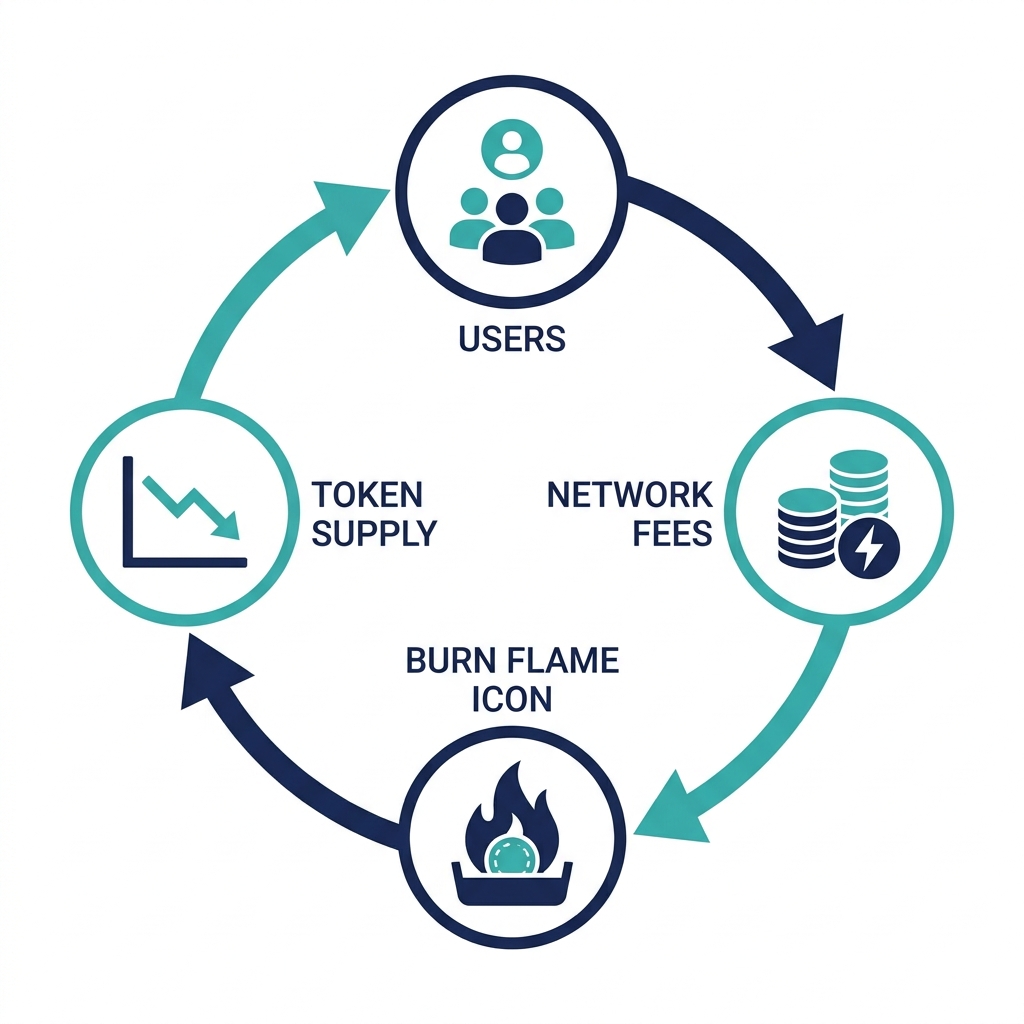
A utility token gains value only if usage creates lasting demand for the token that outpaces new supply. Mechanisms such as fee burns, staking requirements or required holding can link usage to demand. Without them, users may buy the token briefly to pay and sell it immediately.
| Driver | Supports value when… | Weakens value when… |
| Usage demand | Real, growing, paying users | Activity is subsidised by incentives |
| Value accrual | Fees are burned or tokens must be held/staked | Token is a pass-through payment rail |
| Supply schedule | Issuance is low or declining | Large unlocks or high inflation are coming |
| Velocity | Holders keep tokens (staking, collateral) | Tokens are spent and sold quickly |
| Ownership | Broadly distributed | Concentrated in team, investor or treasury wallets |
| Substitutes | Few alternatives | Users can pay in stablecoins or switch networks easily |
The “velocity problem” is the most common gap in utility token theses: if a service can be paid for with a token that users acquire and spend within minutes, rising usage need not raise the token’s price. Our guide to how tokenomics affects valuation explores supply and demand mechanics in depth.
Key Risks
Valuation risk: no cash flows; prices rely heavily on expectations.
Unlock and dilution risk: scheduled releases to teams and early investors can add significant sell pressure.
Liquidity risk: many tokens trade on few venues with thin order books.
Concentration and governance risk: a few wallets may control voting or supply.
Technology and competition risk: a better or cheaper network can draw users away.
Regulatory risk: classification depends on facts and on how a token is marketed and sold; rules continue to evolve across jurisdictions.
Custody risk: some tokens are supported by few custodians.
Free educational tool
How much token-specific risk fits your profile?
The Crypto Risk Profile Quiz helps you think through your tolerance for volatility, illiquidity and loss before considering smaller digital assets.
Take the Crypto Risk Profile Quiz →
Educational tool. Results are not investment advice.
Utility Token Due-Diligence Checklist
What exactly is the token used for, and is that use required or optional?
Who uses the network today, and is activity organic or incentive-driven?
How does usage create demand for the token (burns, staking, holding requirements)?
What is the circulating vs. total supply, and when are the next unlocks?
Who holds the largest balances, and are they locked?
Where does the token trade, and how deep is liquidity?
How was the token distributed and marketed, and what legal opinions or disclosures exist?
Which qualified custodians support it?
Free educational tool
Visualize how smaller tokens affect your overall mix
The Portfolio Allocation Visualizer shows how different digital asset categories combine with the rest of a portfolio across risk levels.
Open the Allocation Visualizer →
Educational tool. Results are not investment advice.
Frequently Asked Questions
Are utility tokens securities?
Not inherently. US guidance in 2026 treats many functional tokens as digital commodities or tools, but a token offered with promises of profit from an issuer’s efforts can be part of an investment contract.
Is a governance token a utility token?
Governance is a type of utility. Tokens that also grant fee or revenue rights raise additional legal and valuation questions.
Why can a useful network have a falling token price?
If usage does not translate into lasting token demand, or if new supply outpaces demand, the token can fall even as the network grows.
Work With Kenson Investments
Kenson Investments’ digital asset specialists focus on education around token design, valuation and risk. Explore our digital asset consultation services or contact the team to learn more.
Disclaimer: The information provided on this page is for educational and informational purposes only and should not be construed as financial advice. Digital assets involve significant risk, including the possible loss of principal, and past performance is not indicative of future results. Always conduct thorough research and consult a qualified financial advisor before making investment decisions.
Digital asset regulation in the United States is still developing. Some areas, such as payment stablecoins, now have a federal framework, but comprehensive market-structure legislation has not yet been enacted. None of the information provided by Kenson LLC should be considered financial investment advice. Please consult your Registered Financial Advisor for guidance. Kenson LLC does not offer any products regulated by the SEC, including equities, registered securities, ETFs, stocks, bonds, or equivalents.



