








As institutional participation in digital assets expands, operational discipline has become just as important as market strategy. Over the last two years, several high-profile failures across exchanges, custodians, and decentralized finance protocols demonstrated that operational breakdowns can destroy capital faster than market volatility itself. For allocators managing meaningful exposure to digital assets, governance frameworks are no longer optional. They are part of the infrastructure required to preserve capital.
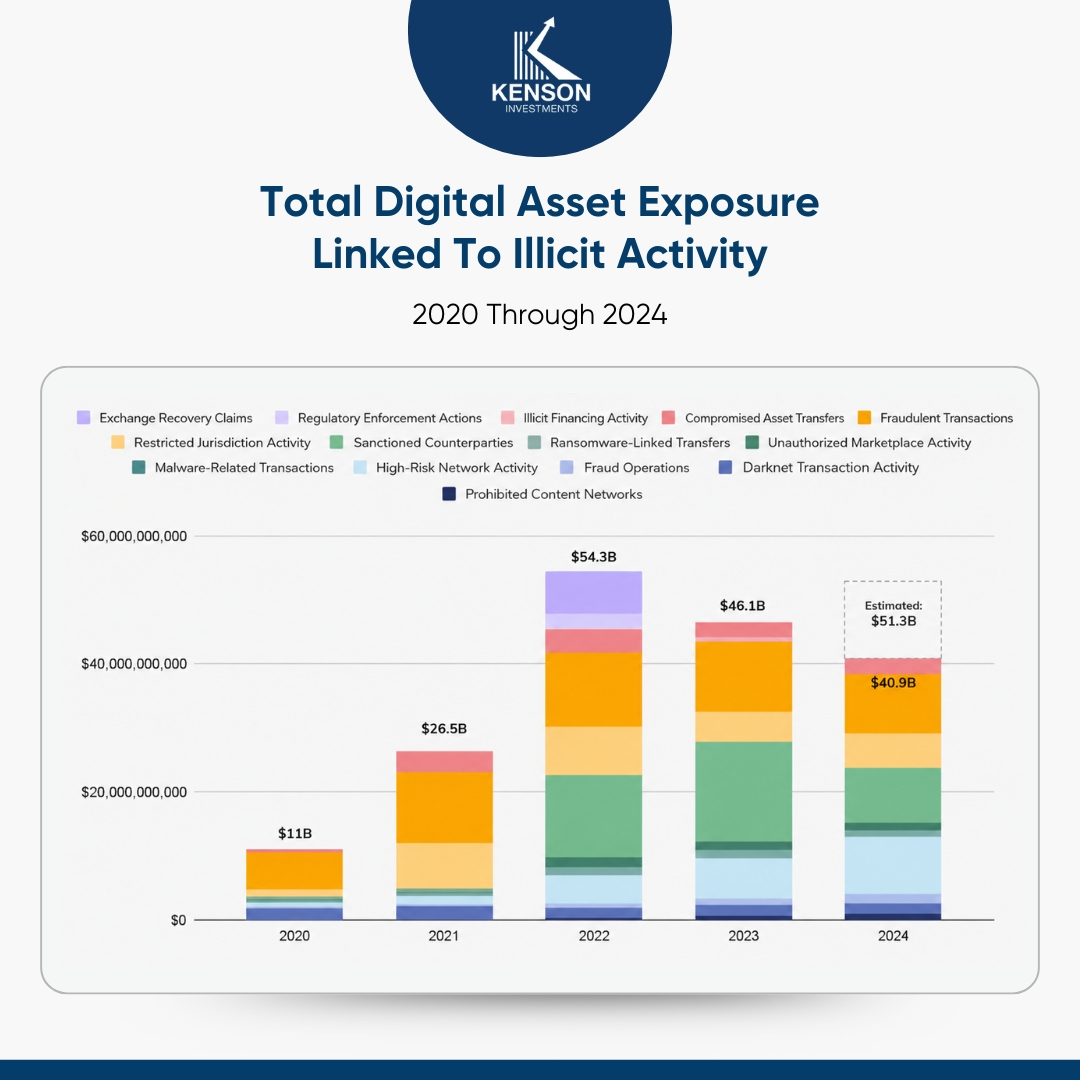
The growth of institutional adoption has accelerated demand for stronger digital asset internal controls. According to Chainalysis, illicit cryptocurrency activity fell to approximately 0.14% of total on-chain transaction volume in recent years, yet operational failures, governance breakdowns, and weak treasury controls continued to generate substantial losses across the sector. Institutions are increasingly recognizing that technology alone cannot replace disciplined operational oversight.
This shift has elevated the importance of institutional operational governance across every layer of digital asset infrastructure, including custody, treasury management, transaction authorization, wallet access, and settlement reconciliation.
For firms involved in digital asset management, internal controls now serve as a defining differentiator between speculative participation and institutional-grade infrastructure.
Why Internal Controls Matter in Digital Asset Markets
Traditional finance spent decades building operational safeguards around wire transfers, treasury controls, counterparty management, and settlement procedures. Digital assets introduce many of the same operational risks, but with additional complexity stemming from irreversible blockchain transactions, decentralized infrastructure, and 24-hour market activity.
A mistaken wallet address, compromised signing device, or unauthorized smart contract approval can create immediate and unrecoverable financial exposure.
This reality is reshaping how institutions approach security in digital asset management. Sophisticated allocators are no longer evaluating digital assets solely on return potential. They are evaluating operational survivability.
Many firms seeking comprehensive digital asset consulting services now prioritize questions such as:
- How are transaction approvals structured?
- Who controls wallet permissions?
- How are private keys segmented?
- What escalation procedures exist during operational anomalies?
- How are audit trails maintained across custodial systems?
These questions reflect a broader institutional shift toward governance-first participation.
Multi-Layer Transaction Approval Structures
One of the foundational components of strong internal controls involves transaction authorization frameworks.
Institutional firms rarely rely on single-person transaction approval authority. Instead, they implement layered authorization structures designed to reduce operational concentration risk.
Multi-signature wallet architecture has become increasingly common among firms offering secure digital asset consulting solutions. These systems require multiple authorized approvals before transactions can be executed. In practice, this reduces the probability of internal fraud, compromised credentials, or accidental transfers.
For example, a treasury movement involving stablecoins may require:
- Initiation by operations personnel
- Secondary verification from treasury management
- Final authorization from senior governance oversight
This process mirrors institutional cash management systems used in traditional finance while adapting to blockchain-native settlement mechanics.
For firms involved in consulting on digital asset management, transaction governance has become central to operational resilience planning.
Access Rights and Segregation of Duties
Operational failures frequently emerge when too much authority is concentrated within too few individuals.
As a result, segregation of duties has become a critical component of digital asset management services. Institutions increasingly separate responsibilities across multiple operational teams, including:
- Trading execution
- Treasury management
- Custody oversight
- Compliance review
- Infrastructure administration
- Reconciliation and reporting
This layered structure reduces the likelihood that a single operational failure can compromise the broader system.
The importance of role-based access controls has increased significantly as firms expand into staking, tokenization, and decentralized finance infrastructure. Institutions involved in decentralized finance advisory often face elevated smart contract and protocol interaction risks that require tighter operational compartmentalization.
Large allocators are also deploying hardware security modules (HSMs), biometric authentication systems, geographic signing separation, and time-delayed withdrawal protocols to strengthen operational governance.
For many institutions, these controls now represent baseline requirements when evaluating digital asset strategies.
Audit Trails and Operational Transparency
In digital asset markets, operational transparency is inseparable from risk management.
Institutional investors increasingly require comprehensive audit visibility across all operational activity, including:
- Wallet transfers
- Governance approvals
- Treasury allocations
- Custodial reconciliations
- Smart contract interactions
- Counterparty exposures
Unlike traditional banking systems, blockchain networks create immutable transaction histories. However, immutable records alone are not sufficient. Institutions still require internal documentation that links blockchain activity to operational decision-making.
This is where modern digital asset advisory services have evolved beyond basic market research. Governance architecture now includes:
- Continuous reconciliation systems
- Automated exception reporting
- Custody verification procedures
- Real-time operational monitoring
- Independent review frameworks
According to PwC’s recent institutional digital asset reporting research, governance transparency remains one of the primary determinants of institutional confidence in digital asset infrastructure.
This matters particularly for firms involved in cryptocurrency fund administration, where operational traceability directly impacts investor trust.
The Expanding Role of Operational Risk Committees
Many institutional firms now operate dedicated digital asset operational risk committees that oversee governance decisions separately from portfolio allocation teams.
This separation reflects a growing understanding that operational risk and market risk require different oversight structures.
Operational governance committees typically review:
- Custodial exposure limits
- Counterparty concentration
- Wallet security procedures
- Staking participation limits
- Smart contract exposure thresholds
- Incident response planning
The expansion of these governance models reflects how seriously institutions now approach risk management in crypto investments.
For organizations pursuing long-term investment in digital assets, operational governance increasingly functions as a prerequisite to capital deployment rather than a secondary compliance consideration.
Governance Challenges across DeFi Infrastructure
The rise of decentralized finance has introduced additional governance complexity.
Institutions exploring navigating DeFi finance assets with consultants face operational environments that differ significantly from traditional custody systems. Smart contracts, liquidity pools, governance tokens, and protocol bridges introduce risks that cannot always be mitigated through conventional financial controls.
As a result, firms providing consultancy for DeFi finance investments are placing greater emphasis on:
- Smart contract auditing
- Protocol counterparty assessment
- On-chain monitoring systems
- Withdrawal risk analysis
- Liquidity fragmentation oversight
The rapid evolution of decentralized infrastructure has increased demand for blockchain and digital asset consulting focused specifically on operational governance rather than speculative positioning.
Institutions are learning that participation without operational discipline can create asymmetric downside exposure.
Internal Controls as a Competitive Advantage
Operational governance is no longer viewed purely as a compliance function. Increasingly, it has become a strategic advantage.
Institutional allocators prefer working with organizations capable of demonstrating mature operational infrastructure, particularly during periods of market stress.
This shift is influencing how firms position themselves within the broader ecosystem of digital assets consulting.
Operational resilience now affects:
- Counterparty trust
- Custodial relationships
- Banking access
- Insurance coverage
- Institutional onboarding
- Long-term capital retention
As digital asset markets mature, governance standards are beginning to resemble those found in institutional treasury management and traditional asset management operations.
The market is gradually moving away from speculative infrastructure toward professionally managed operational ecosystems supported by disciplined oversight.
The Kenson Perspective
At Kenson Investments, operational governance is viewed as foundational to sustainable digital asset participation. Market access without disciplined controls introduces unnecessary operational vulnerability, particularly in an asset class that operates continuously across global markets.
Strong governance frameworks support consistency, accountability, and transparency across digital asset operations. This includes structured authorization systems, custody oversight, operational segregation, and continuous monitoring procedures designed to strengthen long-term resilience.
As institutions continue investing in the digital age, the firms best positioned for longevity are unlikely to be those pursuing the fastest expansion. More often, they will be the organizations capable of maintaining operational discipline during periods of volatility, liquidity fragmentation, and evolving regulatory oversight.

Build Operational Discipline Into Digital Asset Participation
Digital asset markets continue evolving rapidly, but institutional participation increasingly depends on governance quality, operational transparency, and risk oversight. Digital asset consulting for startups and specialized DeFi Finance consulting services play a critical role in establishing these baseline requirements. Kenson Investments focuses on education-driven perspectives surrounding operational resilience, infrastructure discipline, and long-term digital asset market development. Explore how our approach to digital asset management consulting services and institutional governance frameworks supports informed participation in evolving blockchain markets through our team at Kenson Investments. Partnering with a dedicated Cryptocurrency investment consultant or aligning with Security tokens investment consultants can help ensure your risk frameworks keep pace with these shifting market structural dynamics.
Disclaimer: The information provided on this page is for educational and informational purposes only and should not be construed as financial advice. Crypto currency assets involve inherent risks, and past performance is not indicative of future results. Always conduct thorough research and consult with a qualified financial advisor before making investment decisions.
“The crypto currency and digital asset space is an emerging asset class that has not yet been regulated by the SEC and US Federal Government. None of the information provided by Kenson LLC should be considered as financial investment advice. Please consult your Registered Financial Advisor for guidance. Kenson LLC does not offer any products regulated by the SEC including, equities, registered securities, ETFs, stocks, bonds, or equivalents”