


Capital does not sit still in digital markets. It moves continuously across exchanges, protocols, custodians, and settlement layers, responding to pricing inefficiencies, yield opportunities, and risk signals. In tokenized capital markets, this movement is not incidental. It is structural.
Liquidity routing has become one of the defining mechanisms behind execution quality and capital preservation. For institutions engaged in digital asset investments, the ability to track and control how capital flows across fragmented infrastructure is no longer optional. It is a core component of disciplined allocation.
Unlike traditional markets where liquidity is concentrated within a few centralized venues, tokenized markets are inherently fragmented. Liquidity exists simultaneously across centralized exchanges, decentralized protocols, cross-chain bridges, and off-chain settlement systems. Routing capital efficiently across this landscape requires precision, speed, and continuous monitoring.
Fragmented Liquidity and the Rise of Routing Systems
The defining feature of digital markets is fragmentation. As of early 2026:
- Over 700 active crypto exchanges operate globally
- Decentralized exchanges (DEXs) process between $5 billion and $15 billion in daily volume depending on market conditions
- Cross-chain bridges collectively hold tens of billions in locked value
This fragmentation creates pricing disparities across venues. The same asset can trade at slightly different prices across exchanges, especially during volatility. For institutions engaged in crypto asset management, these inefficiencies represent both opportunity and risk.
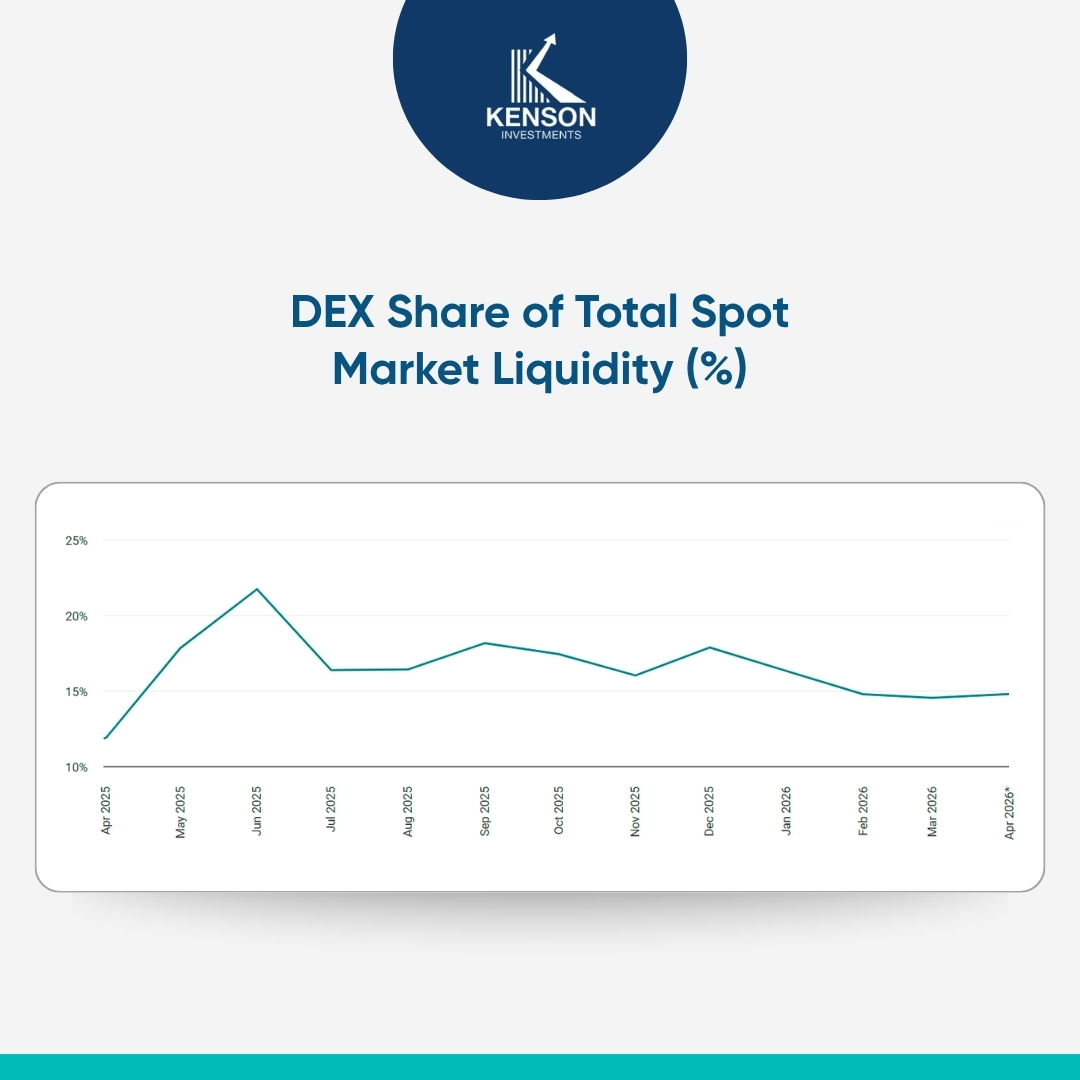
Liquidity routing systems are designed to solve this. They determine:
- Where to execute trades
- How to split orders across venues
- When to move capital between protocols
- How to minimize slippage and execution cost
In practice, routing systems function as the operational backbone of digital asset portfolio management. They are not simply optimizing trades. They are determining how capital is deployed across the entire market structure.
Capital Flow Dynamics Across Digital Infrastructure
Liquidity routing is not limited to trade execution. It extends to how capital is repositioned across the ecosystem. This includes:
- Moving assets between centralized and decentralized exchanges
- Allocating capital between lending protocols and liquidity pools
- Rebalancing collateral across derivatives platforms
- Transferring assets across chains to access deeper liquidity
In 2025, stablecoins accounted for over 60% of total crypto trading volume. Their role as settlement assets makes them central to liquidity routing. When capital moves, it often moves in stablecoin form before being redeployed.
For institutions relying on digital asset management services, understanding these flow patterns is critical. Capital that is poorly routed faces:
- Increased transaction costs
- Slippage during execution
- Delayed settlement
- Exposure to fragmented liquidity pools
Efficient routing, on the other hand, allows capital to move with minimal friction while maintaining exposure control.
The Role of Aggregators and Smart Order Routing
Smart order routing has evolved rapidly within digital markets. Early systems focused on simple price comparisons across exchanges. By 2026, routing systems incorporate:
- Real-time liquidity depth analysis
- Gas fee optimization for on-chain execution
- Cross-chain routing logic
- Risk scoring for counterparties and protocols
DEX aggregators like 1inch and Paraswap have demonstrated how routing can be optimized across dozens of liquidity pools simultaneously. These systems split orders across multiple venues to reduce slippage.
For institutions working with a global digital asset consulting firm, the focus is not just on best price. It is on best execution under real-world constraints. This includes:
- Network congestion
- Settlement delays
- Counterparty risk
- Smart contract exposure
Routing decisions must account for all of these variables simultaneously.
Liquidity Tracking and Data Infrastructure
Routing is only as effective as the data supporting it. Institutional participants rely on advanced analytics to track liquidity flows across markets.
Key metrics include:
- Order book depth across exchanges
- On-chain liquidity pool balances
- Stablecoin inflows and outflows
- Cross-chain bridge activity
- Funding rates in derivatives markets
In 2026, on-chain analytics platforms process billions of data points daily. Firms engaged in consulting on digital asset management increasingly depend on these tools to understand where liquidity is moving in real time.
For example:
- A spike in stablecoin inflows to exchanges often precedes increased trading activity
- Declining liquidity in lending protocols can signal tightening market conditions
- Cross-chain flows can indicate emerging arbitrage opportunities
This level of visibility is central to investment analysis and portfolio management in digital markets.
Cross-Chain Routing and Settlement Complexity
Tokenized capital markets are no longer confined to a single blockchain. Ethereum, Solana, Avalanche, and emerging Layer 2 networks all host liquidity pools.
Cross-chain routing introduces additional layers of complexity:
- Bridge latency can delay execution
- Security risks increase with each additional layer
- Liquidity fragmentation intensifies across chains
In 2025, cross-chain bridge exploits accounted for billions in losses. This forced institutions to reassess how capital is routed between networks.
For firms offering secure digital asset consulting solutions, cross-chain routing is approached conservatively. Priority is given to:
- Proven infrastructure
- Audited bridge mechanisms
- Liquidity depth on destination chains
The objective is not to chase marginal pricing advantages. It is to avoid structural risk.
Liquidity Routing Under Market Stress
Liquidity behaves differently during volatility. Routing systems that perform well in stable conditions can fail under stress.
During sharp market moves:
- Liquidity can disappear from order books
- Slippage increases significantly
- Stablecoin demand spikes
- Execution costs rise
In March 2023 and again in late 2024 volatility events, several DeFi protocols experienced liquidity fragmentation that led to inefficient routing and forced liquidations.
For institutions focused on risk management in crypto investments, stress testing routing systems is essential. This includes:
- Simulating liquidity withdrawal scenarios
- Evaluating execution under extreme slippage
- Assessing dependency on single liquidity sources
Routing discipline becomes most visible when markets are under pressure.
Institutional Approaches to Liquidity Routing
Institutional participants are not relying on a single routing mechanism. Instead, they deploy layered strategies:
- Internal routing systems for large trades
- External aggregators for fragmented liquidity
- OTC desks for block execution
- Custodial routing for settlement efficiency
This multi-layered approach reduces dependency on any single system.
Firms engaged in blockchain and digital asset consulting are increasingly designing hybrid routing frameworks that combine centralized and decentralized execution paths.
For allocators evaluating digital asset consulting services for businesses, the ability to integrate routing systems across platforms is a key differentiator.
The Kenson Perspective
Liquidity routing is often framed as an execution problem. In reality, it is a capital protection problem.
At Kenson Investments, routing decisions are not driven by marginal price improvement alone. They are driven by consistency of execution across market conditions.
Within our digital asset management consulting services, routing frameworks prioritize:
- Depth of liquidity over quoted price
- Stability of counterparties over speed
- Settlement certainty over theoretical efficiency
This approach reflects a broader principle. In fragmented markets, the lowest visible cost is not always the lowest realized cost.
For institutions engaged in navigating the digital asset market, routing discipline is one of the most underappreciated drivers of long-term performance.

Strategic Implications for Capital Allocators
Liquidity routing has direct implications for portfolio construction and risk exposure.
Poor routing can lead to:
- Hidden transaction costs
- Increased volatility exposure
- Inefficient capital deployment
Effective routing supports:
- Consistent execution quality
- Lower slippage across trades
- Improved capital efficiency
This is particularly relevant for those focused on long-term investment in digital assets. Over time, execution quality compounds. Small inefficiencies accumulate into meaningful performance differences.
For firms providing digital asset advisory services, routing strategy is increasingly integrated into portfolio design rather than treated as a separate function.
Liquidity Routing and the Evolution of Market Structure
Tokenized capital markets are still evolving. Several trends are shaping the future of liquidity routing:
- Growth of on-chain order books alongside AMMs
- Expansion of institutional DeFi platforms
- Integration of real-world assets into blockchain systems
- Development of intent-based execution systems
Intent-based systems, expected to gain traction beyond 2026, allow traders to specify desired outcomes rather than execution paths. Routing is then handled by network participants competing to fulfill that intent.
This represents a shift from deterministic routing to probabilistic execution models.
For those engaged in investing in the digital age, understanding these structural shifts is critical. Liquidity routing will continue to evolve alongside the infrastructure that supports it.
Building Resilient Capital Movement Frameworks
Institutions cannot rely on default routing systems. They must build frameworks that align with their risk tolerance and operational requirements.
This includes:
- Defining acceptable execution thresholds
- Diversifying liquidity sources
- Monitoring routing performance continuously
- Integrating routing with custody and settlement systems
Firms offering comprehensive digital asset consulting services are increasingly focused on helping institutions design these frameworks.
The objective is not to eliminate complexity. It is to manage it systematically.
A More Controlled Approach to Capital Movement
Efficient capital movement is not about speed alone. It is about control, transparency, and consistency across market conditions.
Kenson Investments supports institutions through digital assets consulting that prioritizes execution integrity, liquidity awareness, and structured risk management.
For those evaluating strategic digital asset consulting partners, the focus should remain on how capital moves, not just where it is allocated. Stay educated with Kenson Investments’ digital asset specialists.
Disclaimer: The information provided on this page is for educational and informational purposes only and should not be construed as financial advice. Crypto currency assets involve inherent risks, and past performance is not indicative of future results. Always conduct thorough research and consult with a qualified financial advisor before making investment decisions.
“The crypto currency and digital asset space is an emerging asset class that has not yet been regulated by the SEC and US Federal Government. None of the information provided by Kenson LLC should be considered as financial investment advice. Please consult your Registered Financial Advisor for guidance. Kenson LLC does not offer any products regulated by the SEC including, equities, registered securities, ETFs, stocks, bonds, or equivalents”