








For decades, institutional capital efficiency has been shaped by delay. Trades execute in seconds, but settlement stretches across days. Margin is calculated on snapshots. Collateral sits idle while exposures net out through clearing cycles designed for slower infrastructure.
Programmable settlement challenges that foundation. As tokenized markets mature, capital is no longer bound by end-of-day processes or batch reconciliation. It moves continuously, responding to real-time exposure rather than historical assumptions. This shift is redefining capital efficiency in tokenized markets and forcing institutions to rethink how much capital they actually need to hold.

Why Delayed Settlement Shaped Capital Assumptions
Traditional market infrastructure evolved around operational constraints. T+2 settlement cycles, centralized clearing, and periodic margin calls created predictability, but at the cost of locked capital. Firms over-collateralize to account for timing risk, price movement, and operational uncertainty.
Those buffers became normalized. Capital efficiency was measured relative to peers operating under the same constraints, not against theoretical minimums. In that context, idle collateral was considered a cost of doing business.
Programmable settlement infrastructure disrupts that equilibrium.
Real-Time Settlement Compresses Exposure Windows
When assets settle in near real time, the duration of counterparty exposure collapses. Positions no longer sit in limbo awaiting reconciliation. Risk crystallizes faster, but it also clears faster.
This compression has direct implications for the margin. Instead of holding capital against multi-day exposure windows, firms can size buffers against minutes or seconds of risk. That difference is material at scale.
Institutions exploring programmable settlement infrastructure are finding that exposure duration, not trade size, becomes the dominant driver of capital usage.
Margin Becomes Dynamic, Not Periodic
In legacy systems, margin is updated on schedules. Intraday calls exist, but they are reactive and manual. Programmable environments allow margin to adjust continuously as positions change.
Smart contracts can calculate margin requirements in real time, reflecting current prices and positions rather than yesterday’s close. Collateral moves automatically when thresholds are breached, reducing the need for conservative static buffers.
This shift underpins many innovative solutions in digital asset consulting, where the focus moves from minimizing margin calls to optimizing capital flow.
Collateral Automation Unlocks Trapped Liquidity
Traditional collateral management prioritizes safety over efficiency. Assets are pledged, segregated, and often immobilized until obligations are discharged.
Programmable collateral engines change that dynamic. Eligibility rules, haircuts, and reuse constraints can be encoded directly into settlement logic. Collateral can be substituted or released automatically as exposures change.
The result is higher utilization of high-quality assets. Capital that once sat idle can support multiple obligations sequentially, without increasing risk.
This is where digital asset consulting services for businesses increasingly concentrate, helping institutions map how automation affects balance sheet usage.
Capital Efficiency Shifts From Static Ratios To Flow Management
Legacy metrics focus on ratios. Leverage. Coverage. Utilization at a point in time. Programmable settlement shifts attention to flow. How fast capital moves. How quickly it is freed. How often it is reused.
Institutions that understand this distinction gain an advantage. Capital efficiency becomes less about holding less and more about cycling faster.
This reframing is central to best practices in digital asset consulting emerging from early institutional deployments.
The Trade-Off Between Efficiency And Control
Greater efficiency does not come without trade-offs. Real-time systems reduce buffers, but they also reduce reaction time. Automated margining and settlement require robust controls, governance, and monitoring.
Institutions must trust code to act correctly under stress. They must predefine limits rather than approve actions manually. This introduces a different kind of risk, operational rather than financial.
Balancing efficiency and control is now a board-level discussion, particularly for firms engaging digital asset consulting for compliance to align automation with regulatory expectations.
Clearing Models Begin To Fragment
Central clearing remains a cornerstone of traditional markets, providing netting and mutualized risk management. Programmable settlement introduces alternative models.
Bilateral atomic settlement reduces the need for centralized intermediaries, but it also redistributes risk management responsibilities. Netting occurs continuously rather than at the end of a cycle.
This fragmentation is reshaping how institutions evaluate infrastructure. Capital efficiency gains are weighed against operational complexity and governance maturity.
Evidence From Early Production Deployments
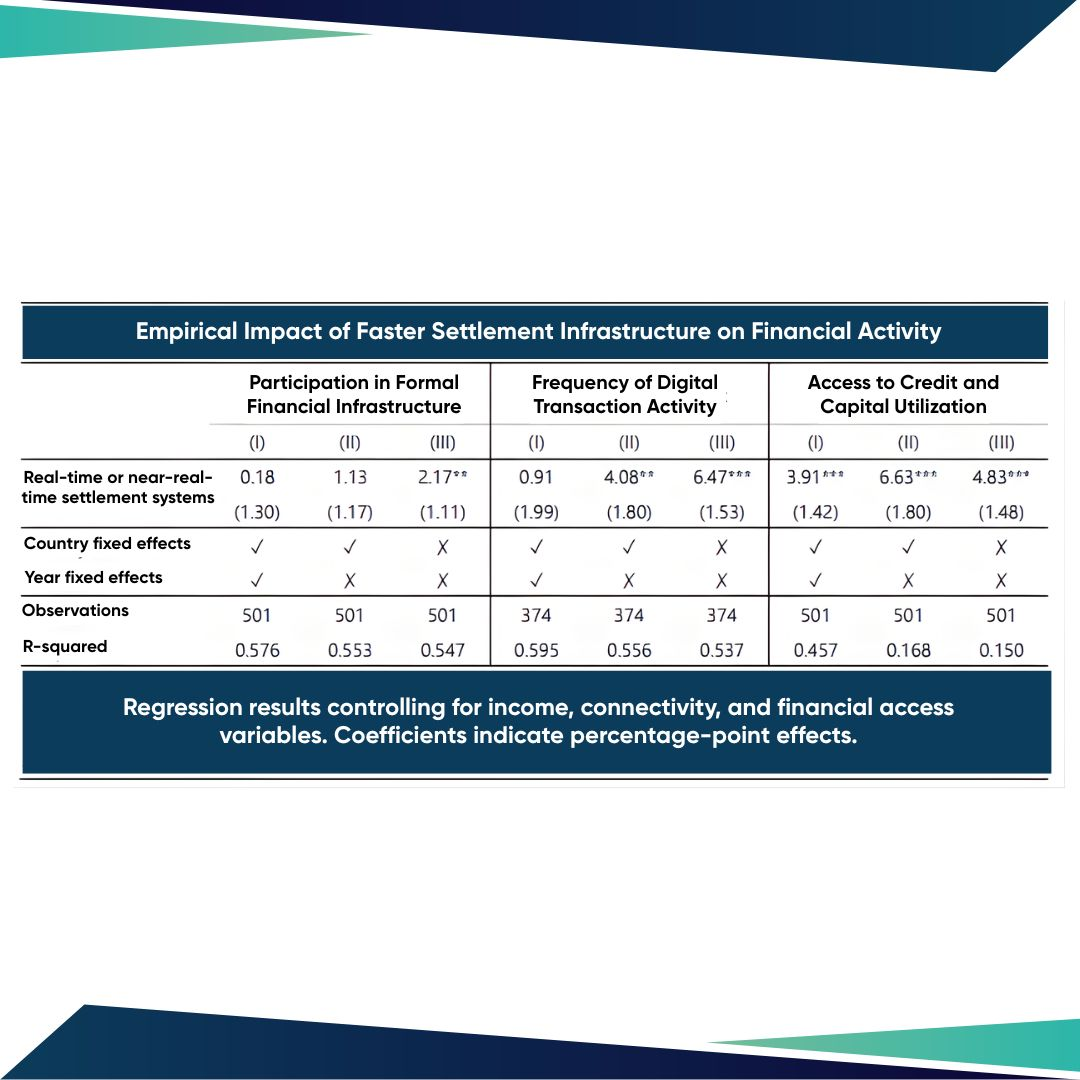
By 2025, several production environments demonstrate these effects. Tokenized repo and collateral platforms report materially lower margin requirements relative to traditional equivalents, driven by shorter exposure windows and automated substitution.
While precise figures vary by asset class, industry estimates suggest that real-time settlement can reduce required margin by double-digit percentages in certain use cases. These gains are not theoretical. They are being realized where governance and controls keep pace.
This is why firms evaluating digital asset consulting firms increasingly look for operational experience, not just protocol expertise.
Capital Efficiency Changes Strategy, Not Just Cost
As capital becomes more fluid, trading and financing strategies evolve. Firms can support higher volumes with the same balance sheet. They can respond faster to market dislocations. They can allocate capital more precisely across venues.
These changes ripple outward, influencing investment analysis and portfolio management, liquidity provisioning, and even product design.
Capital efficiency becomes a strategic lever, not just a cost metric.
What Institutions Are Learning Now
The core lesson is simple. Capital efficiency in programmable markets is earned through design, not assumed through buffers, a principle often highlighted in best practices in digital asset consulting. Institutions that retrofit automation onto legacy workflows capture limited benefit. Those who redesign operating models unlock structural gains, which is why many firms also evaluate Digital asset portfolio management approaches alongside infrastructure changes.
This is why strategic digital asset consulting partners increasingly focus on settlement architecture, margin logic, and collateral flow rather than surface-level tokenization, and in some cases integrate specialized DeFi Finance consulting services or guidance from a Cryptocurrency investment consultant to align operational and investment strategies.
Rethinking Capital in Real Time
Kenson Investments publishes research on how programmable settlement, automated margining, and tokenized infrastructure are reshaping institutional capital dynamics and market structure, including insights relevant to bitcoin investment consultants and evolving Altcoin investment options. Work with us.
Disclaimer: The information provided on this page is for educational and informational purposes only and should not be construed as financial advice. Crypto currency assets involve inherent risks, and past performance is not indicative of future results. Always conduct thorough research and consult with a qualified financial advisor before making investment decisions.
“The crypto currency and digital asset space is an emerging asset class that has not yet been regulated by the SEC and the US Federal Government. None of the information provided by Kenson LLC should be considered as financial investment advice. Please consult your Registered Financial Advisor for guidance. Kenson LLC does not offer any products regulated by the SEC, including equities, registered securities, ETFs, stocks, bonds, or equivalents.”