








Institutional participation in digital assets is not driven by momentum, narratives, or retail-style positioning. It is defined by constraint. Capital is deployed under mandates that prioritize preservation first, participation second, and upside last. That ordering matters.
Across pensions, endowments, sovereign allocators, and family offices, the shift into digital markets has followed a familiar pattern seen in other emerging asset classes. Early curiosity gives way to structured experimentation. Experimentation evolves into policy. Policy eventually becomes discipline. The difference in digital assets is that this transition is happening in compressed time, under conditions of higher volatility, fragmented infrastructure, and evolving regulatory clarity.
The result is a new allocation philosophy shaped by institutional digital asset allocation discipline and reinforced through layered capital protection frameworks. These are not theoretical constructs. They are operational systems designed to manage exposure in a market where liquidity can vanish, correlations can spike unexpectedly, and pricing integrity can diverge across venues.
For allocators, the question is no longer whether digital assets deserve attention. It is how exposure can be structured without compromising the broader portfolio.
Why Discipline Defines Institutional Entry
The starting point for institutional capital is not opportunity. It is risk containment.
In traditional portfolios, new asset classes are assessed through correlation behavior, drawdown profiles, and liquidity characteristics. Digital assets challenge each of these dimensions. Bitcoin has demonstrated periods of low correlation, but also episodes where it behaves like a high-beta risk asset. Altcoins introduce additional dispersion, often disconnected from underlying economic activity. Liquidity is uneven, concentrated in a handful of venues and instruments.
This complexity explains why institutions do not approach investing in cryptocurrencies through opportunistic allocation. Instead, they construct bounded exposure frameworks. A common structure observed across 2024–2026 institutional flows is a 1% to 5% allocation range within diversified portfolios. Even at the upper end, this allocation is rarely static. It is adjusted dynamically based on volatility regimes, liquidity conditions, and macro overlays.
Capital discipline emerges through three constraints:
- Position sizing relative to total portfolio risk
- Liquidity-adjusted exposure limits
- Governance oversight at the committee level
These constraints convert digital assets from speculative instruments into controlled allocation components. The objective is not to maximize returns. It is to ensure that no single exposure can materially impair portfolio stability.
This is where the role of investment analysis and portfolio management becomes critical. Institutions treat digital assets as one input within a broader capital allocation engine, not as a standalone thesis.
Exposure Limits and Portfolio Construction Realities
Institutional frameworks rarely treat all digital assets equally. Allocation decisions are typically segmented into tiers based on liquidity, market structure, and perceived durability.
The first tier consists of large-cap assets, primarily Bitcoin and Ethereum. These are often treated as proxy exposures for the broader asset class. They benefit from deeper liquidity, established custody solutions, and increasing integration into traditional financial infrastructure. Institutional positioning here is often supported by digital asset portfolio management systems that monitor volatility, drawdowns, and liquidity conditions in real time.
The second tier includes emerging protocols and tokenized asset exposures. This segment carries higher return potential but introduces additional risks around governance, smart contract integrity, and market depth. Exposure here is tightly constrained and often accessed through structured vehicles or managed mandates.
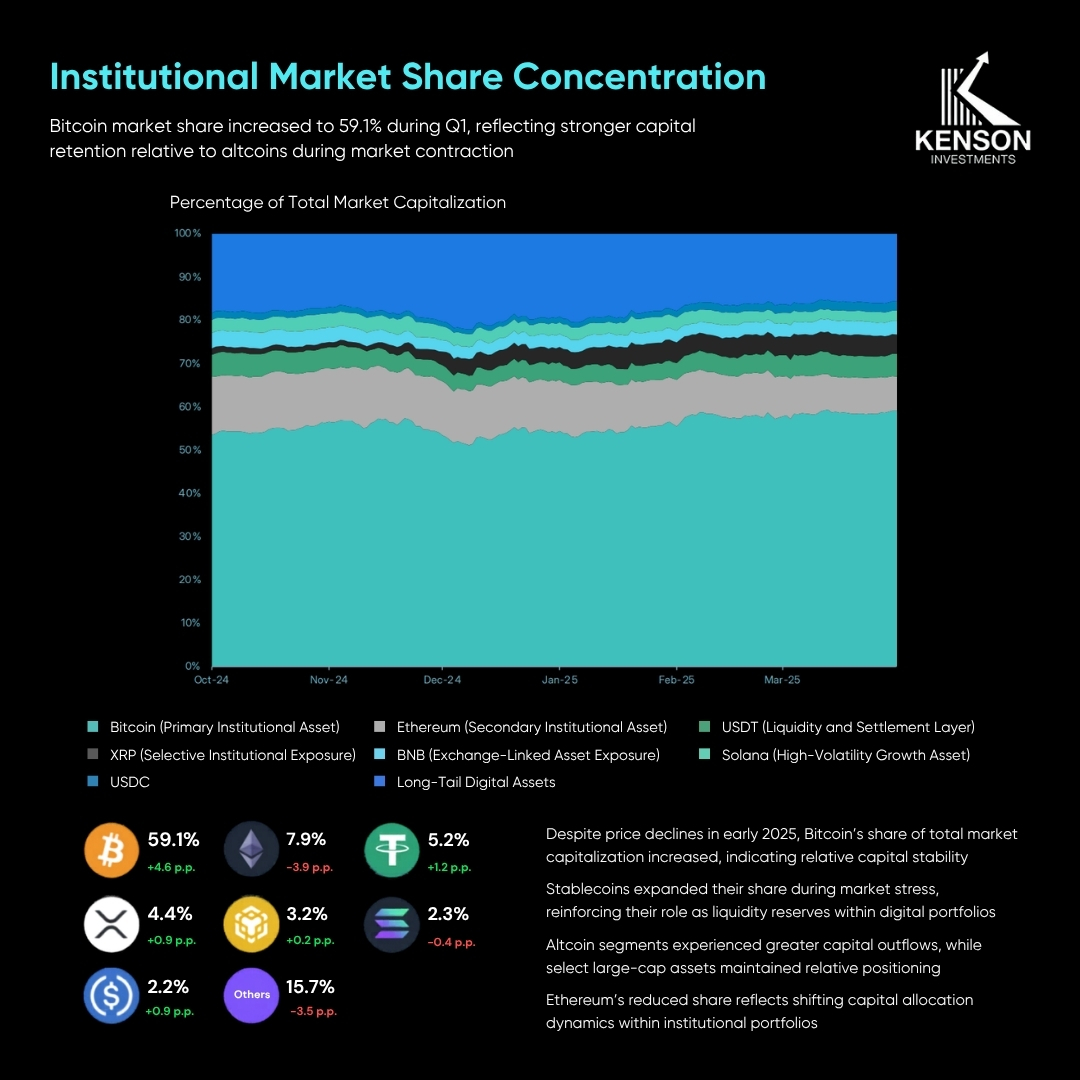
The third tier, which includes long-tail altcoins, is largely excluded from institutional portfolios. The reason is straightforward. These assets fail liquidity thresholds and lack the operational transparency required for institutional participation.
The distinction between altcoins vs. major cryptocurrencies is not ideological. It is operational. Institutions require assets that can absorb capital without distorting price, provide reliable execution pathways, and integrate with custody and reporting systems.
Recent data underscores this allocation pattern. As of early 2026, Bitcoin and Ethereum continue to account for over 70% of institutional digital asset holdings, despite representing a smaller share of total market listings. The concentration reflects discipline, not lack of awareness.
Governance Oversight and Decision-Making Structures
Institutional allocation is governed, not traded.
Investment committees play a central role in determining exposure levels, approving counterparties, and defining rebalancing thresholds. Unlike discretionary trading environments, where decisions can be made in real time, institutional frameworks require predefined rules.
These rules include:
- Maximum allocation caps at both asset and portfolio levels
- Approved custody providers and execution venues
- Defined rebalancing intervals based on volatility triggers
- Counterparty risk thresholds
Governance structures also enforce separation of duties. Execution, custody, and reporting functions are often distributed across different providers to reduce operational risk.
This is where digital asset consulting for compliance becomes essential. Institutions rely on structured advisory frameworks to navigate jurisdictional requirements, custody regulations, and reporting obligations. The complexity is increasing, not decreasing. With regulatory frameworks such as MiCA in Europe and ongoing legislative developments in the United States, compliance is becoming a core component of allocation strategy.
The rise of comprehensive digital asset consulting services reflects this shift. Institutions are not simply seeking market exposure. They are building infrastructure around that exposure.
Operational Due Diligence: Where Capital Protection Happens
Operational risk remains one of the most underestimated dimensions of digital asset allocation.
Market volatility is visible. Custody failure is not, until it happens.
Institutional allocators conduct extensive due diligence across multiple layers:
- Custody architecture, including cold storage protocols and multi-signature frameworks
- Exchange and execution venue risk, including liquidity depth and counterparty exposure
- Smart contract audits for protocol-based investments
- Reporting systems capable of reconciling on-chain and off-chain activity
The importance of these processes has been reinforced by past market failures. Exchange collapses, liquidity freezes, and protocol exploits have demonstrated that price risk is only one dimension of exposure.
Security considerations are central to security in digital asset management. Institutions increasingly favor segregated custody solutions, insurance-backed storage, and independent verification systems. The goal is to eliminate single points of failure.
At the same time, the rise of tokenized real-world assets is introducing new operational layers. According to Kenson’s internal research, tokenized government debt alone has exceeded $1.5 billion in circulation, while real-world asset protocols now account for over $8 billion in on-chain value. These developments expand the opportunity set, but also introduce additional diligence requirements around legal structures, asset backing, and settlement mechanisms.
Liquidity, Volatility, and Capital Preservation
Liquidity is the defining constraint in digital asset markets.
Unlike traditional equities or fixed income instruments, where market depth is relatively stable, digital asset liquidity can shift rapidly. This creates challenges for large allocators who must consider not only entry points, but exit capacity.
Institutions address this through liquidity-adjusted position sizing. Exposure is calibrated based on the ability to exit positions without materially impacting price. This often results in lower allocation levels than theoretical models would suggest.
Volatility adds another layer of complexity. Digital assets routinely experience drawdowns exceeding 50% within short timeframes. For institutional portfolios, this level of volatility is not acceptable without mitigation strategies.
Risk control mechanisms include:
- Volatility-based rebalancing
- Hedging through derivatives markets
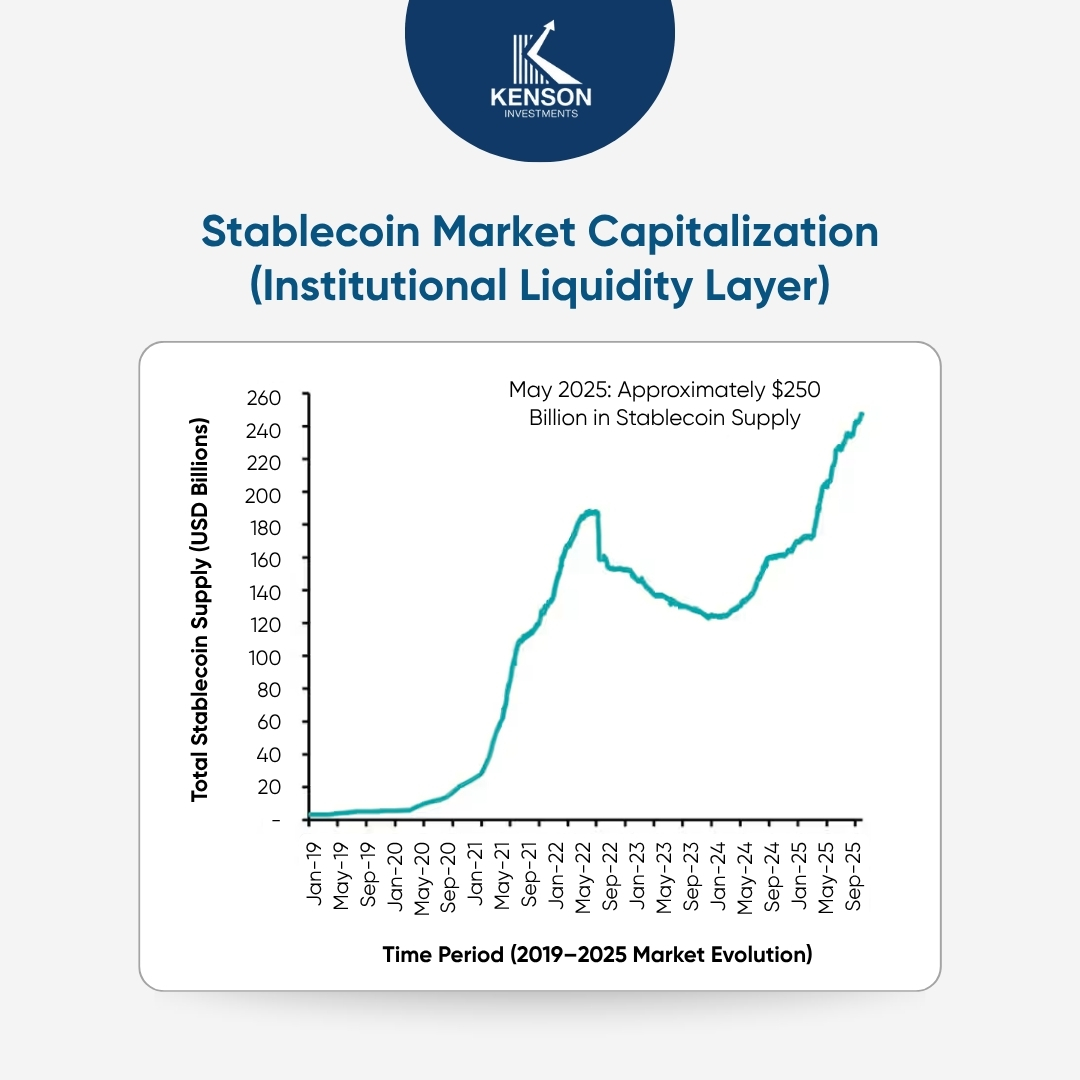
- Stable allocation anchors, including stablecoins for investmentas liquidity buffers
The integration of stablecoins is particularly notable. They serve as both settlement instruments and defensive positioning tools. As institutional CBDC pilots expand, with over 135 countries now exploring digital currency frameworks representing 98% of global GDP, the role of programmable liquidity is expected to increase significantly.
This evolution reinforces a broader trend. Digital asset allocation is becoming less about directional exposure and more about liquidity management.
The Role of Structured Advisory and Consulting Frameworks
Institutional adoption is supported by an expanding ecosystem of advisory and infrastructure providers.
Firms offering digital asset consulting services for businesses are increasingly involved in allocation design, operational setup, and governance structuring. These services extend beyond basic market education. They include:
- Portfolio construction modeling
- Risk framework development
- Custody and execution architecture design
- Regulatory alignment strategies
The emergence of the global digital asset consulting firm model reflects the need for integrated solutions. Institutions are not looking for fragmented inputs. They require cohesive frameworks that align market exposure with operational resilience.
This has led to a shift in how allocators evaluate partners. When evaluating digital asset consulting firms, the focus is less on market predictions and more on infrastructure capability. The ability to design secure digital asset consulting solutions is becoming a primary differentiator.
At the same time, specialized services such as digital fund advisory are gaining traction. These services help institutions integrate digital assets into existing portfolio structures without disrupting broader allocation strategies.
Market Structure Evolution and Institutional Positioning
The digital asset market is undergoing structural change.
Tokenization is moving beyond proof-of-concept into institutional deployment. Real-world assets, including government bonds and private credit, are increasingly being issued and traded on blockchain-based platforms. This shift is not driven by speculation. It is driven by efficiency.
Settlement times are compressing. Operational costs are declining. Transparency is improving.
At the same time, decentralized infrastructure is expanding into sectors beyond finance. DePIN models are introducing blockchain-based coordination into energy, telecom, and data networks. These developments signal a broader transition. Digital assets are becoming infrastructure, not just instruments.
For institutional allocators, this creates a new challenge. Exposure decisions must account for both financial and technological evolution.
This is where blockchain and digital asset consulting plays a critical role. Understanding how infrastructure changes impact market behavior is essential for maintaining disciplined allocation frameworks.
How Kenson Approaches This
Kenson Investments operates from a single principle. Participation must never compromise capital discipline.
Allocation frameworks are designed with explicit constraints. Exposure levels are defined relative to total portfolio risk, not market opportunity. Liquidity conditions are continuously assessed, with position sizing adjusted accordingly. Governance structures ensure that all allocation decisions pass through defined oversight processes.
Operational diligence is treated as a primary risk control, not a secondary check. Custody, execution, and reporting systems are evaluated as integrated components of the allocation framework. This reduces the likelihood of hidden vulnerabilities that can emerge in fragmented environments.
Kenson’s approach also reflects a broader view of market evolution. The firm’s 2025 Digital Asset Market Map highlights how tokenization, DeFi infrastructure, and interoperability frameworks are reshaping capital flows across the ecosystem. These developments are analyzed through a capital preservation lens, ensuring that participation aligns with long-term consistency rather than short-term narratives.
The objective is not to capture every opportunity. It is to engage selectively, with clarity around risk, structure, and operational integrity.
Where This Is Heading: 2026 and Beyond
Institutional digital asset allocation is entering its second phase.
The first phase was exploratory. The current phase is structural.
Several trends are shaping the next stage:
- Integration of tokenized assets into traditional portfolios
- Expansion of regulated custody and settlement infrastructure
- Increased use of programmable liquidity through CBDCs and stablecoins
- Greater alignment between regulatory frameworks and market practices
These trends point toward a more stable, but also more complex, market environment. The role of discipline will not diminish. It will become more important.
Allocators will need to navigate a landscape where opportunities expand, but so do interdependencies. Exposure decisions will increasingly require cross-functional analysis, combining market, operational, and regulatory considerations.
This is where strategic digital asset consulting partners will play a defining role. Institutions will rely on structured frameworks to maintain consistency as the market evolves.
Allocation Models: Translating Policy into Exposure
Institutional capital does not move into digital assets through discretionary judgment. It moves through models.
Allocation models are where institutional digital asset allocation discipline becomes tangible. They translate high-level policy into executable positioning. Without this layer, governance remains theoretical and risk controls become inconsistent.
The most common frameworks observed across institutional portfolios fall into three categories:
- Static Allocation Bands
Allocators define a fixed range, often between 1% and 5%, within which digital assets can fluctuate. Rebalancing occurs when allocations breach predefined thresholds. This prevents drift during strong market cycles and forces discipline during drawdowns. - Volatility-Adjusted Allocation Models
Exposure is dynamically adjusted based on realized and implied volatility. When volatility expands, position sizes contract. When volatility compresses, exposure can increase. This model aligns directly with risk management in crypto investments, ensuring that capital at risk remains proportional rather than fixed. - Liquidity-Sensitive Allocation Frameworks
Allocations are tied to market depth and execution capacity. If liquidity deteriorates, exposure is reduced regardless of price direction. This reflects a key institutional reality. Exit risk matters as much as entry opportunity.
Across all three models, one principle remains consistent. Allocation is not based on conviction alone. It is constrained by measurable variables tied to capital preservation.
This is where investment analysis and portfolio management integrates directly with digital asset exposure. Institutions do not isolate crypto. They evaluate it within total portfolio risk budgets, correlation shifts, and macro sensitivity.
Rebalancing Discipline and Timing Risk
Rebalancing is one of the least visible, yet most important, components of institutional allocation.
Retail investors often treat rebalancing as optional. Institutions treat it as mandatory.
Digital assets amplify the importance of this process. A 3% allocation can quickly become 7% during a strong market cycle, introducing unintended concentration risk. Conversely, sharp drawdowns can reduce exposure below strategic targets, requiring disciplined re-entry under unfavorable sentiment conditions.
Institutional rebalancing frameworks typically include:
- Volatility-triggered thresholds rather than fixed time intervals
- Liquidity checks before execution
- Staggered re-entry and exit windows to reduce market impact
This approach avoids reactive behavior. It replaces emotion with structure.
It also introduces a critical benefit. Rebalancing forces institutions to systematically trim exposure during euphoric phases and reallocate during distressed conditions. This aligns with long-term capital discipline, even when short-term narratives suggest otherwise.
Fund Structures: How Institutions Access Digital Assets
Direct exposure is only one pathway. Many institutions access digital assets through structured vehicles.
These structures provide operational efficiency, reporting clarity, and governance alignment. They also introduce an additional layer of discipline by embedding rules at the fund level.
The most common institutional vehicles include:
Cryptocurrency Index Fund Management
Index-based exposure allows institutions to participate in the broader market without making asset-level selection decisions. This reduces idiosyncratic risk and aligns with passive allocation strategies.
Cryptocurrency index fund management has evolved significantly since 2022. Early versions were heavily skewed toward market capitalization. Newer structures incorporate liquidity filters, governance criteria, and rebalancing rules that reflect institutional standards.
Cryptocurrency Growth Fund Management
Growth-oriented funds target emerging protocols and higher-risk opportunities within controlled frameworks. Exposure is typically capped, and allocations are diversified across multiple projects to reduce single-asset risk.
These funds operate under stricter due diligence requirements, including smart contract audits, governance assessments, and token distribution analysis.
Structured Mandates and Managed Accounts
Some institutions prefer customized mandates rather than pooled vehicles. These arrangements provide greater control over exposure, liquidity, and reporting. Allocators can define parameters aligned with their specific risk tolerance and operational requirements.
Fund Administration and Oversight
The role of cryptocurrency fund administration has expanded significantly. These functions include:
- Independent valuation and reporting
- Reconciliation of on-chain and off-chain activity
- Compliance monitoring
As digital asset markets mature, fund administration is becoming a core pillar of institutional trust. Without it, transparency breaks down.
Portfolio Integration: Digital Assets Within Multi-Asset Strategies
Digital assets are not standalone allocations. They exist within broader portfolio structures.
Integration requires careful consideration of correlation behavior, liquidity alignment, and macro sensitivity.
Historically, Bitcoin has shown periods of low correlation with traditional assets. However, during stress events, correlations tend to converge. This creates a challenge for allocators relying on diversification benefits.
To address this, institutions are increasingly focusing on:
- Scenario-based modeling rather than historical correlation
- Stress testing across liquidity shocks and volatility spikes
- Integration with broader finance asset management consultingframeworks
This approach reflects a shift in thinking. Digital assets are not treated as diversification tools by default. They are treated as conditional diversifiers, with behavior that changes across market regimes.

DeFi Exposure: Controlled Participation in Emerging Systems
Decentralized finance introduces a new layer of complexity.
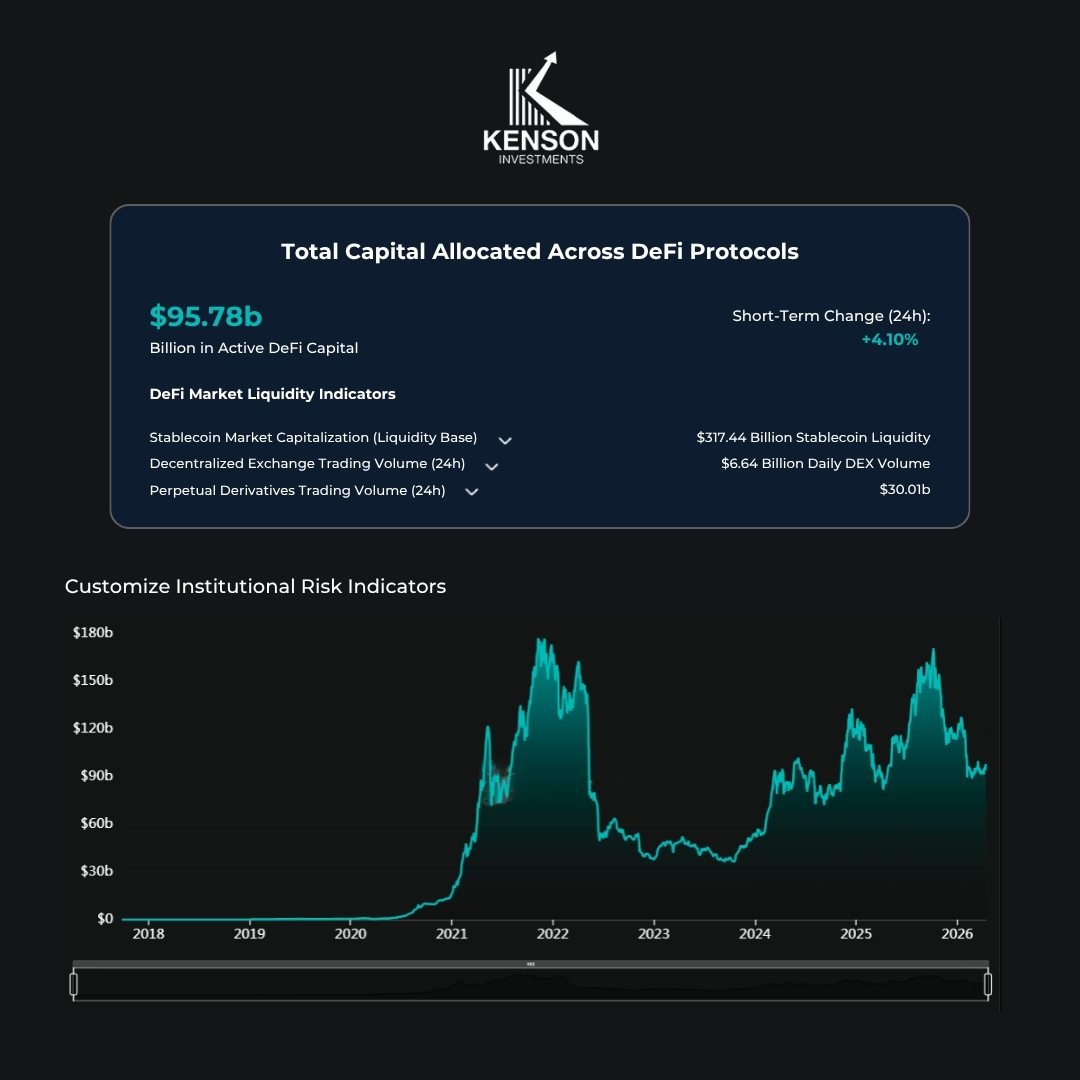
While DeFi offers potential efficiency gains and yield generation, it also introduces smart contract risk, governance uncertainty, and liquidity fragmentation.
Institutional participation in DeFi remains cautious. Exposure is typically limited and accessed through structured frameworks rather than direct interaction.
Key considerations include:
- Protocol maturity and audit history
- Governance structure and token distribution
- Liquidity depth and withdrawal conditions
The role of DeFi finance consulting services is not to identify opportunities, but to filter risk. Participation is selective, measured, and continuously monitored.
Security, Custody, and Counterparty Risk
Security remains the foundation of institutional participation.
Capital can be lost through market movement. It can also be lost through operational failure. The latter is less visible, but often more damaging.
Institutional frameworks prioritize:
- Segregated custody solutions
- Multi-signature authorization structures
- Insurance-backed storage arrangements
- Independent verification of asset ownership
The importance of security in digital asset management has increased as institutional capital has entered the space. Custody providers are no longer evaluated solely on technology. They are assessed based on governance, transparency, and operational resilience.
Counterparty risk is also a critical consideration. Institutions diversify execution across multiple venues to reduce dependency on any single provider. This reflects lessons learned from past market disruptions.
The Expanding Role of Advisory and Infrastructure Partners
Institutional allocation is not executed in isolation.
A growing network of providers supports the ecosystem, including digital asset management companies, custodians, execution platforms, and advisory firms.
The role of the digital asset management consultant has evolved significantly. Institutions are not looking for market predictions. They are looking for structure.
This includes:
- Designing allocation frameworks
- Implementing operational infrastructure
- Ensuring compliance alignment
Firms offering digital asset management consulting are increasingly integrated into institutional workflows. They act as strategic digital asset consulting partners, providing continuity across evolving market conditions.
The distinction between providers is becoming clearer. The focus is shifting toward those who can deliver transparent investment solutions and maintain discipline under stress.
Capital Discipline in Practice: What Separates Institutional from Retail Behavior
The difference between institutional and retail participation is not access. It is behavior.
Retail investors often pursue upside. Institutions manage downside.
This difference is reflected in:
- Allocation sizing
- Rebalancing discipline
- Operational diligence
- Governance oversight
Institutions do not chase narratives around blockchain-based investment opportunities. They evaluate whether exposure aligns with defined risk parameters.
Similarly, decisions around long-term investment in digital assets are not based on belief. They are based on whether assets can be integrated into portfolio structures without compromising capital stability.
This is the essence of institutional digital asset allocation discipline. It is not about avoiding risk. It is about controlling it.
Final Thoughts: Discipline as the Core Allocation Advantage
Digital assets will continue to evolve. Infrastructure will mature. Regulatory clarity will improve.
None of these changes eliminate risk.
What they do is shift where risk resides.
For institutional allocators, success will not come from identifying the next high-performing asset. It will come from maintaining discipline as the market structure evolves.
The frameworks being built today, around governance, liquidity, and operational diligence, will define how capital performs over the next decade.
This is not a short-term transition. It is a structural shift in how capital engages with emerging systems.
Build Allocation Frameworks That Withstand Market Stress
Understanding digital assets is no longer the challenge. Structuring exposure is.
Kenson Investments provides institutional-grade insights and comprehensive digital asset consulting services designed to help allocators evaluate risk, structure exposure, and maintain consistency across market cycles.
Explore how disciplined frameworks, governance clarity, and operational resilience shape participation in digital markets with Kenson Investments. Reach out to us today.
Disclaimer: The information provided on this page is for educational and informational purposes only and should not be construed as financial advice. Crypto currency assets involve inherent risks, and past performance is not indicative of future results. Always conduct thorough research and consult with a qualified financial advisor before making investment decisions.
“The crypto currency and digital asset space is an emerging asset class that has not yet been regulated by the SEC and US Federal Government. None of the information provided by Kenson LLC should be considered as financial investment advice. Please consult your Registered Financial Advisor for guidance. Kenson LLC does not offer any products regulated by the SEC including, equities, registered securities, ETFs, stocks, bonds, or equivalents”