










Collateral is not just a safeguard. It is a signal. In traditional markets, that signal is often delayed, aggregated, and partially obscured. In tokenized financial systems, it is increasingly visible in real time.
This shift from opacity to transparency is changing how participants behave. When collateral positions, reserve backing, and leverage exposure are observable on-chain, risk is no longer inferred. It is monitored continuously.

For institutions engaged in digital asset investments, this visibility introduces a new form of discipline. It does not eliminate risk, but it changes how risk is understood, priced, and managed across the market.
From Opaque Balance Sheets to Real-Time Visibility
In traditional finance, collateral disclosure is periodic. Balance sheets are updated quarterly. Counterparty exposure is often estimated rather than confirmed. During stress events, this lag creates uncertainty.
Tokenized markets operate differently. On-chain systems allow participants to observe:
- Collateral reserves backing lending positions
- Leverage ratios across protocols
- Liquidity pool balances in real time
- Stablecoin reserves and issuance levels
As of 2026, major DeFi protocols collectively secure over $100 billion in collateral, much of which is publicly visible. This level of transparency is unprecedented in financial markets.
For firms relying on digital asset management services, this creates a measurable advantage. Risk is not just modeled. It is observed directly.
Transparency as a Behavioral Constraint
Visibility changes behavior. When collateral positions are public, participants adjust their risk profiles accordingly.
In opaque systems, excessive leverage can build unnoticed. In transparent systems:
- High leverage positions are visible to the market
- Liquidation thresholds are known in advance
- Collateral quality can be assessed by counterparties
This creates a form of self-regulation. Market participants are less likely to take extreme positions when those positions are observable.
For institutions focused on risk management in crypto investments, this behavioral shift is significant. Transparency does not prevent risk-taking, but it discourages hidden risk accumulation.
Stablecoin Transparency and Reserve Verification
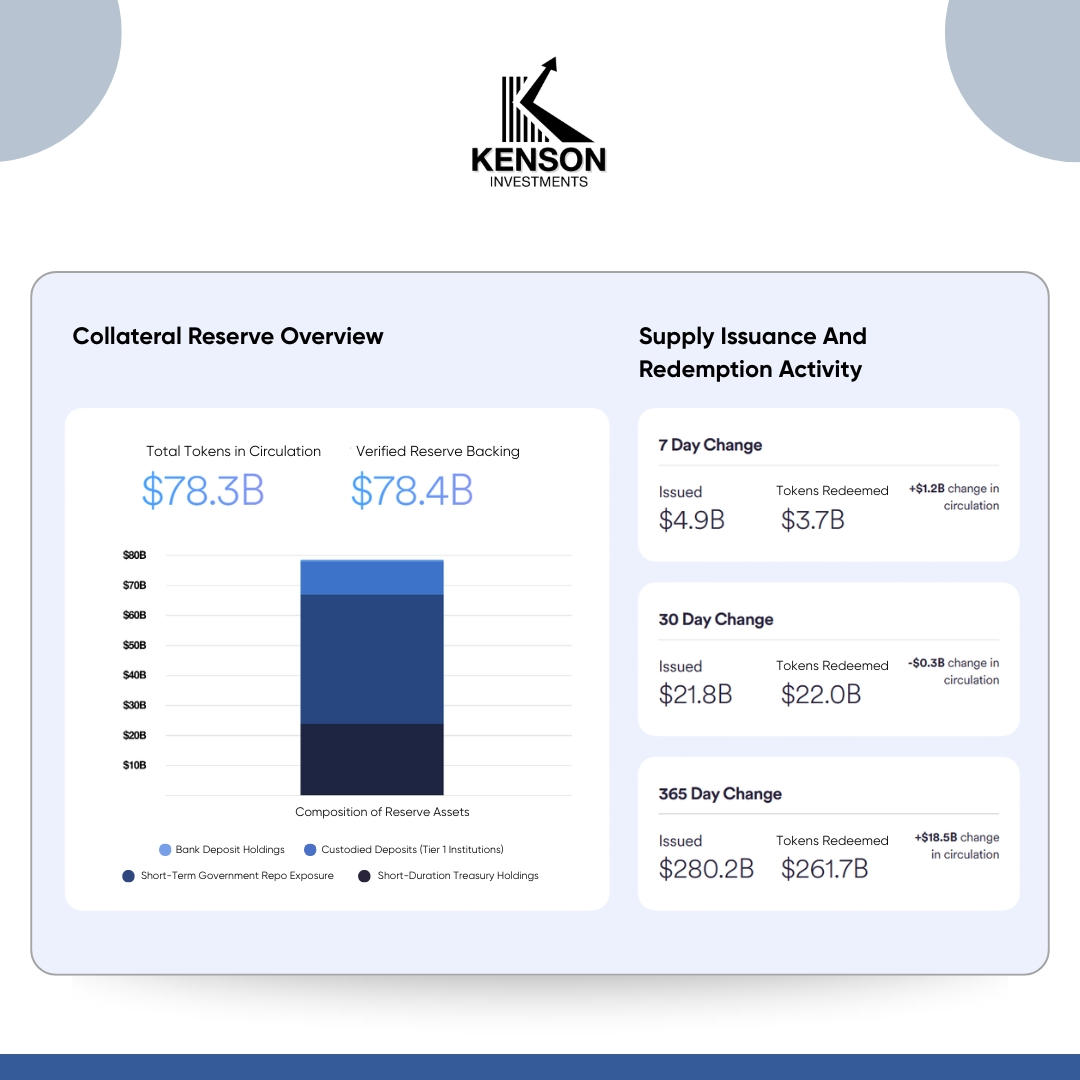
Stablecoins play a central role in collateral frameworks. They are widely used as both settlement assets and collateral instruments. Their reliability depends on the transparency of their reserves.
By 2026:
- The global stablecoin market exceeds $180 billion
- Leading issuers publish reserve attestations monthly or more frequently
- On-chain transparency tools allow real-time monitoring of supply and flows
However, not all stablecoins offer the same level of transparency. The collapse of algorithmic stablecoins demonstrated the consequences of insufficient reserve visibility.
For institutions working with a stablecoin investment consultant, the focus is increasingly on:
- Reserve composition
- Audit frequency
- Liquidity of underlying assets
This is central to security in digital asset management. Collateral is only as reliable as the assets backing it.
Collateral Quality and Market Perception
Transparency not only reveals how much collateral exists. It reveals what that collateral consists of.
In tokenized systems, collateral can include:
- Major cryptocurrencies such as Bitcoin and Ethereum
- Stablecoins backed by fiat reserves
- Tokenized real-world assets
- Governance tokens with varying liquidity profiles
The distinction between high-quality and low-quality collateral becomes visible in real time.
For example:
- Highly liquid assets tend to stabilize collateral systems
- Illiquid or volatile assets introduce fragility
This distinction is critical for those engaged in investment analysis and portfolio management. Transparency allows institutions to assess not just exposure, but the quality of that exposure.
Market Discipline During Stress Events
Transparency is most valuable during periods of volatility. When markets decline rapidly, the ability to observe collateral positions becomes critical.
During the 2022–2024 market cycles:
- Liquidation cascades were visible in real time across lending protocols
- Stablecoin de-pegging events were tracked through on-chain data
- Collateral shortfalls were identified before full system failure
This visibility allowed some participants to reduce exposure before losses escalated.
For institutions engaged in navigating the digital asset market, this represents a shift from reactive to proactive risk management.
However, transparency can also accelerate market reactions. When participants see collateral positions weakening, they may withdraw liquidity or exit positions quickly. This can amplify volatility.
The Limits of Transparency
While transparency improves visibility, it does not eliminate risk. Several limitations remain:
- Data accuracy depends on oracle reliability
- Off-chain exposures are not always visible
- Complex derivative structures can obscure true risk levels
In addition, transparency can create false confidence. Visible collateral does not guarantee liquidity under stress.
For firms offering digital asset management consulting services, the emphasis is on interpreting data correctly. Transparency provides information, not certainty.
Institutional Integration of Transparent Systems
Institutions are increasingly incorporating transparent collateral frameworks into their operations. This includes:
- Real-time monitoring dashboards
- Automated risk alerts based on collateral thresholds
- Integration of on-chain data into portfolio management systems
Firms engaged in blockchain and digital asset consulting are building tools that bridge traditional risk frameworks with on-chain transparency.
For those evaluating digital asset consulting services for businesses, the ability to interpret and act on transparent data is becoming a core requirement.
Transparency and Regulatory Alignment
Regulators are paying close attention to collateral transparency. The ability to observe reserves and exposures aligns with broader goals around financial stability.
By 2026:
- Several jurisdictions are exploring proof-of-reserve requirements for digital asset firms
- Stablecoin issuers face increasing disclosure obligations
- Tokenized asset platforms are integrating compliance reporting into smart contracts
For firms providing digital asset consulting for compliance, transparency is both an opportunity and a requirement.
It allows institutions to demonstrate risk awareness and operational integrity without relying solely on traditional reporting structures.
The Kenson Perspective
Transparency is often treated as a solution. In practice, it is a tool.
At Kenson Investments, the focus is not simply on accessing transparent data. It is on understanding how that data behaves under stress.
Within our digital asset management consulting services, collateral transparency is evaluated through three lenses:
- Reliability of data sources
- Liquidity of underlying collateral
- Market response to visible stress signals
Transparent systems can improve discipline, but they can also accelerate market reactions. The objective is not just visibility. It is controlled interpretation.
For institutions engaged in crypto asset management, the challenge is not access to information. It is filtering that information into actionable risk frameworks.
Strategic Implications for Capital Allocators
Collateral transparency is reshaping how capital is allocated. It introduces new considerations:
- Exposure can be assessed in real time
- Counterparty risk becomes more visible
- Market signals emerge earlier in stress cycles
For those focused on long-term investment in digital assets, this creates both opportunity and responsibility.
Allocators must move beyond traditional models and incorporate real-time data into decision-making processes.
Firms providing digital asset advisory services are increasingly focused on helping institutions build these capabilities.
Transparency as a Foundation for Market Maturity
Tokenized markets are still evolving. Transparency is one of the factors driving their maturation.
As infrastructure improves:
- Data quality is expected to increase
- Cross-platform visibility will expand
- Standardization of reporting frameworks will emerge
This will support more consistent market behavior and reduce systemic uncertainty.
For participants engaged in investing in the digital age, transparency is not a differentiator. It is becoming a baseline expectation.
Building Disciplined Frameworks around Transparency
Institutions cannot rely on transparency alone. They must build frameworks that incorporate it effectively.
This includes:
- Defining thresholds for acceptable collateral quality
- Monitoring leverage across protocols
- Stress testing exposure under different market scenarios
- Integrating transparency into portfolio governance
Firms offering comprehensive digital asset consulting services are increasingly focused on these frameworks.
The goal is not to eliminate risk. It is to manage it with greater precision.
Strengthen Discipline through Transparent Systems
Clear visibility into collateral is only valuable when paired with disciplined decision-making.
Kenson Investments supports institutions through digital assets consulting that prioritizes clarity, risk awareness, and structured capital protection.
For those seeking strategic digital asset consulting partners, the focus should remain on interpreting transparency effectively, not simply accessing it. Kenson Investments’ digital asset specialists make it easy to stay educated and updated in this field. Reach out to us.
Disclaimer: The information provided on this page is for educational and informational purposes only and should not be construed as financial advice. Crypto currency assets involve inherent risks, and past performance is not indicative of future results. Always conduct thorough research and consult with a qualified financial advisor before making investment decisions.
“The crypto currency and digital asset space is an emerging asset class that has not yet been regulated by the SEC and US Federal Government. None of the information provided by Kenson LLC should be considered as financial investment advice. Please consult your Registered Financial Advisor for guidance. Kenson LLC does not offer any products regulated by the SEC including, equities, registered securities, ETFs, stocks, bonds, or equivalents”



