








Fast markets punish hesitation. In digital assets, that punishment is not limited to missed price levels. It appears through slippage, liquidity decay, failed routing, delayed settlement, and post-trade reconciliation gaps. For institutions and high-net-worth allocators, execution latency digital assets risk is not simply a technology issue. It is a capital protection issue.
Digital markets trade continuously, but liquidity does not behave continuously. Price can move across multiple levels in seconds, and execution quality can deteriorate before an approval chain, routing system, or settlement workflow has completed. This is why institutional trading efficiency has become a major focus for disciplined digital asset managers. The goal is not speed for its own sake. The goal is controlled execution when market structure is unstable.
The October 2025 crypto deleveraging event showed why timing matters. Reuters reported that more than $19 billion in leveraged crypto positions were liquidated during the October 10 to 11 period, while Bitcoin fell more than 14% from its Friday high and Ether dropped 12.2% during the same stress window. In that type of environment, execution delay is not abstract. It becomes measurable cost.
Why Latency Becomes a Hidden Cost
Latency is often discussed in milliseconds, but institutional latency is broader than exchange connectivity. It includes the time between decision and execution. A portfolio team may identify a needed rebalance quickly, but execution may still be delayed by approval workflows, custody transfer rules, compliance checks, fragmented exchange balances, or settlement timing.
In digital markets, these delays compound. A 30-second delay during calm trading may be irrelevant. The same delay during a liquidation cascade can mean losing access to visible liquidity, crossing a wider spread, or executing after price has already moved through the intended level.
This is why institutions evaluating digital asset investment solutions increasingly consider total execution cost rather than quoted price alone. The relevant measure is not “where was the market when the decision was made?” It is “where was liquidity when the trade was actually executable?”
Kenson Investments views execution latency as part of risk management in crypto investments. It affects portfolio outcomes, liquidity assumptions, and capital mobility.
Market Fragmentation Makes Delay More Expensive
Digital asset markets are fragmented across exchanges, custodians, liquidity providers, decentralized venues, and derivatives platforms. Each venue has different APIs, matching engines, margin systems, and liquidity profiles. Talos’ institutional derivatives analysis notes that liquidity is fragmented across many exchanges globally, with different frameworks and rulebooks, making execution outcomes vary materially by venue.
This fragmentation increases the cost of delay. If liquidity disappears on one venue, another venue may still show depth, but capital may not be positioned there. If assets must move from custody to exchange before execution, network congestion or approval delays may prevent timely action. If orders are routed sequentially rather than intelligently across venues, the first execution can move the market before the remaining size is filled.
For institutions engaged in digital asset portfolio management, execution efficiency depends on infrastructure design. Venue access is useful only when balances, approvals, risk limits, and routing logic are aligned. This is where digital asset management and blockchain consulting often focus on operational readiness rather than simple market access.
Approval Friction and Internal Workflow Latency
Institutional trading does not happen in isolation. It requires controls. These controls are necessary, but if poorly designed, they create latency that becomes costly during volatility.
Approval friction can appear in several places: pre-trade compliance checks, transfer authorization, portfolio manager approval, custodian withdrawal procedures, or post-trade documentation. Each step may be reasonable individually. Combined, they can prevent an institution from acting while liquidity is still available.
This is a core challenge in institutional trading efficiency. Institutions must reduce avoidable latency without weakening governance. Faster execution cannot come at the expense of auditability, segregation of duties, or security.
Kenson Investments approaches this through workflow design. Pre-approved parameters, defined trading limits, and structured escalation procedures allow execution teams to act within controlled boundaries. The objective is not to remove oversight. It is to avoid building systems where every market response requires manual reinvention.
Settlement Timing and Capital Mobility
Execution is only one part of the cost chain. Settlement and asset movement also matter. In traditional markets, settlement delays are familiar, but digital assets introduce a different issue: assets may settle on-chain quickly in normal conditions, yet still become operationally delayed during congestion, custodian review, or internal wallet approval.
This matters because capital trapped in the wrong location cannot respond to opportunity or risk. An institution may hold sufficient liquidity in aggregate, but if that liquidity sits in cold storage, on a different venue, or in an asset that requires conversion before trading, it is not immediately useful.
For firms using digital asset management services, liquidity location is as important as liquidity amount. Settlement architecture must support the strategy. If execution speed is required, capital must be pre-positioned, transfer routes must be tested, and settlement workflows must be mapped before volatility arrives.
Volatility Turns Small Delays into Large Differences
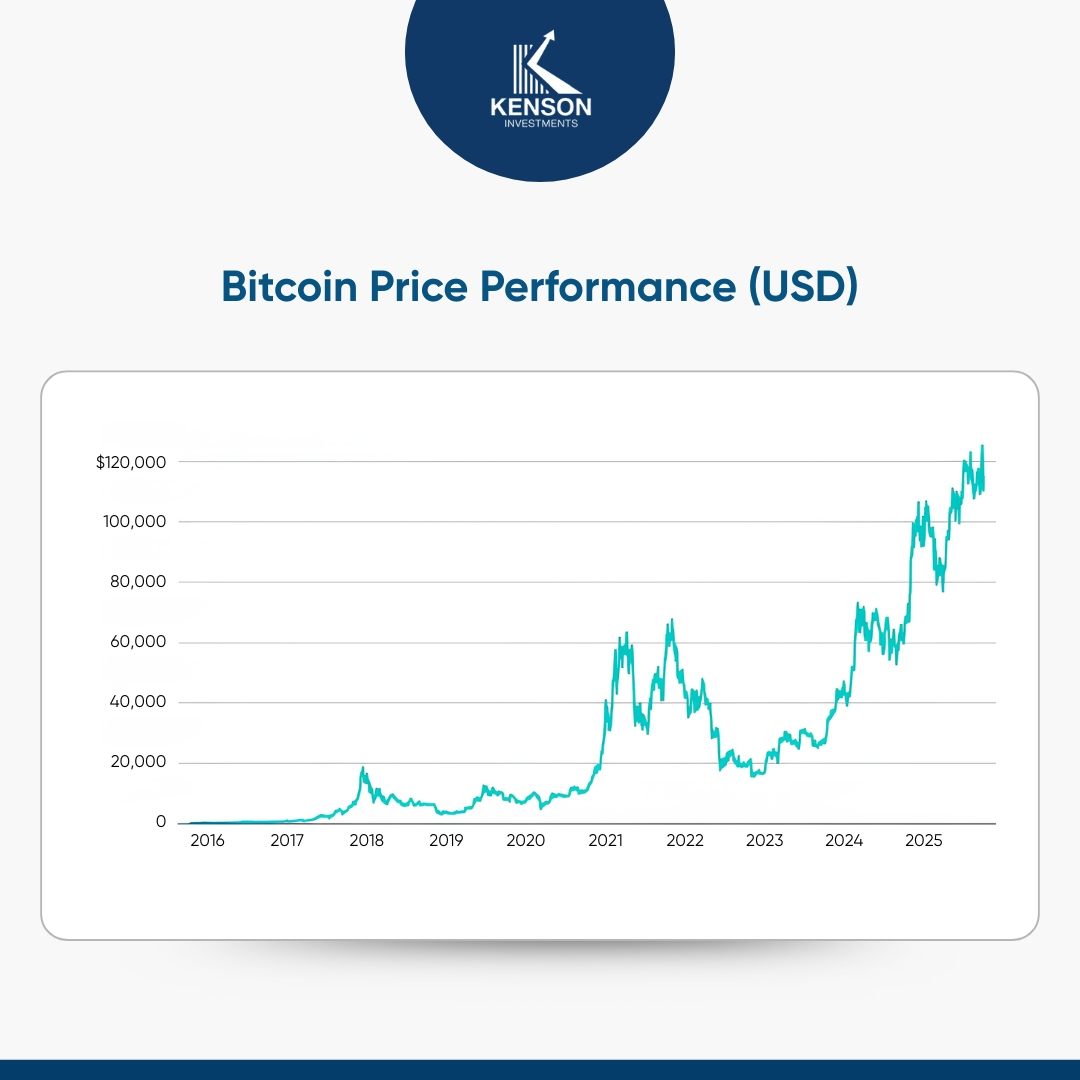
Bitcoin’s volatility has declined over the long term, but S&P Global still notes that it remains higher than many traditional assets. It also notes that perpetual futures, leverage, and automated liquidations can amplify Bitcoin’s price volatility relative to other financial assets.
This creates a simple institutional reality. Small timing differences have larger consequences when price movement is faster. In a market moving 2% to 5% intraday, a delayed execution can materially affect entry or exit price. In altcoins or thinner assets, the difference can be larger because order book depth is weaker and slippage rises quickly.
This is why altcoins vs. major cryptocurrencies must be evaluated differently from an execution perspective. Major assets may still carry volatility, but they generally offer deeper liquidity and more venue support. Smaller assets can impose higher hidden costs through wider spreads, thinner books, and more fragile market depth.
How Institutions Reduce Execution Latency
Disciplined institutions reduce execution latency through process design, not improvisation. They build systems where execution decisions, custody access, and risk controls are coordinated before trading begins.
A strong framework usually includes pre-trade liquidity analysis, approved venue lists, automated order routing, defined approval thresholds, real-time exposure monitoring, and post-trade transaction cost analysis. Talos’ analysis also highlights that institutions require visibility into execution performance, including detailed data and transaction cost analysis, to monitor outcomes and demonstrate best execution internally.
This aligns with best practices in digital asset consulting, where execution is treated as a risk control. A firm may have a sound market view, but if execution infrastructure is weak, that view may not translate into durable outcomes.
Kenson Investments emphasizes this distinction. For long-term investment in digital assets, trading discipline must be supported by infrastructure discipline. Execution latency is not only a trading desk concern. It affects portfolio construction, drawdown control, liquidity management, and reporting accuracy.
The Kenson Perspective
Kenson Investments views execution efficiency as part of capital stewardship. Digital asset markets move quickly, but disciplined participation requires more than speed. It requires controlled speed, measurable workflows, and infrastructure built around real market conditions.
For high-net-worth investors and allocators, the hidden cost of delayed execution is not always visible in headline performance. It often appears in worse fills, larger slippage, delayed rebalancing, and reduced flexibility during stress. Over time, these frictions compound.
Strengthen Execution Before Volatility Tests the System
Execution latency is easiest to ignore when markets are calm and most expensive when markets break. Institutions that reduce operational delay, improve routing discipline, and align settlement workflows are better positioned to preserve flexibility during volatility. Leveraging professional Blockchain asset consulting and comprehensive DeFi Finance consulting services can assist institutions in optimizing these execution tracks. Kenson Investments helps market participants understand how execution quality, liquidity structure, and operational readiness shape outcomes in digital asset markets. To discuss how execution-aware frameworks can support disciplined participation, connect with a Digital asset management consultant or touch base with our Digital asset strategy consulting firm to get started.
Disclaimer: The information provided on this page is for educational and informational purposes only and should not be construed as financial advice. Crypto currency assets involve inherent risks, and past performance is not indicative of future results. Always conduct thorough research and consult with a qualified financial advisor before making investment decisions.
“The crypto currency and digital asset space is an emerging asset class that has not yet been regulated by the SEC and US Federal Government. None of the information provided by Kenson LLC should be considered as financial investment advice. Please consult your Registered Financial Advisor for guidance. Kenson LLC does not offer any products regulated by the SEC including, equities, registered securities, ETFs, stocks, bonds, or equivalents”