







In digital asset markets, price often receives disproportionate attention. Screens, dashboards, and headlines reinforce the idea that marginal pricing advantages determine outcomes. Yet repeated market disruptions, operational failures, and forced unwind events suggest a different reality. In practice, completion certainty, the confidence that a transaction will execute, settle, and remain recoverable, often outweighs small differences in quoted price.
For institutions and organizations participating in digital asset investments, capital preservation depends less on nominal execution levels and more on whether transactions complete as intended under stress. Execution certainty in digital assets has therefore become a core consideration, particularly as market structure continues to evolve.
Price Is Visible; Completion Risk Is Structural
Price is immediate and observable. Completion risk is embedded within infrastructure.
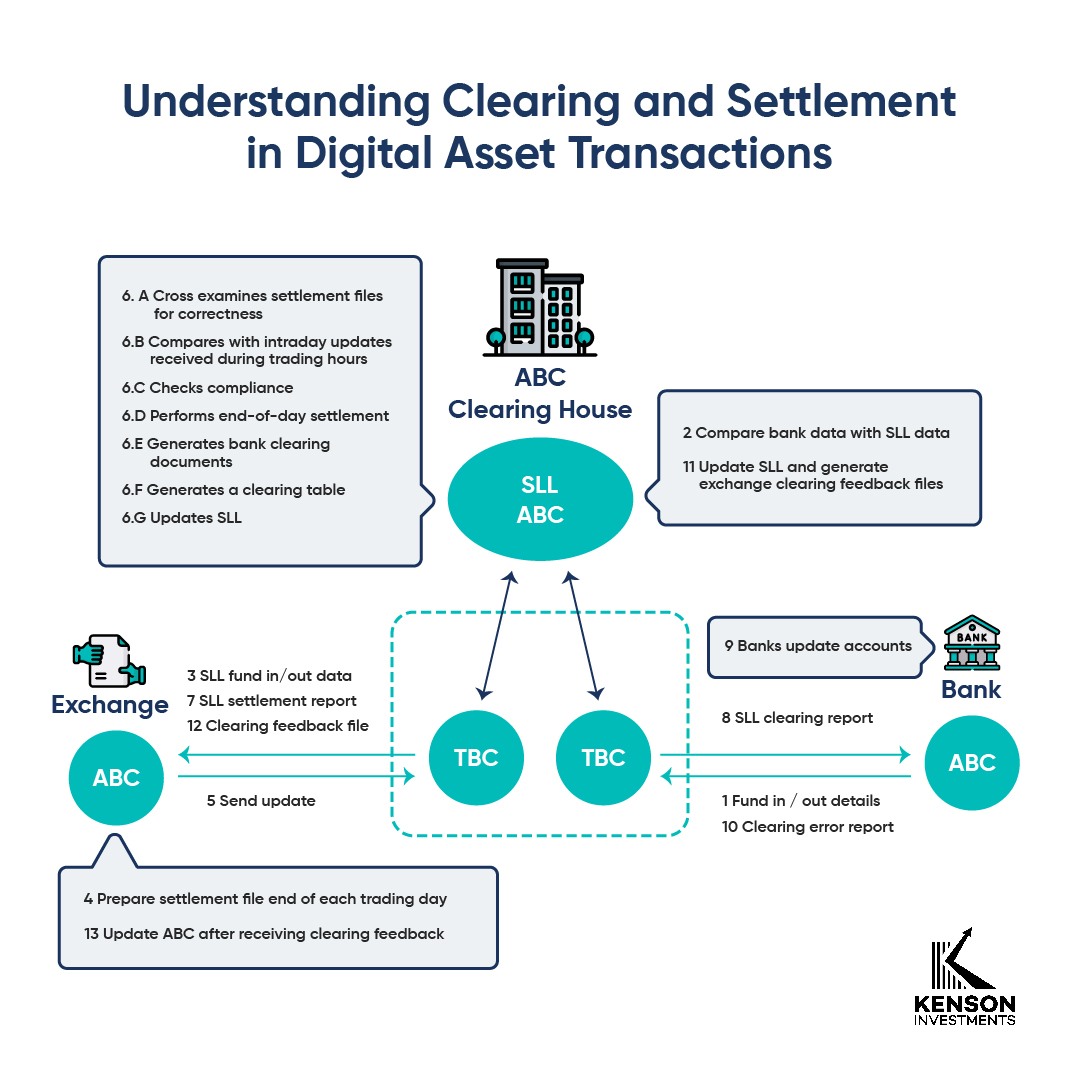
In traditional markets, decades of clearinghouse development, settlement guarantees, and standardized recovery processes have reduced uncertainty around transaction completion. Digital asset markets, by contrast, operate across fragmented venues, varying custody models, and heterogeneous settlement rails.
Settlement assurance cannot be assumed. Execution may fail or be partially completed due to:
- Network congestion or fee volatility
- Exchange-level outages or risk controls
- Smart contract design limitations
- Custody workflow breakdowns
- Counterparty operational stress
When these issues surface, the quoted price becomes secondary. What matters is whether the transaction reaches finality and whether the participant retains control over the asset.
Execution Certainty as a Risk Variable
Execution certainty in digital assets refers to the probability that a transaction completes fully and predictably across all stages:
- Order acceptance
- Trade execution
- Asset settlement
- Custody confirmation
- Post-trade recoverability
Each stage introduces potential failure points. In periods of elevated volatility, these risks compound. Liquidity fragmentation and reflexive flows can amplify delays, while automated liquidation mechanisms may accelerate losses unrelated to underlying market direction.
From a digital asset management perspective, this reframes execution as a risk variable rather than a mechanical step.
Settlement Assurance and Capital Protection
Settlement assurance is not simply a technical concept. It directly affects capital exposure.
During stressed market conditions, delayed settlement or failed withdrawals can result in:
- Inability to rebalance exposure
- Forced continuation of undesired positions
- Increased counterparty dependency
- Loss of operational optionality
Historical market events repeatedly demonstrate that losses often occur after a trade is placed, not because of price direction but due to settlement disruption. In such scenarios, entities that prioritized settlement reliability over marginal pricing were often better positioned to maintain control.
This reinforces a central principle: capital protection is operational before it is directional.
The Illusion of Best Price Execution
In highly competitive markets, the pursuit of best price execution can unintentionally increase exposure. Thin liquidity pockets, aggressive leverage, or reliance on a single execution venue may offer improved pricing while simultaneously reducing completion certainty.
Digital asset investments operate within market structures where depth can change rapidly. A quoted price may exist briefly without guaranteeing executable size or post-trade settlement.
Institutional frameworks increasingly recognize that pricing efficiency must be evaluated alongside:
- Venue resilience
- Withdrawal reliability
- Custody integration
- Legal and operational clarity
Absent these considerations, pricing advantages may exist only in theory.
Recovery Paths Matter More Than Entry Points
Another often overlooked element of execution certainty is recovery. When transactions encounter issues, the availability of defined recovery paths determines outcome severity.
Recovery considerations include:
- Clear custody ownership records
- Transparent transaction auditability
- Established incident response procedures
- Documented counterparty escalation processes
Without these structures, even small disruptions can escalate into prolonged capital impairment. This reality has informed a shift toward conservative execution frameworks that emphasize predictability and traceability.
In digital asset management, recovery capability is increasingly treated as a prerequisite rather than a contingency.
Market Volatility Exposes Infrastructure Weakness
Volatile conditions function as stress tests for digital asset infrastructure. Periods of rapid repricing reveal which systems can maintain execution certainty and which cannot.
Observed patterns show that during volatility:
- Network fees may spike unpredictably.
- Automated risk controls may trigger mass position closures.
- Liquidity may fragment across venues.
- Operational bottlenecks become binding constraints.
In these environments, execution certainty in digital assets becomes a differentiator. Participants with conservative execution parameters and diversified settlement pathways tend to experience fewer forced outcomes unrelated to market intent.

Implications for Long-Term Market Participation
For organizations operating in the digital asset market, the implications are structural rather than tactical. Execution frameworks designed solely around price optimization may underperform in capital preservation terms over extended horizons.
By contrast, approaches that prioritize:
- Settlement assurance
- Operational redundancy
- Controlled execution sizing
- Transparent custody workflows
are more resilient across varying market regimes. This does not eliminate risk, but it reshapes exposure toward known variables rather than hidden dependencies.
Innovative investment solutions in digital assets increasingly reflect this shift, emphasizing infrastructure robustness over aggressive optimization.
Execution Certainty as a Governance Issue
Execution reliability is also a governance consideration. Institutions face internal accountability standards that require explainable outcomes. Losses stemming from infrastructure failure or settlement breakdowns are often more difficult to justify than market-driven variance.
As a result, execution certainty in digital assets intersects with:
- Internal risk oversight
- Compliance review
- Operational auditability
- Board-level governance expectations
This reinforces why completion certainty has become a central discussion point among institutional participants evaluating digital asset investments.
The Kenson View: Execution Certainty as a Governance Consideration
At Kenson Investments, execution certainty in digital assets is viewed as a structural component of digital asset management rather than a trading preference.
Pricing advantages may be visible, but completion reliability determines whether digital asset investments perform as intended. Within Kenson’s framework, settlement assurance supports capital discipline by emphasizing:
- Operational resilience
● Reliable settlement pathways
● Custody alignment
● Recovery visibility
This approach helps ensure participation remains intentional, particularly during periods of market stress where execution outcomes—not quoted price—define real exposure.
Price Is a Number; Completion Is an Outcome
Price is instantaneous. Completion is enduring.
In digital asset markets, where infrastructure maturity varies and stress conditions are frequent, focusing exclusively on price can obscure more consequential risks. Execution certainty, settlement assurance, and recovery capability collectively shape real-world outcomes.
For informed participants, understanding these dynamics is a foundational element of responsible digital asset management.

Building Execution Awareness Through Education
Execution reliability is not intuitive; it must be understood.
At Kenson Investments, we focus on education that helps organizations examine how execution certainty, settlement assurance, and operational design influence outcomes in digital asset markets.
We provide educational resources and general market insights to support informed evaluation of digital asset investments without offering recommendations or financial advice. Our goal is to help participants better understand how market structure and execution frameworks affect capital exposure over time. As a digital asset strategy consulting firm, our blockchain asset consulting and blockchain and digital asset consulting resources are designed to support this understanding, alongside insights into Solana DeFi risk management and access to a dedicated blockchain asset investments consultant. Register now!
Disclaimer: The information provided on this page is for educational and informational purposes only and should not be construed as financial advice. Cryptocurrency assets involve inherent risks, and past performance is not indicative of future results. Always conduct thorough research and consult with a qualified financial advisor before making investment decisions.
“The cryptocurrency and digital asset space is an emerging asset class that has not yet been regulated by the SEC and the US Federal Government. None of the information provided by Kenson LLC should be considered as financial investment advice. Please consult your Registered Financial Advisor for guidance. Kenson LLC does not offer any products regulated by the SEC, including equities, registered securities, ETFs, stocks, bonds, or equivalents.”